
Tagliatelle al ragù; the quintessential taste of Bologna
The next region on the list for my “Eating Italy” series – in which I prepare a dish from each of Italy’s twenty regions – is Emilia-Romagna. My aim of Eating Italy is to showcase the unique cuisine from each region, which is what I find so fascinating about Italian food; each region has its own flavours and traditions, yet all are tied together by the use of seasonal and local ingredients.
Emilia-Romagna is one of the wealthiest regions in Europe, famous for its rich dishes. The fertile lands and ideal climate of both mountains and coastlines (giving the region its name, the food valley of Italy) produces food, particularly meat and cheese, of the highest quality. It is the birthplace of many Italian classics including Prosciutto di Parma, Parmigiano Reggiano, Grana Padano, mortadella, balsamic vinegar (aceto balsamico di Modena), and fresh egg pastas such as tagliatelle and tortellini.
Emilia-Romagna has 44 PDO (protected designation of origin)/DOP (denominazione origine protetta) and PGI protected geographical indication/IGP (indicazione geografica protetta) food products, making it the Italian region with the highest number of those certifications. PDO/DOP and PGI/IGP are certifications by the European Union that protect regional food products. They ensure authenticity and quality, and require production to occur in a specific region. The number of these certifications for Emilia-Romagnan products is a reflection of the regions celebration of its prestigious heritage through the food it produces.
In the words of Pellegrino Artusi:
“ Quando incontrate la cucina emiliana fate una riverenza, ché se la merita” (“When you come across cucina emiliana take a bow, because it deserves it”),
And I couldn’t agree more.
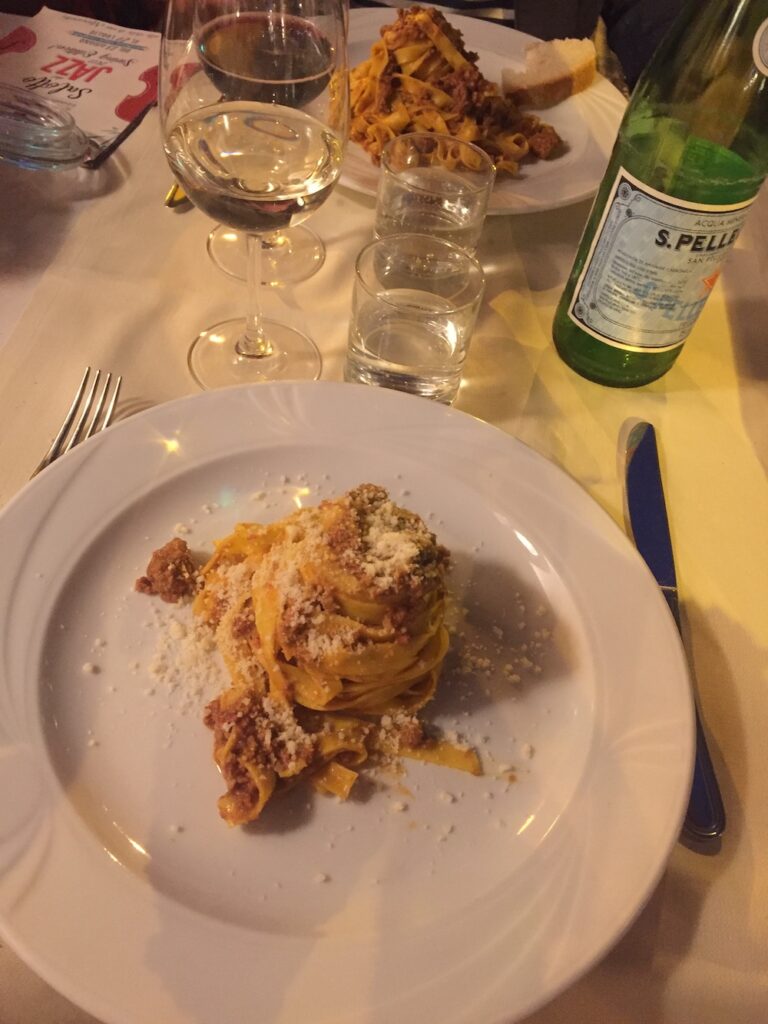
For me, tagliatelle al ragù is the epitome of Emilia-Romagnan cuisine; silky, fresh egg pasta with a deliciously rich, slow-cooked meat sauce. It is the quintessential taste of Bologna and the authentic and original version of spaghetti bolognese.
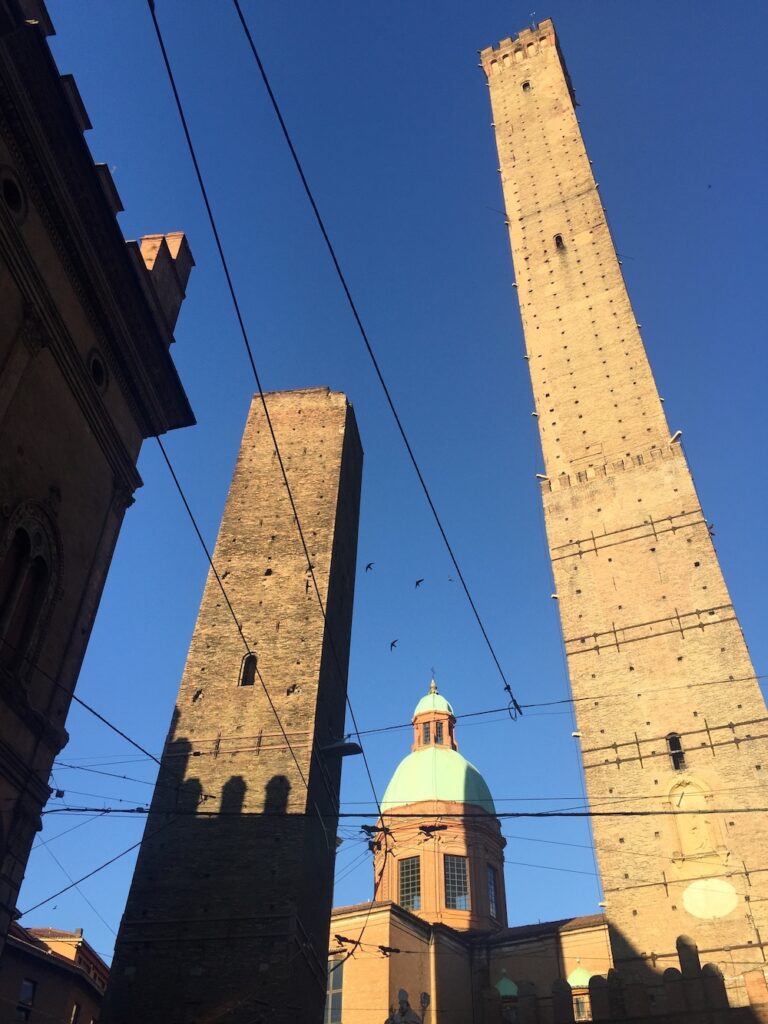
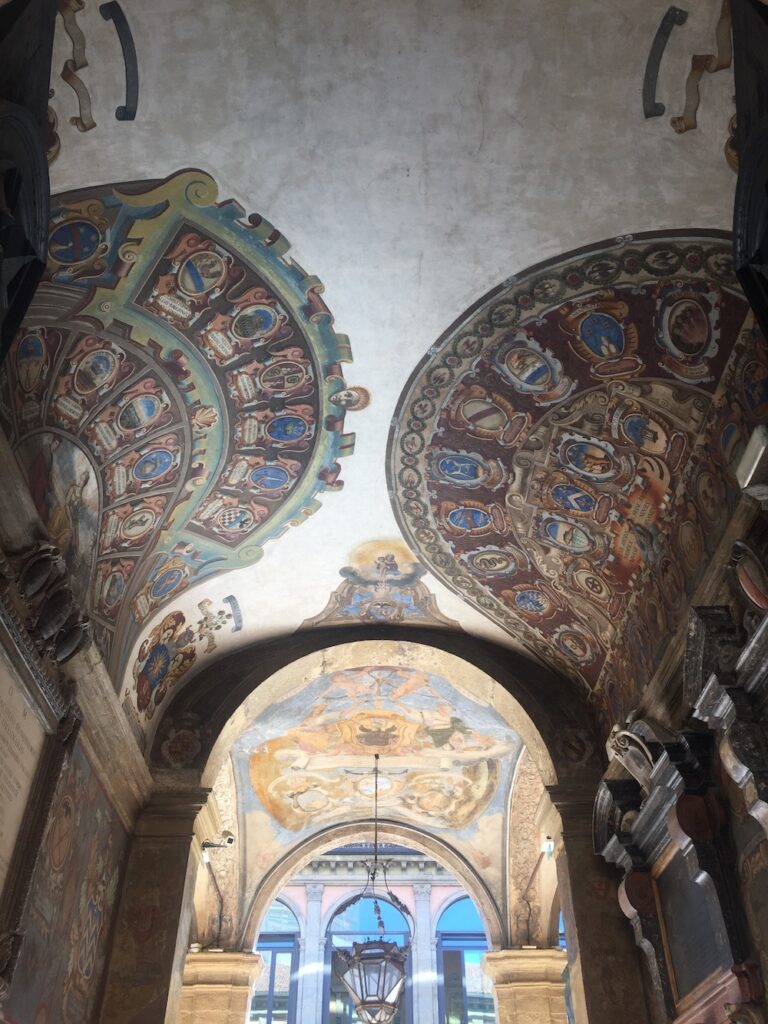
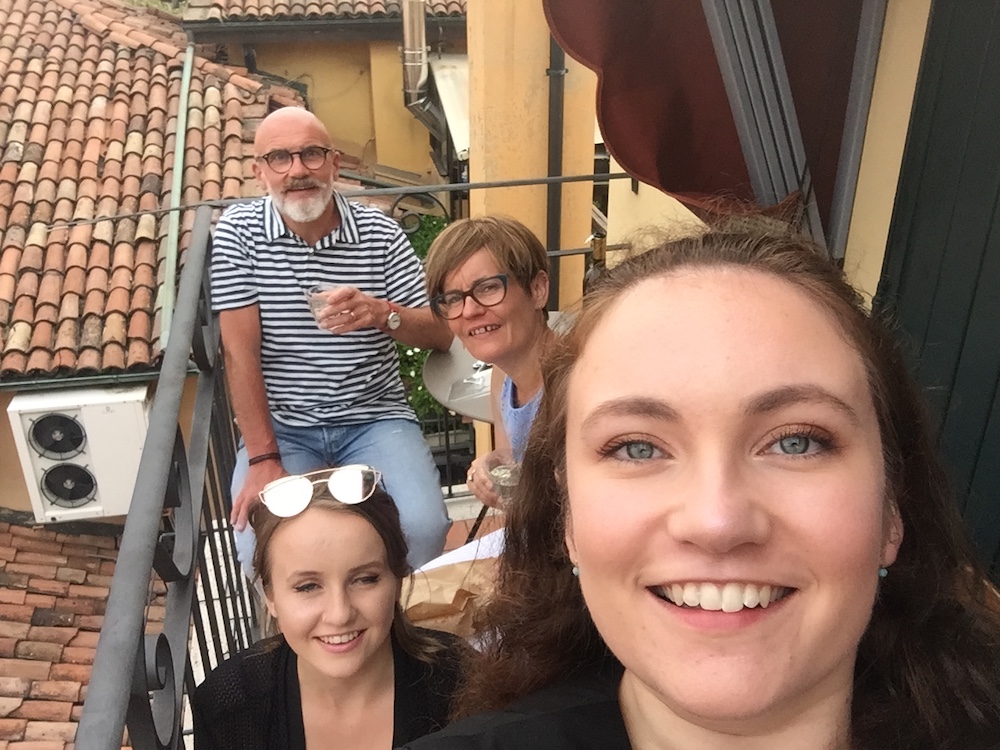
I visited Bologna with my family in 2017, and it was one of my favourite Italian long weekends – a city packed with delicious food; rich history, art, and culture; and a blend of medieval and renaissance architecture with its iconic towers and porticoes. It is also home to the oldest university in continuous operation in the world, which was fascinating to see.
The Official Recipe
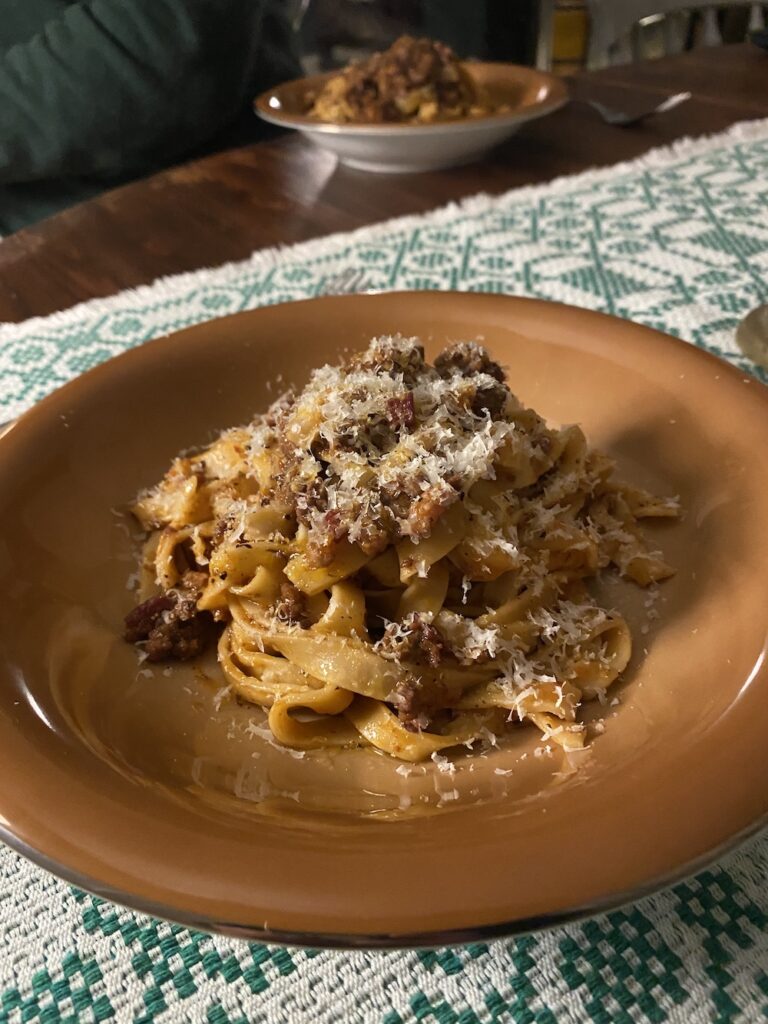
The official recipe for tagliatelle was filed at Bologna’s Chamber of Commerce on 16 April 1972, on behalf of l’Accademia Italiana della Cucina (the Italian Academy of Cuisine). It specifies that the width of tagliatelle when cooked should be 8mm (about 7mm when raw), which corresponds to a 12,270th part of the height of the city’s Asinelli Tower. The official recipe for ragù alla bolognese was filed at Bologna’s Chamber of Commerce on 17 October 1982, and updated on 20 April 2023. It lists some variants at the end, both “permitted” including the addition of nutmeg and “unacceptable” including veal, garlic, and rosemary. I have made a note below of the version of the official recipe that I like to follow, but, admittedly, I have used some of the unacceptable variants before. I hope you enjoy the recipe – buon appetito!
Ingredients for ragù (serves 4 people)
- 3 tablespoons of extra virgin olive oil
- 150g pancetta, sliced thinly
- Half an onion, finely chopped
- 1 stick of celery, finely chopped
- 1 carrot, finely chopped
- 200g beef mince
- 200g pork mince
- 1 glass of red wine
- 200g passata
- 1 tablespoon of tomato purée
- Approximately 750ml of chicken stock
- Salt and pepper
Method:
- Add the pancetta to a hot pan with the olive oil and fry until the fat has rendered.
- Add the soffritto (onion, celery and carrot) to the pancetta and sauté until translucent.
- Add the mince and cook until it is brown and any liquid has evaporated.
- Add the wine and simmer until it has reduced.
- Then, add the passata and tomato purée. Mix well and add the chicken stock.
- Simmer for a couple of hours, adding more stock or water if necessary.
- Season with salt and pepper to taste.
Ingredients for pasta (serves 4 people)
- 400g 00 flour
- 4 eggs
- A pinch of salt
Method:
I use my KitchenAid and the pasta roller attachment, but if you don’t have one or a pasta machine, you can follow the traditional method and roll it by hand. Tagliatelle gets its name from the verb tagliare, “to cut”, which you will see if you roll it by hand.
- Make a well in the flour and crack in the eggs.
- Gradually incorporate the flour and eggs until a dough forms. Knead until you have a smooth ball of dough.
- Wrap the pasta dough in cling film and leave in the fridge for 2 hours.
- Roll out the dough until it is thin enough for you to see your hand through it – it will be very delicate. If you are rolling it by hand, fold the dough over itself and cut it to shape.
- Cook the pasta in salted water until al dente – it will only need 1-2 minutes.
Serve with the ragù alla bolognese, a drizzle of extra virgin olive oil and Parmigiano Reggiano. Buon appetito!
Read “Eating Italy” Liguria by Natalia.