
From the Heart to the Hands: Dolce & Gabbana Closes on June 14 | Institute of Contemporary Art, Miami
For centuries, travelers came to Italy seeking beauty, craftsmanship, architecture, and artistic inspiration. They arrived not only for monuments and museums, but also for the atmosphere of the country itself. Italy has long transformed everyday life into an art form.
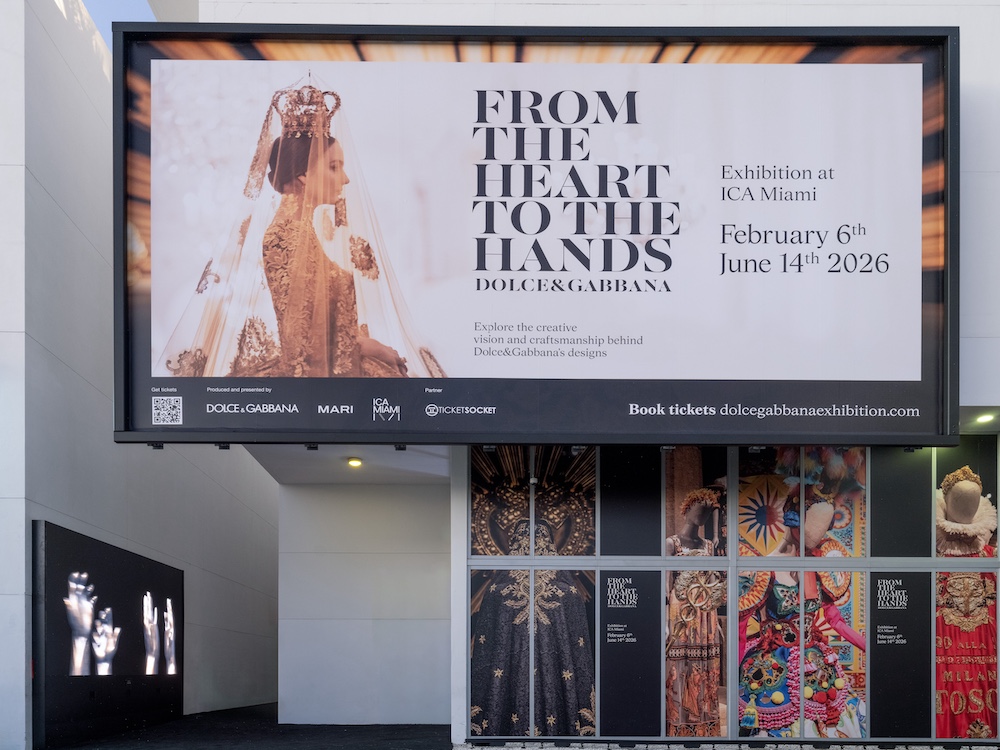
From the Heart to the Hands: Dolce & Gabbana, now on view at the Institute of Contemporary Art, Miami through June 14, continues that tradition in an unexpected way. Rather than functioning as a traditional fashion exhibition, the immersive experience unfolds as a cultural journey through Italy’s artistic, regional, and emotional identity.
Following acclaimed presentations in Milan, Paris, and Rome, the exhibition marks its first United States stop in Miami. Curated by Florence Müller, the show features more than 300 pieces and explores the creative universe of Domenico Dolce and Stefano Gabbana through architecture, opera, cinema, folklore, craftsmanship, mosaics, tailoring, and religious symbolism.
Yet perhaps the exhibition’s greatest achievement lies elsewhere. It encourages visitors to look beyond branding and reconsider what Italian luxury truly means.
Italy as Muse, Memory, and Emotional Geography
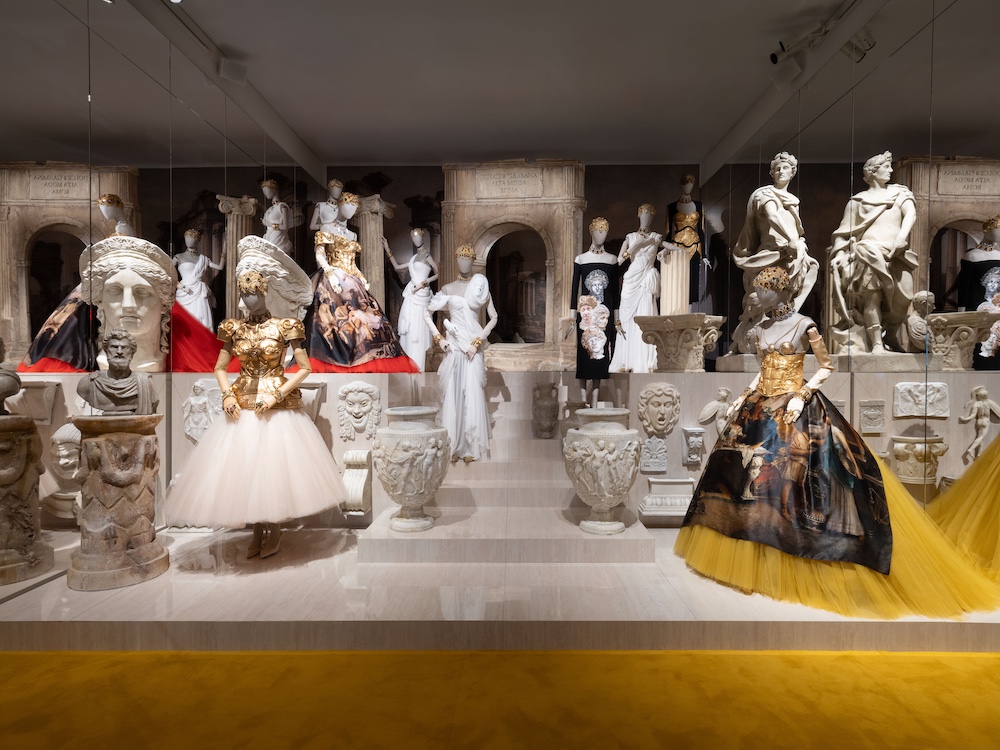
From the moment visitors enter the exhibition, Italy becomes more than inspiration. It becomes the central character.
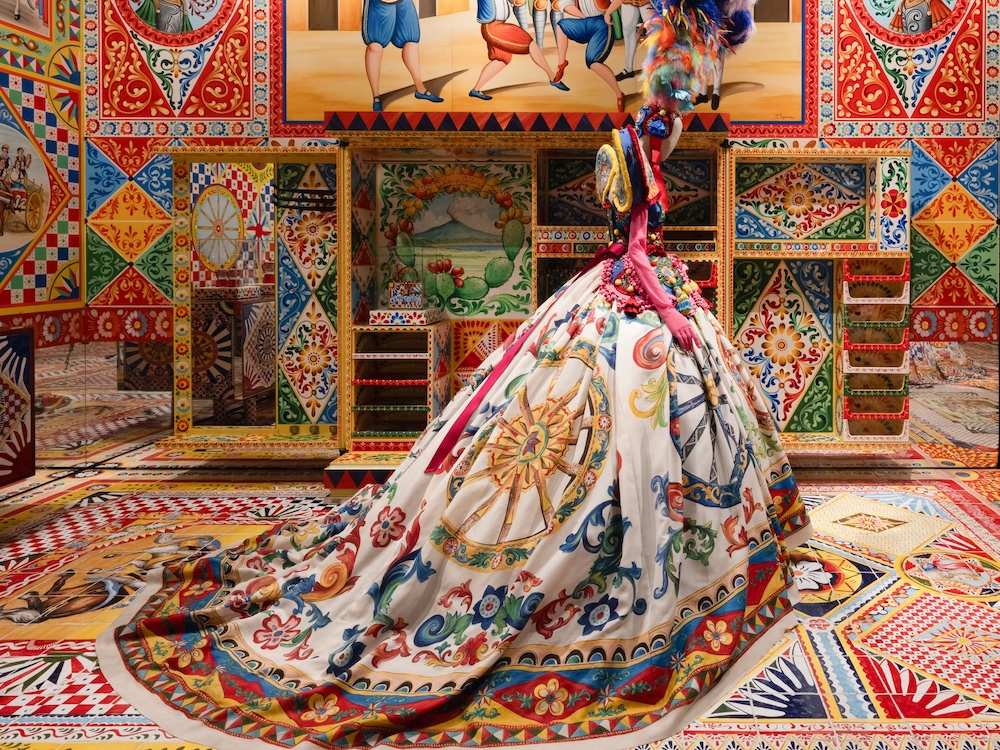
Each room explores a different layer of Italian identity. Sicily appears through color, ceramics, devotion, and folklore. Venice emerges through glasswork and Byzantine mosaics. Rome enters through grandeur, spectacle, and sacred symbolism. Milan introduces precision, tailoring, and discipline.
Rather than presenting Italy as a postcard, the exhibition reconstructs it as memory. The result feels cinematic, emotional, and deeply immersive.
This approach reflects the exhibition’s broader curatorial vision. According to the presentation materials, the rooms draw from “art, architecture, folklore, regional topographies and artisanal craft, opera and ballet, as well as the abiding spirit of the dolce vita.”
That layered storytelling gives the exhibition unusual depth. Visitors do not simply observe garments. They move through different interpretations of Italy itself.
From the Heart to the Hands — The Philosophy of “Fatto a Mano”
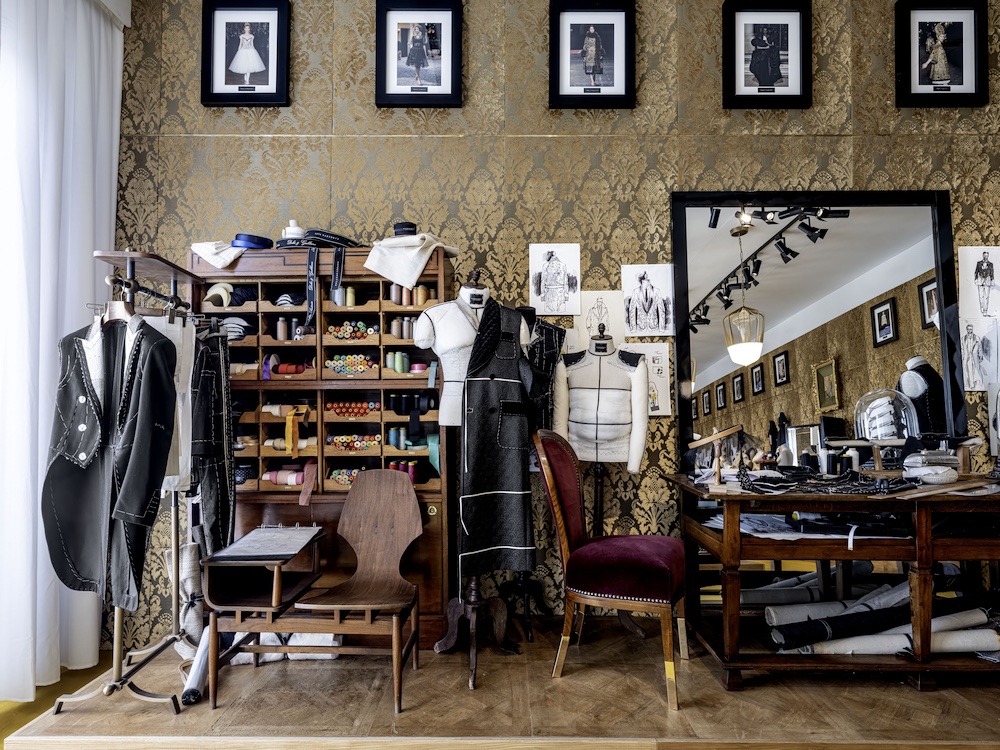
One of the exhibition’s strongest themes is the importance of handmade craftsmanship.
In an era increasingly shaped by automation and digital production, From the Heart to the Hands places human labor at the center of luxury. Embroidery, lacework, tailoring, mosaics, beadwork, and textile construction appear not as decorative details, but as cultural preservation.
The tailoring rooms are especially revealing. Sketches, corsets, unfinished structures, sewing tables, and forms expose the discipline behind the final creations. These spaces quietly dismantle the illusion of effortless luxury.
What emerges instead is something far more meaningful: patience, technical mastery, and the human hand.
The exhibition repeatedly references Italy’s regional artisan traditions, from Venetian glassmaking and Sicilian ceramics to Sardinian textiles and ecclesiastical embroidery.
This focus aligns closely with Italy’s broader cultural identity. Across the country, craftsmanship remains tied to local memory and regional pride. Many techniques survive because artisans continue passing knowledge between generations.
In this context, “Made in Italy” becomes more than a label. It becomes a living cultural language.
Fashion as Architecture, Opera, and Cinema
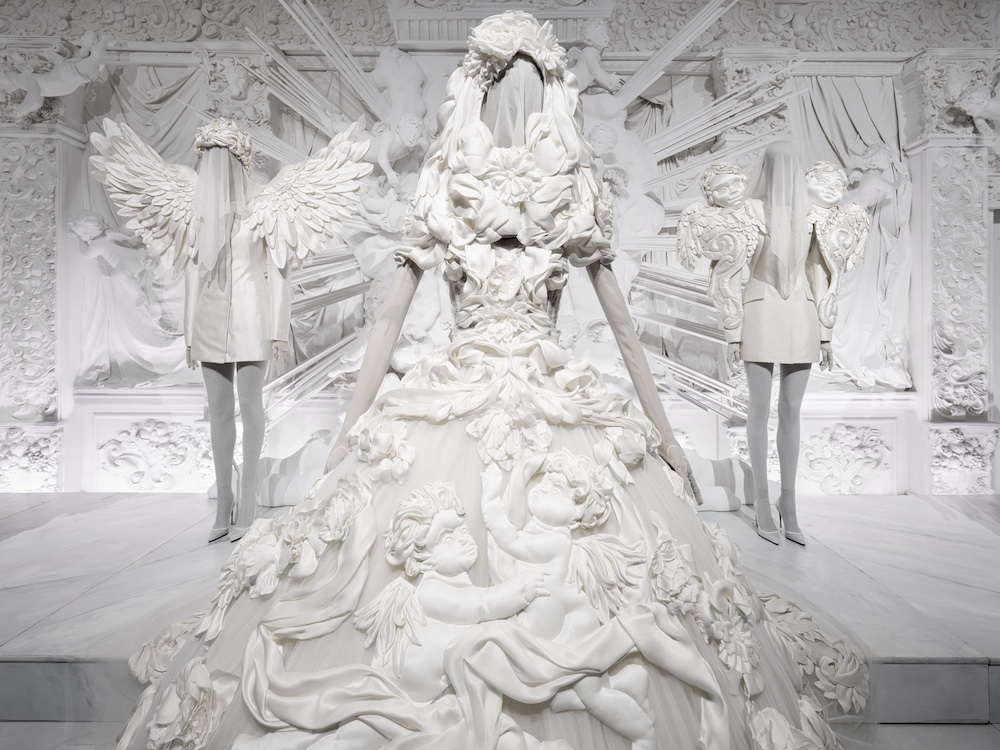
One of the exhibition’s most fascinating qualities is its refusal to separate fashion from other art forms.
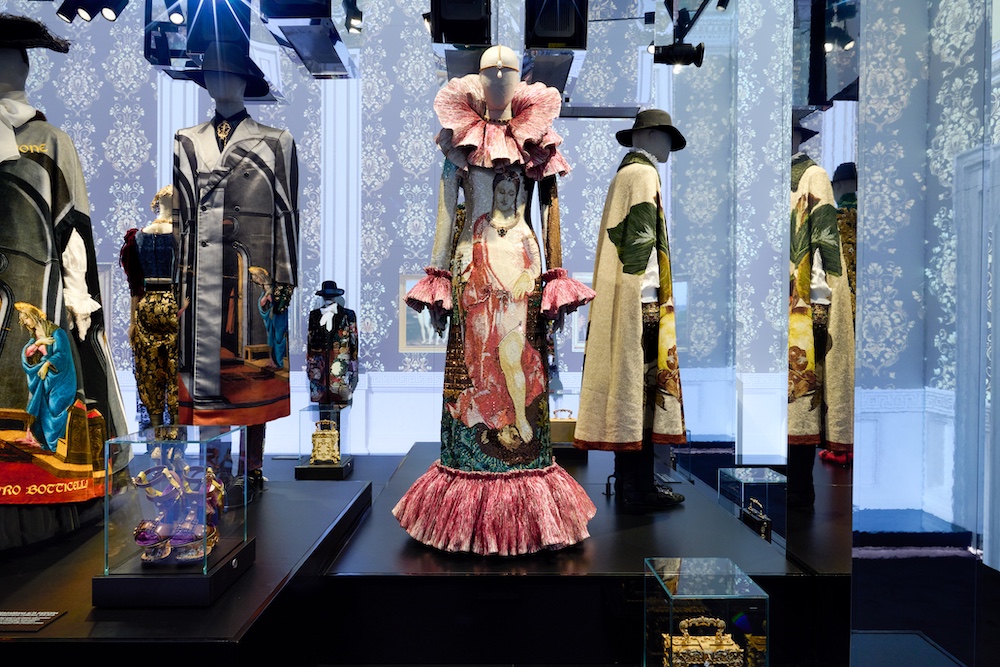
The rooms function almost like theatrical stage sets. Some resemble opera scenography. Others evoke film production, sacred spaces, or sculptural installations. Mirrors, lighting, mosaics, marble references, and immersive sound design transform the garments into part of a larger visual narrative.
The white Baroque room is particularly striking. Without relying on color, the garments emphasize silhouette, texture, and sculptural volume. The pieces feel closer to marble statuary than traditional couture.
Elsewhere, Ancient Rome appears through dramatic columns, imperial references, and cinematic grandeur. Byzantine mosaics shimmer beside richly embroidered garments. Sicilian references explode through color and ornamentation.
This blending of disciplines reflects a distinctly Italian artistic tradition. In Italy, architecture, opera, painting, cinema, sculpture, and fashion have long existed in conversation with one another.
The exhibition also references directors such as Luchino Visconti and draws inspiration from opera, ballet, and religious processions.
The result feels less like a museum survey and more like immersive visual storytelling.
Sacred Beauty and Italian Visual Culture
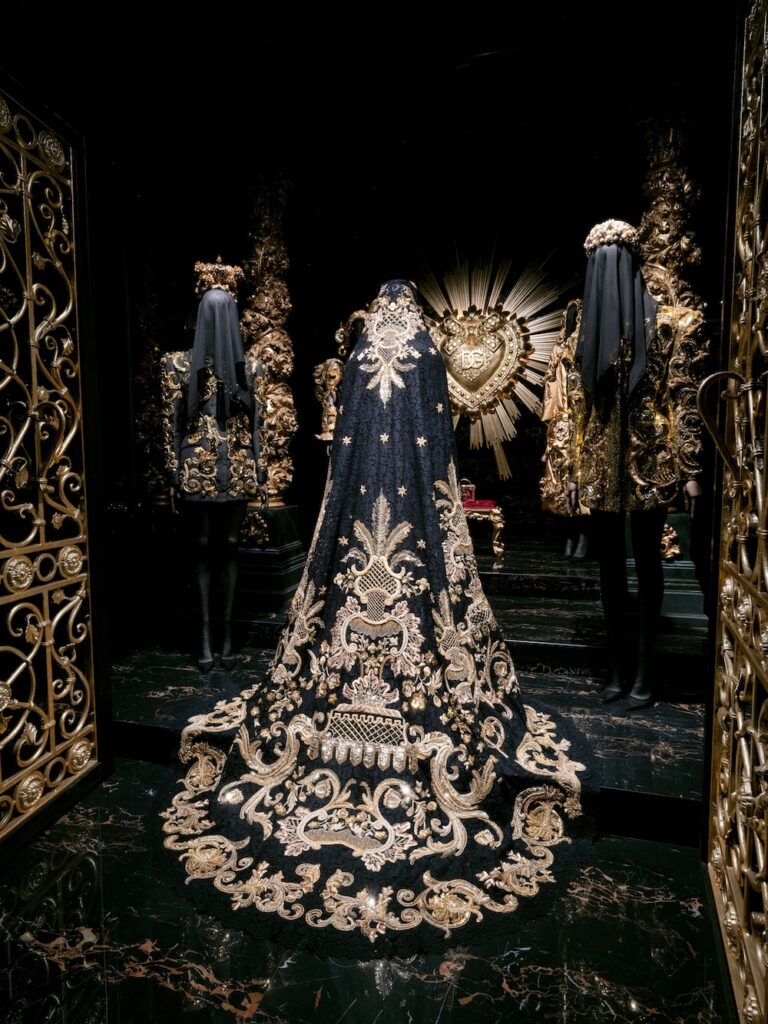
Religious imagery plays a major role throughout the exhibition. Yet the presentation feels less controversial than anthropological.
Italy’s visual culture has long intertwined beauty, ritual, craftsmanship, and devotion. Churches across the country demonstrate this relationship through mosaics, sculpture, frescoes, embroidery, gold leaf, and ceremonial objects.
From the Heart to the Hands explores this tradition through elaborate ecclesiastical references, jeweled garments, lace veils, crowns, sacred hearts, and richly embroidered ceremonial pieces.
Some rooms evoke processions or cathedral interiors. Others resemble private chapels or theatrical interpretations of spiritual ritual.
These spaces reveal how deeply Catholic aesthetics shaped Italian visual identity across centuries. Even today, traces remain visible throughout Italy’s festivals, architecture, and artisan traditions.
The exhibition approaches these references not as costume, but as cultural memory.
“Step into the world of Domenico Dolce and Stefano Gabbana, where magic and fantasy, legend and reality intertwine.”
— Florence Müller, exhibition curator

The Grand Tour Reimagined for a Contemporary Audience
Historically, wealthy travelers embarked on the Grand Tour to experience Italy’s artistic and intellectual treasures firsthand. Cities such as Rome, Venice, Florence, and Naples became essential cultural destinations for generations of artists, writers, and aristocrats.
In many ways, From the Heart to the Hands revives that tradition for a contemporary audience.
The exhibition guides visitors through different interpretations of Italy’s regions, histories, and artistic languages. Sicily appears through ceramics and folklore. Venice emerges through glass and Byzantine light. Rome becomes theatrical and imperial. Milan introduces precision and tailoring.
The journey feels emotional rather than chronological.
That distinction matters because Italy itself often functions this way for travelers. The country is not experienced as a single identity, but as a collection of layered regional cultures, traditions, dialects, aesthetics, and histories.
This exhibition understands that complexity.
Why Miami Makes Sense
At first glance, Miami may seem like an unexpected destination for this exhibition. Yet the city proves remarkably compatible with its visual language.
Miami’s relationship with design, contemporary art, architecture, luxury hospitality, and international culture creates a fitting environment for the exhibition’s American debut. The Institute of Contemporary Art, Miami also positions the show within a broader dialogue about contemporary visual culture.
There is another connection as well.
Like southern Italy, Miami embraces theatricality, color, sensuality, ornamentation, and cultural hybridity. The exhibition’s Mediterranean spirit feels surprisingly at home within the city’s tropical and international atmosphere.
The Miami presentation also introduces new Rome-inspired rooms first unveiled after the exhibition’s earlier European stops. These spaces draw from Dolce & Gabbana’s Alta Moda and Alta Sartoria collections presented in Rome in 2025.
The result transforms Miami into more than a host city. It becomes the latest chapter in the exhibition’s evolving cultural journey.
Beyond Luxury, Toward Cultural Continuity
What ultimately distinguishes From the Heart to the Hands is its insistence that luxury is not merely about exclusivity.
Instead, the exhibition suggests that true luxury may lie in preservation:
preserving craftsmanship, regional identity, cultural memory, artistic dialogue, and human skill.
That message feels especially relevant today.
In a global landscape increasingly shaped by sameness and rapid consumption, the exhibition argues for specificity, locality, and the enduring value of handmade work. It reminds visitors that beauty often emerges from patience, tradition, and emotional connection.
For Live in Italy Magazine readers, that philosophy may feel familiar. Italy’s greatest cultural experiences rarely come from surface-level consumption. They come from deeper engagement with artisans, traditions, history, regional identity, and storytelling.
From the Heart to the Hands captures that idea beautifully. As the exhibition approaches its June 14 closing in Miami, we look forward to sharing more from our own visit across Live in Italy Magazine’s social platforms. Additional information and tickets are available at dolcegabbanaexhibition.com.