
Inside Olive & Atlas: Traveling Deeper in Italy
For Italian American Heritage Month and our October edition, Heritage: A Sense of Place, we continue exploring the ties that connect people to Italy across generations, geography, and experience.
For Angela Isherwood, founder of Olive & Atlas Travel Design, that connection began long before travel became her profession. Raised in Milwaukee by an Italian American family with roots in Sicily, Naples, and Calabria, Angela grew up surrounded by traditions centered on family, food, and time spent together.
Then, at 13, she visited Italy for the first time.
While traveling south toward Sorrento, Angela remembers looking out the window and experiencing something difficult to explain: a feeling that she had arrived home.
Today, that connection shapes the way she approaches travel. Through Olive & Atlas, Angela creates bespoke journeys designed around how travelers want to experience a place rather than simply what they want to see.
Our conversation moves from Italian American identity and family traditions to the meaning of luxury travel, la dolce vita, Italy’s strong regional identities, overtourism, and why slowing down may be one of the most valuable things we can bring home from Italy.
Listen to the full conversation on Italy Answered while following along with this edited transcript on Spotify, Apple Podcasts, or YouTube.
You grew up in a strong Italian American family. Tell us about your background and some of the traditions that shaped you. (02:00)
I was born and raised in Milwaukee, Wisconsin, and I’m still here. My father was an immigrant from Sicily when he was a young boy. He immigrated here with his mom and dad and four siblings. They moved straight to Milwaukee because my nana had a sister here.
My mom was born in Chicago and raised in an all-Italian neighborhood. Her grandparents were from Naples and Calabria, so I come from very Southern Italian roots.
When it’s your life as a young child, it’s hard to recognize that it may be different from other people’s lives. But because we were living in Wisconsin, where there is a very high German and Polish demographic, our Italian roots really stood out.
My dad grew up in a part of Milwaukee with a high Italian concentration, and all of their friends were Italian. Both my mom and dad grew up with that connection to Italy and Italian American culture. When we came along, it was continued and instilled in us from day one.
My nana, my dad’s mom, never spoke English. They always spoke Sicilian in the home—not necessarily Italian, but Sicilian. My mom never learned the language because her parents were really trying to learn English at a time when people were acclimating to being Americans.
We had pasta Sundays. Everything was around family. We were always surrounded by my grandparents, aunts, and uncles. Every holiday was a huge celebration, and it was always “the more, the merrier.”
We had plenty of aunts and uncles who weren’t actually blood-related but were somehow connected through our Italian heritage and all the years of growing up together.
Those roots are so important to me, even today. We still try to keep Sundays as a sacred family day for pasta or just cooking and sharing a meal together.
I remember growing up, even at Thanksgiving, we always had pasta and other Italian dishes. None of my friends did the same, and I didn’t realize it was strange until I got a little older.
I still appreciate all of those things about my roots, and I hope I can share them with my kids.
You have said that you felt a strong connection to Italy from your first visit. What do you remember about that experience? (06:58)
I can remember it like yesterday. I was either 13 or 14, a freshman in high school, and we were taking our first trip to Italy.
It was a big deal to go to Europe, especially as a family of four. We did the full classic two-week trip: Rome, Florence, Venice, and then we ended up in Sorrento. Everything was done by train, including the overnight from Venice down south.
I loved Rome, Florence, and Venice. But when we got off the train and were driving in a car down to Sorrento, I don’t know what it was. I don’t know if it was the lemon trees. There was just something in the air.
Looking out the window, I remember taking a deep breath and thinking, “Oh, wow. There’s a connection here. It feels like I’ve arrived home.”
I loved Sorrento and being in Southern Italy. Of course, I love all of Italy, but Southern Italy is where my roots are, and in that moment, I felt it so deeply.
How did that love of travel eventually become your career and Olive & Atlas? (08:50)
It wasn’t my plan at all. I went to UW–Madison and graduated with an economics and international studies degree. I’ve always loved travel, and I’ve always loved Italy, but I never thought it could be my life the way it is today.
After college, I worked for Kohl’s and had a successful career there. I really loved what I was doing. But in my free time, especially before I had children, my husband and I traveled all the time.
I always wanted to be researching travel. Instead of reading Vogue, I was leaning more toward Travel + Leisure and Condé Nast Traveler, always educating myself about the next trip.
At one point, around 2018, I took a leap to join the travel industry. I had no idea what the industry was made of, how it worked, or how complex it was. I found a local company to hire me so I could learn, and that was an amazing journey.
It opened my eyes not only to travel but to the business side of it and the opportunity to create something that really didn’t exist ten years ago: this customized, thoughtful, tailor-made approach to creating trips that mean something at the end of the day and aren’t just a checklist of sights and big tour buses.
When COVID happened, that was really my linchpin to go off and create Olive & Atlas. I had enough knowledge about travel, and I was learning how to start a business that meant something to me and that I thought could fulfill a need in the market.
So far, we’ve been right.
“Bespoke” has become a popular word in travel. What does it actually mean to you? (11:50)
I’ve noticed in my six years in this space that there are a lot of travel buzzwords thrown around constantly by companies, influencers, and people. But we all have our own spin on them, and we all deliver on them a little differently.
To me, bespoke isn’t just someone coming to me saying they want Rome, Florence, and Venice, and I’m going to put that together based on their interests. Yes, at the base, that’s what we’re doing.
But what it really means is listening super deeply on that first consultation call. It’s not meant to hear where they want to go. It’s really meant to listen to how they want to feel.
What exactly are they trying to get out of this trip? When they leave, what do they want to return having seen, felt, heard, and remembered? What are the memories they’re trying to bring back?
Everybody comes on that call wanting to tell me they want to go to the Colosseum or they want to do this or that. But then I start to turn it around a bit.
How do you like to structure your day? What pace do you like to go at? What are your favorite things you’ve done in the past? Do you have hobbies? Are you hikers? Are you bikers? Do you have a strong preference for a certain type of food or an aversion to another?
We try to dig deeper. If they tell us they’re really into Caravaggio in Rome, we can craft an entire day in Rome just around him.
It’s really listening to who they are as people and what makes them come alive, and not just trying to fit them into the traditional boxes of an Italian itinerary.
Is it okay to visit Italy’s famous landmarks and still have an authentic experience? (14:37)
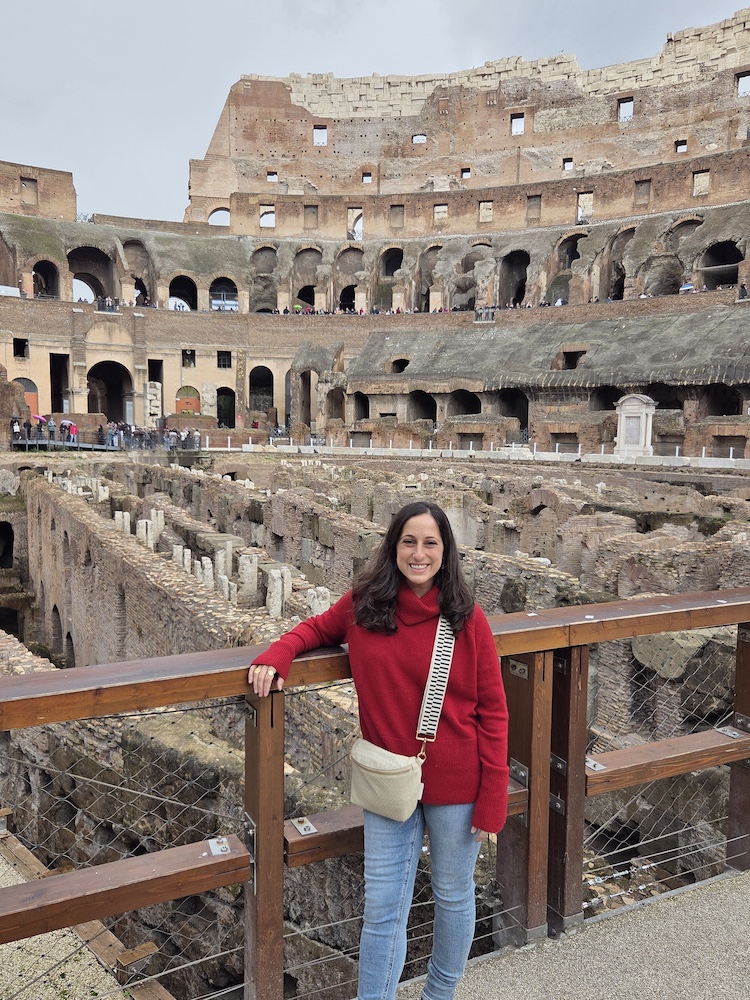
I love this question because it’s a recurring theme.
Our job really is not to be an agent between the booking and the client. We’re an advisor. We’re guiding and consulting.
So many people come and say, “We don’t want to do anything touristy.”
Well, if you’ve never been to Rome before, yes, going to the Colosseum is touristy. It’s a tourist landmark, but it doesn’t make it less incredible because it’s a tourist landmark.
The same thing with Venice. Yes, Venice is crowded. I hear this all the time from clients: “We’ve heard people hate Venice,” or complain that it’s crowded, hot, and not worth it.
But that’s because people don’t know how to approach Venice.
Maybe they’re going to stay in Cannaregio. Maybe they’re going to stay outside of San Marco and have a place to retreat to at night and in the morning that’s more peaceful. When you walk outside your door and through the little alleys, canals, and bridges, there are parts of Venice where nobody is there. Dorsoduro is the same.
Then you do the touristy things. Of course you’re going to go to St. Mark’s, but we’ll put you with a local guide who will show you the highlights and really tell you what you need to see and how to see it well.
Then they’ll take you to the hidden corners. They’re locals.They live there and breathe it. They can bring it to life in a way that the average tourist isn’t seeing.
So we’re trying to match that. Yes, you see the big things, but you also see the more unusual things.
We also hear the word “luxury” constantly in travel. What does luxury travel mean to you? (17:17)
Our ethos, at its core, is that luxury is the ability to be somewhere and not feel the pressure or stress of having to coordinate everything on your own or make sure you’re getting from point A to point B without any missteps.
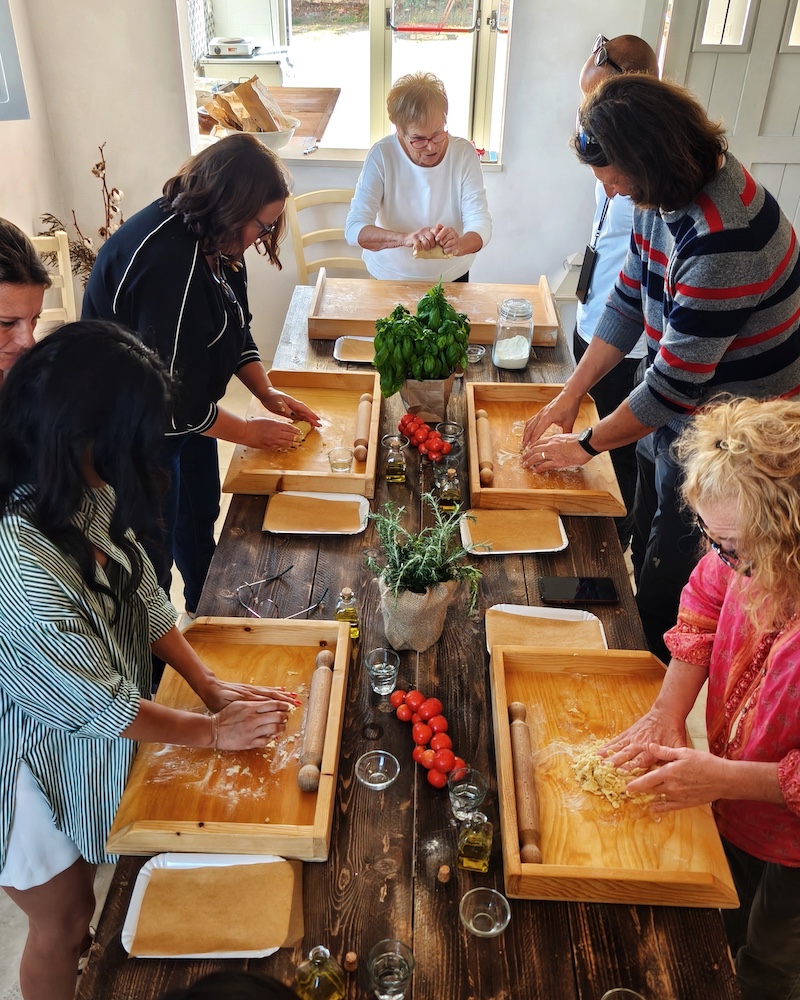
It’s about the ability to be present.
Especially if it’s a family or a couple celebrating something special, they don’t want to be on their phone trying to figure out the next train to take or what restaurant they should go to.
Our clients come back and say, “I was in the moment. I was experiencing everything. I was enjoying it and not managing it.”
That, to me, is life’s greatest luxury.
As somebody who’s managing a business and has two small kids and knows how hectic the day-to-day is, to actually be able to turn off and appreciate what’s happening around you is such a blessing.
The other component is the luxury of access. That’s so much more than the cost of the trip or the fanciness of the hotel.
It’s about connecting people to the people who ultimately make the journey touch the heart. You might love a monument. You might stand in awe of the Tuscan landscape and think how beautiful it is. But when you go home, you remember the people you met.
We can connect people to some of the most incredible artisans, producers, guides, and historians Italy has to offer.
Olive & Atlas also hosts small-group adventures. How are those journeys different? (19:40)
We do an annual Olive & Atlas small-group adventure. We don’t only go to Italy because we have a lot of repeat clients who come with us elsewhere, but we mostly go to Italy.
It’s a journey where I am the host, not a guide. I would never tell anybody that I’m qualified to be a guide in Italy.
I’m really operating as the host and creating the itinerary from the perspective of: How do I want to see this place? Where have I been before that I fell in love with and really want to share?
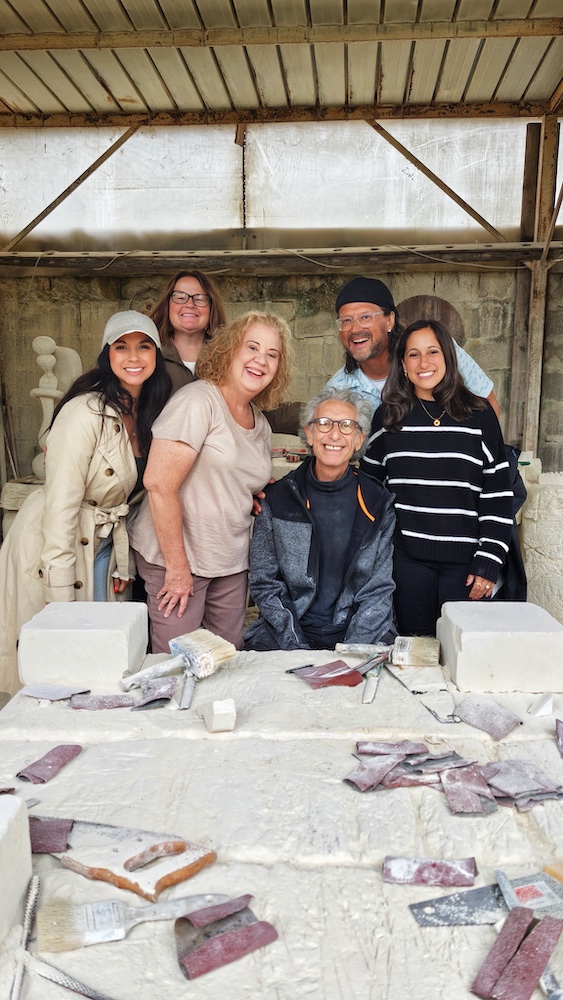
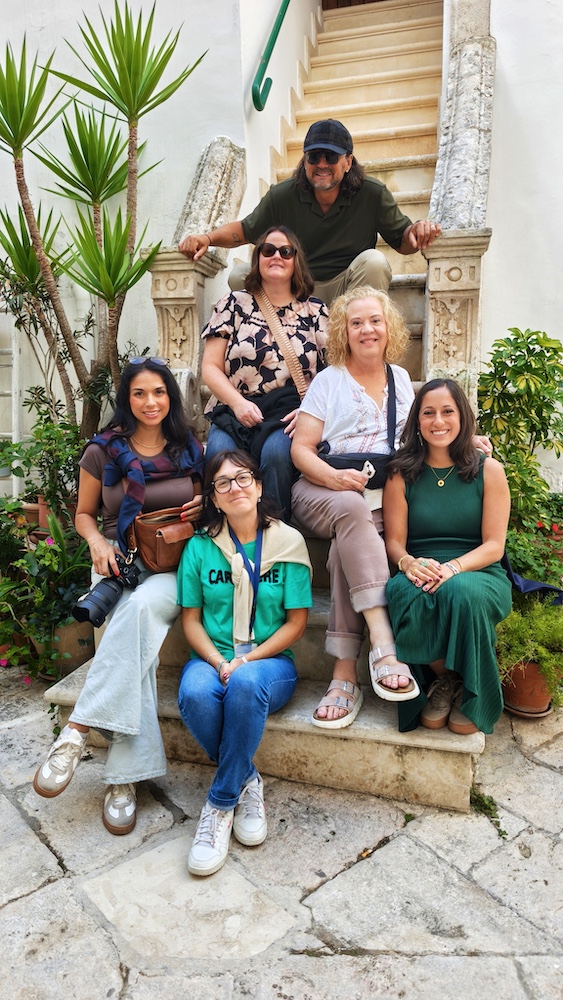
The journeys are really small. We take eight, maybe ten people maximum, plus myself.
They connect people to authentic experiences. They’re built around what we just talked about, which is people. It’s not as much about landmarks, and we don’t go fast.
You’ll never see, for me, a Rome-Florence-Venice itinerary. In September, we’re going to Sicily, and it’s nine days just in Sicily. Last year it was Puglia, and it was a week just in Puglia.
We like to go deep.
Many Italians would say they don’t live la dolce vita every day. Yet visitors often return home feeling they’ve experienced something they struggle to find in their own countries. What do you think that “something” is? (23:36)
It’s such a good and nuanced question, and I feel like it has a lot of different answers depending on who I’m speaking to in Italy.
I’m in the hospitality business, so when I’m going over there and meeting partners, they’re very used to tourists and comfortable talking to tourists. They want, to some degree, to share their culture and the beauty of what they know people are coming to experience.
But it’s also so important for Americans, and whoever is going to Italy, to understand the reality behind the dynamics of what goes on in that country and how life truly is when you’re not the vacationer and you’re actually the citizen.
We love to make sure our clients have a little bit of that dialogue with our guides. They should feel free to ask questions about what life is really like and have people share the hardships along with all the beautiful blessings.
Of course, there are economic factors at play for the people who live there. There are all sorts of things, just like here. There’s everyday life that Italians have to live. Everything is not a vacation. It’s not what you see on Instagram, that they’re just summering at the beach from June to August.
They still have to go to work, raise families, and go to school.
But I think what Italians do that we can’t necessarily understand—or that is harder for us to embrace—is separate from some of those pressures of daily life and appreciate the joy of living without feeling guilty about it.
When I say la dolce vita or dolce far niente, to me, it’s a way of life that Italians tap into. They can keep their humanity in a way that we don’t regularly do or can’t necessarily access in the same way that they’ve developed in their culture.
I think it’s one of the most beautiful things about what it means to be a true Italian, because there is this desire not to let anything overtake what’s really important.
What’s really important is family. It’s time with friends and downtime. It’s appreciating life while you’re living it.
Is there something travelers can bring home from Italy beyond memories and photographs? (27:12)
Everything I just said is really at the root of that question.
To give it some context, I recently had clients share something with me. It was a beautiful couple celebrating their tenth anniversary. They had three small kids at home, and this was a really special trip for them.
They’d never been to Italy before. They had a general idea of the type of trip they wanted but were really open to our suggestions and expertise. They wanted unique locations, beautiful views, really cool hotels, and some food and wine experiences.
When she texted me on the day they were leaving, she wrote this beautiful message in Italian. She doesn’t speak the language, but that’s how deeply she wanted to convey her feelings in the proper language.
She said, “We learned the importance of slowing down.”
They learned that it’s all about the people. One of the chefs said to them, “The secret ingredient is always love,” and that was a phrase she was taking home.
It was heartwarming to me because she said everything that we would want a client to take home.
She felt that connection with the place, with the land, and with the people that is totally different from what we experience in our day-to-day lives.
She’ll probably go right back into the rat race when she gets home, but she’ll have that memory to reflect on and maybe change a couple of things about her life that she otherwise wouldn’t have.
Once Italy gets in your blood—and she already wants to go back—it’s one of those things that’s hard to tangibly talk about until you’ve felt it.
Do you see Italian American travelers looking for a deeper connection to their heritage when they visit Italy? (29:34)
Yes. I have a fun story.
About four years ago, I had some family friends who are my parents’ ages. My dad owns an Italian restaurant in town, so they’ve been longtime loyal customers of his.
They’re from New York. They’re both Italian American. He had never been to Italy before. She had been many years ago with her grandma one time and had never returned.
When they approached me about their trip, they were very insistent that it was going to be a once-in-a-lifetime trip. They had to get everything in because they would probably never be able to go back.
We planned this amazing itinerary from the north to the south, with some of the highlights they wanted but also some gems that we added for them.
First of all, they fell in love.
They would text me every single day with pictures, and they were making friends with their guides, skippers, and drivers—people they still talk to today, four years later.
My favorite thing about this story, and I tell them every time I talk to them, is that their once-in-a-lifetime trip has now been three trips in four years.
They keep going back because they fell in love and felt that Italian American connection.
When you have that root and you go and fall in love with the people, you just have to go back.
How important is it for travelers to understand Italy through its different regions? (31:54)
It’s something we talk about all the time with our clients.
I was just having dinner with our Sicily group at a little meet-and-greet, and we were talking about this exact thing: Sicilians don’t consider themselves Italians. They will come to you and tell you they’re Sicilian.
I always remind our clients, when we talk about the different regions and how diverse they are, especially if they’re trying to do too much in one journey, that they’re going to get 20 different Italys depending on how we put this together.
We can give them such a variety of experiences if we map it out carefully and thoughtfully based on who they are and what they’re looking for.
It’s also fun to remind people how young Italy is as a unified nation. Most people don’t understand that.
We like to educate them about the food differences, cultural differences, and even personality differences in the people. They vary greatly depending on where you are in the country.
What does Italian American Heritage Month mean to you, and how do you think it should be celebrated? (33:26)
To me, it’s reflecting on what draws people to Italian culture.
The crux of it is the human approach and the appreciation for conversation, for time together, for a long lunch.
Of course, Italians care deeply about the quality of their food, but a meal is not about the food to them. It’s about sharing that moment with people you love and taking the time to be together.
I think, as Italian Americans, if we can remember that during this time and do a little extra to be more present, put our phones down, invite family over to celebrate with pasta and wine—or whatever it may look like for your individual family—it’s putting people at the center of your life.
It’s what Italians do so well, and it’s what I hope I continue to try and emulate in my own life.
How are you passing that connection to Italy and your heritage on to your children? (35:01)
There are moments when I’m like, “Oh my gosh, am I giving my kids everything that I had growing up?”
Of course, the dynamics are a little different in my household today. But we still spend so much time together. I make sure they’re with their grandparents.
We take them back to Italy at least once a year. I make sure they’ve already met their cousins in Sicily, and they’re learning the language.
We try to continue those traditions and instill them, and I hope we continue to carry them forward.
I don’t do it probably as well as my parents did, so I’m always trying to figure out how I can reset my own life to get more in touch with what I grew up with and what is so good in Italy, so my kids can appreciate that and continue to pass on those traditions as well.
Looking ahead, what do you want Olive & Atlas to become? (36:24)
I have so many visions for the company and for what I want.
But at the end of the day, what makes us so unique and special is that we are small and very hands-on.
As much as I love the growth and want to continue to grow to a certain degree—to help more clients and more travelers see the best of Italy and other destinations around the world—I also want to keep our team small enough that everyone feels a personalized approach from us.
I never want us to be so big that clients can’t get us on the phone or feel like they’re just a number in our system. That’s never who I want to be as a company.
We know every client—their allergies, their preferences, every detail of their itinerary—and we take that very seriously.
For me, it’s continuing to grow in my expertise in what we offer in our destinations, particularly in Italy. It is my mission to get to all 20 regions, probably within the next year or two, and continue to move people to other parts of the country to help support and preserve the traditions and not be part of the overtourism problem.
If somebody asks me for Tuscany, a lot of times I will offer Piedmont. I’m hoping to get to Le Marche this year so I can really become an expert in some of these other regions where we can confidently funnel our travelers and give them an experience they didn’t even know to ask for.
Finally, if you could give travelers one piece of advice before they visit Italy, what would it be? (38:15)
If they take anything away from this conversation, I hope it’s that when they approach a trip to Italy, they approach it understanding that they cannot see it all.
Hopefully, don’t even try.
Really think deeply within yourself: What do you want to get out of it? What’s most important to you?
Build your itinerary thoughtfully around that idea as opposed to just a checklist of monuments.
What’s Ahead for Olive & Atlas
Olive & Atlas’ 2026 small-group journey is fully booked, while a very small group trip to the Dolomites is planned for late June 2027. Planning for 2028 is also underway.
To learn more about Angela Isherwood, Olive & Atlas Travel Design, bespoke travel planning, and upcoming small-group adventures, connect with Olive & Atlas:
www.oliveandatlastravel.com | Instagram | Facebook | LinkedIn