
Nestled between the Apennine Mountains and Adriatic Sea, Abruzzo sits about 50 miles east of Rome. The region remains unspoiled by the hordes of tourists that invade other parts of the country. Abruzzo is where north meets south, and landscapes shift from sandy beaches to rocky mountains. National parks cover roughly one-third of the region, preserving vast wild areas. More than 43 miles of Abruzzo’s coast form a UNESCO World Heritage stretch. And we cannot, of course, forget the food.
The Green Region
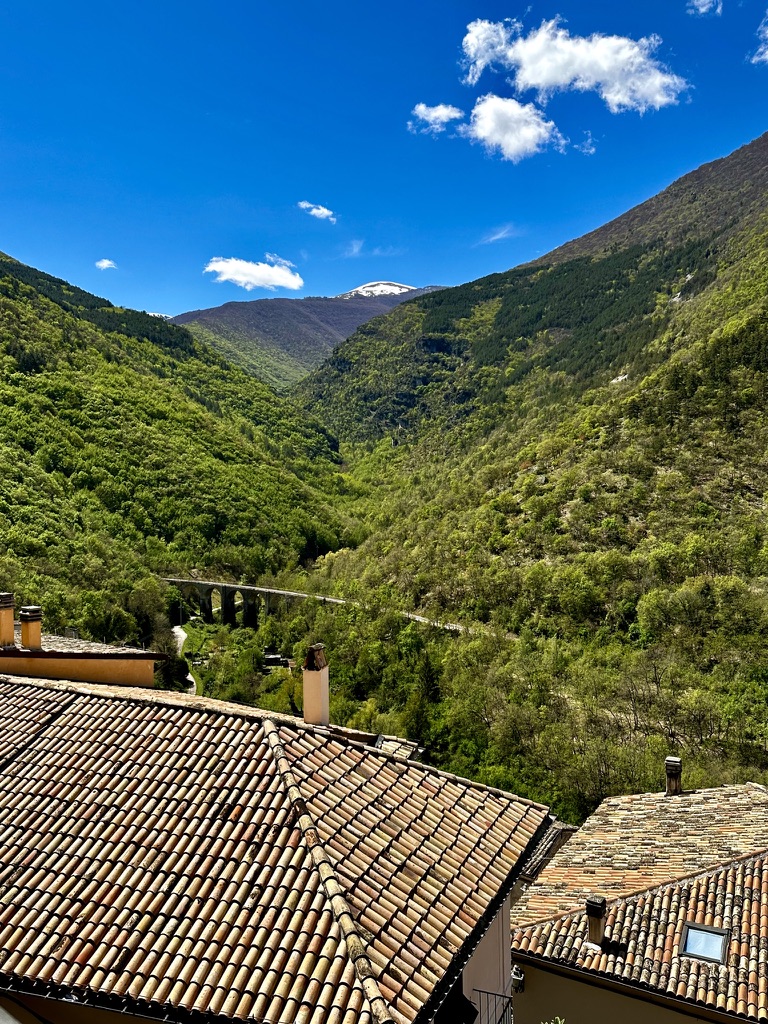
Dubbed the “Greenest Region in Europe,” Abruzzo boasts three national parks and one regional park. More than 35 protected reserves shelter rare European species and fragile ecosystems. These reserves protect golden eagles, Marsican brown bears, Abruzzo chamois, and Apennine wolves. Protected areas help guarantee the survival of about 75 percent of Europe’s living species.
The abundance of nature provides a wealth of year-round outdoor activities.
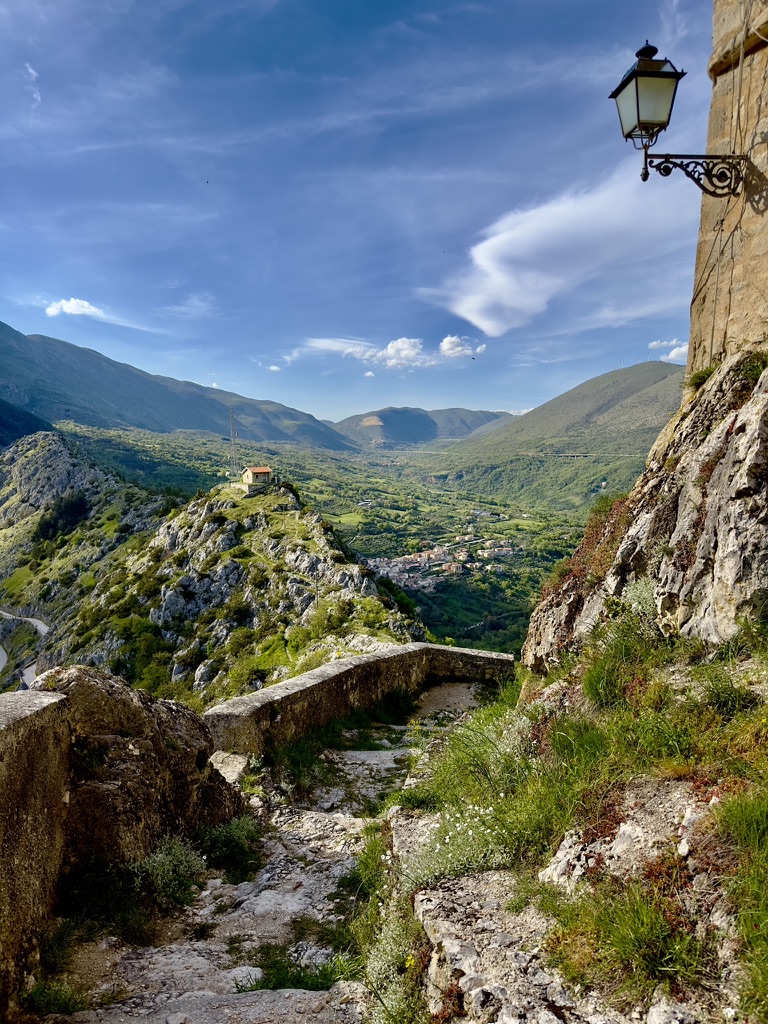
The Apennines on the western border are perfect for walking, hiking, and cycling most months. There are over 30 walking routes winding across the region, lasting two to ten hours. Guidebooks and route collections are easy to find online and on Amazon. Abruzzo also offers more than 35 marked hiking trails. You can find many routes via All Trails.
Winters bring plenty of snow to the mountains and resorts across the region.
Eighteen ski resorts offer about 91 lifts and roughly 151 slope miles. Skiers and snowboarders should check Ski Abruzzo for updated lift and slope information.
A trip from the mountains to the sea rarely takes long anywhere in Abruzzo.
The region’s 85 miles of coastline vary from wide sandy beaches to pebbly coves.
North of Pescara you’ll find fine sands; southward, the shore becomes rockier and quieter. The famous trabocchi, ancient fishing platforms, dot the 43-plus mile coastal stretch. These wooden structures date to the fifteenth century and many now serve as restaurants.
Kings of the Hills
Abruzzo lacks the large cities or major museums seen in other Italian regions.
Instead, it offers a plethora of medieval hilltowns perched on defensive ridgelines.
These towns tumble down hillsides and offer sweeping views of the countryside below. Abruzzese towns have earned 27 “Borghi Piu Belli d’Italia” awards. The awards honor beauty, livability, and cultural, historical, and artistic importance.
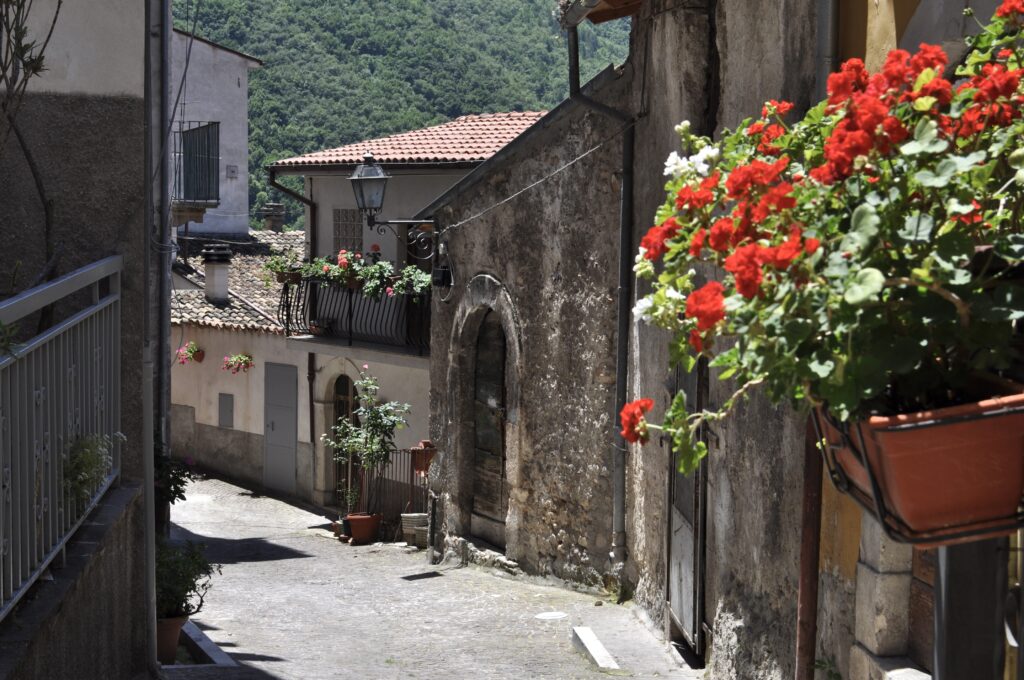
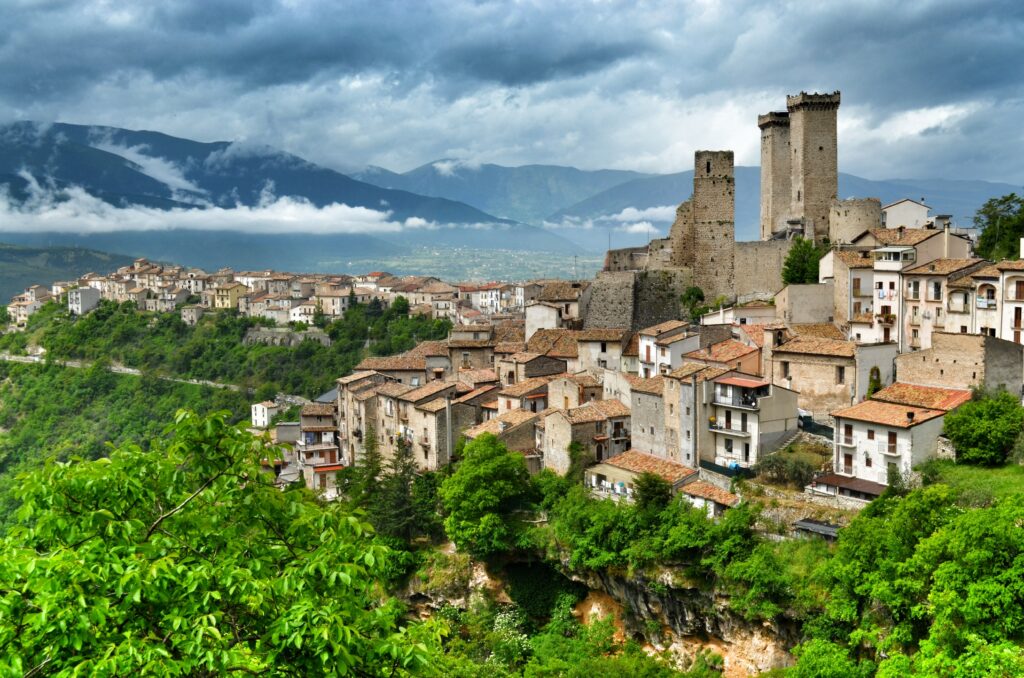
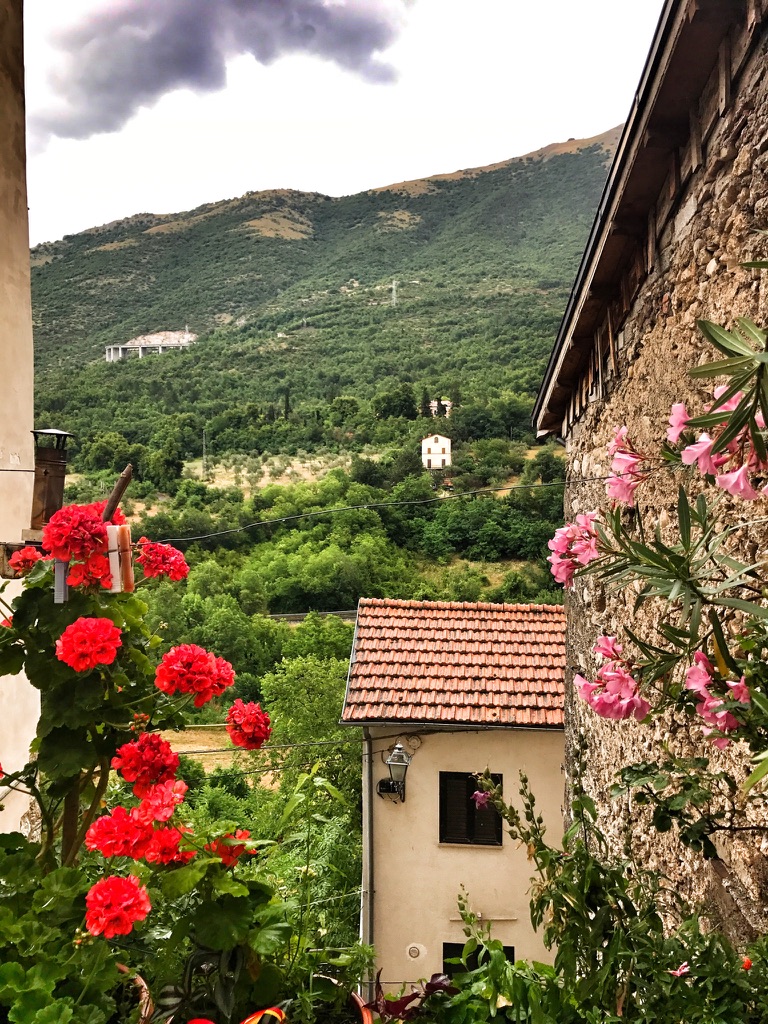
While the borghi lack grand monuments, they reveal authentic Italian life and rhythms. Their charm lives in narrow streets, centuries-old churches, and welcoming local people. You’ll discover excellent wine and simple, memorable regional cuisine in these villages.
And the Seas…
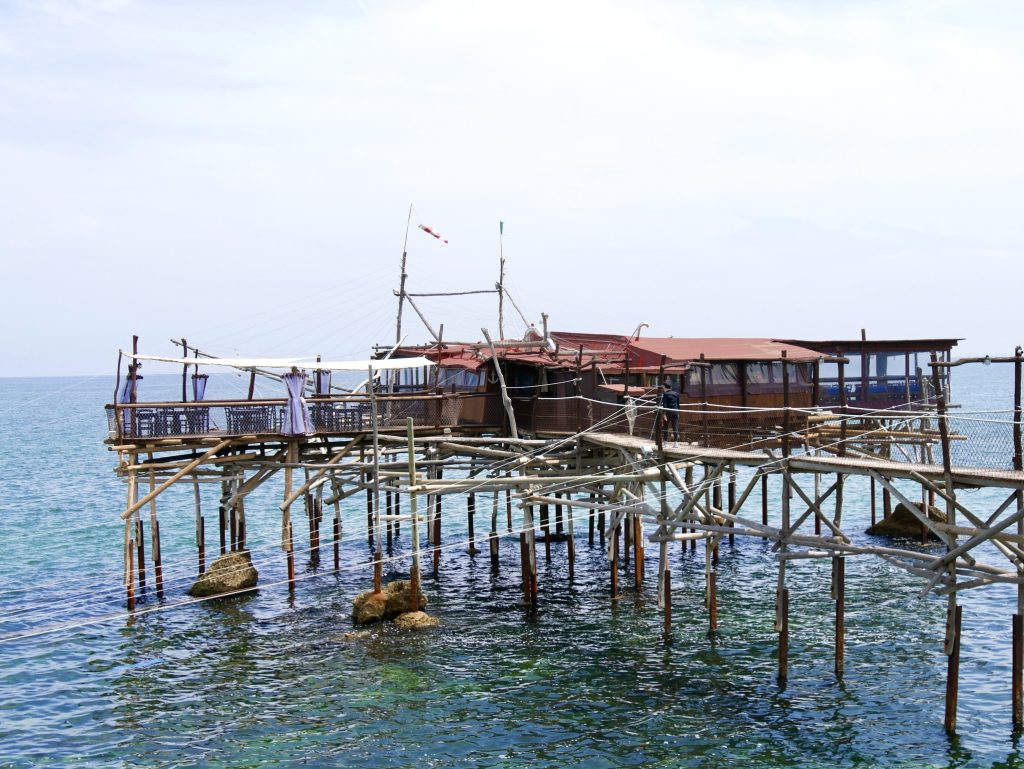
Along Abruzzo’s eastern shore, the ancient trabocchi—wooden fishing platforms built on stilts and linked to shore by narrow walkways—punctuate the coastline with a haunting, maritime charm. Once utilitarian structures used for net fishing, many trabocchi have been lovingly converted into intimate seafood restaurants where you can dine over the Adriatic on fresh catch, octopus, and simple, savory local dishes while watching the tide. Visiting a trabocco is like stepping into a living tradition: the creak of timbers, the salty air, and the slow rhythm of coastal life combine to tie Abruzzo’s sea and cuisine together.
The Markets
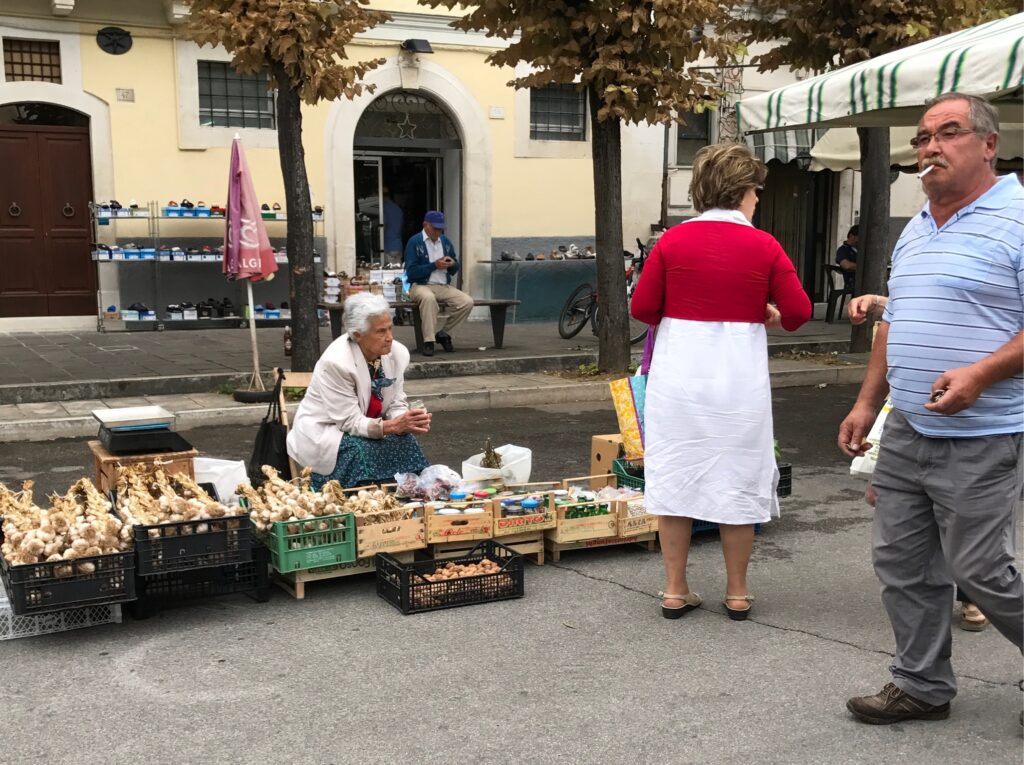
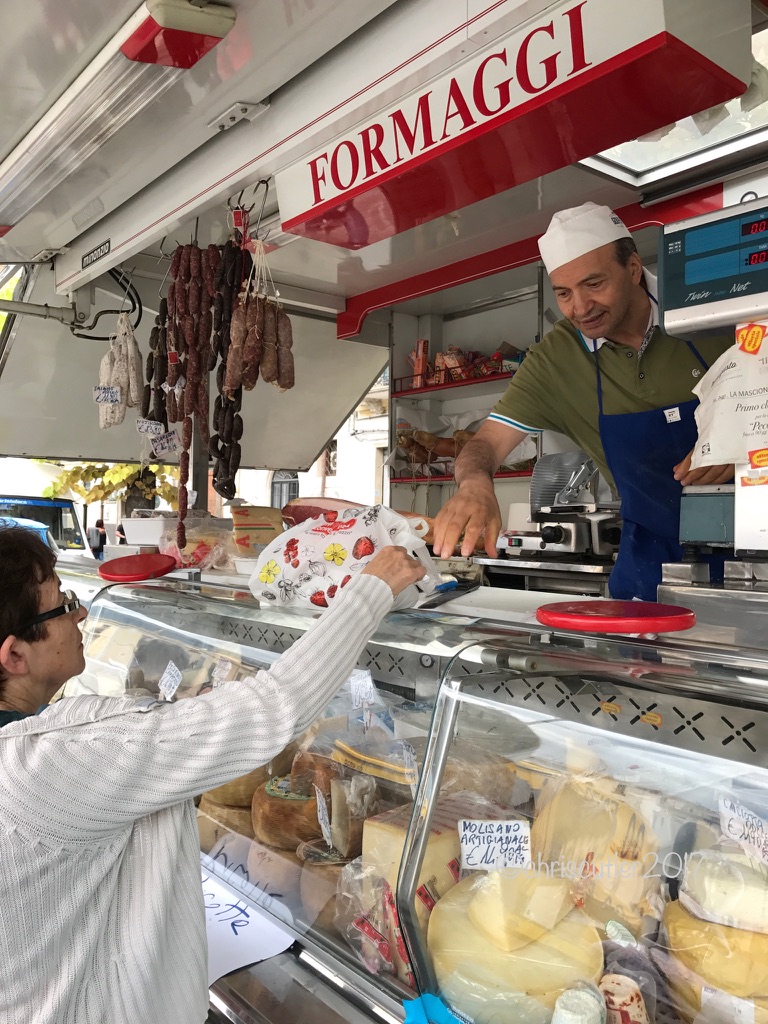
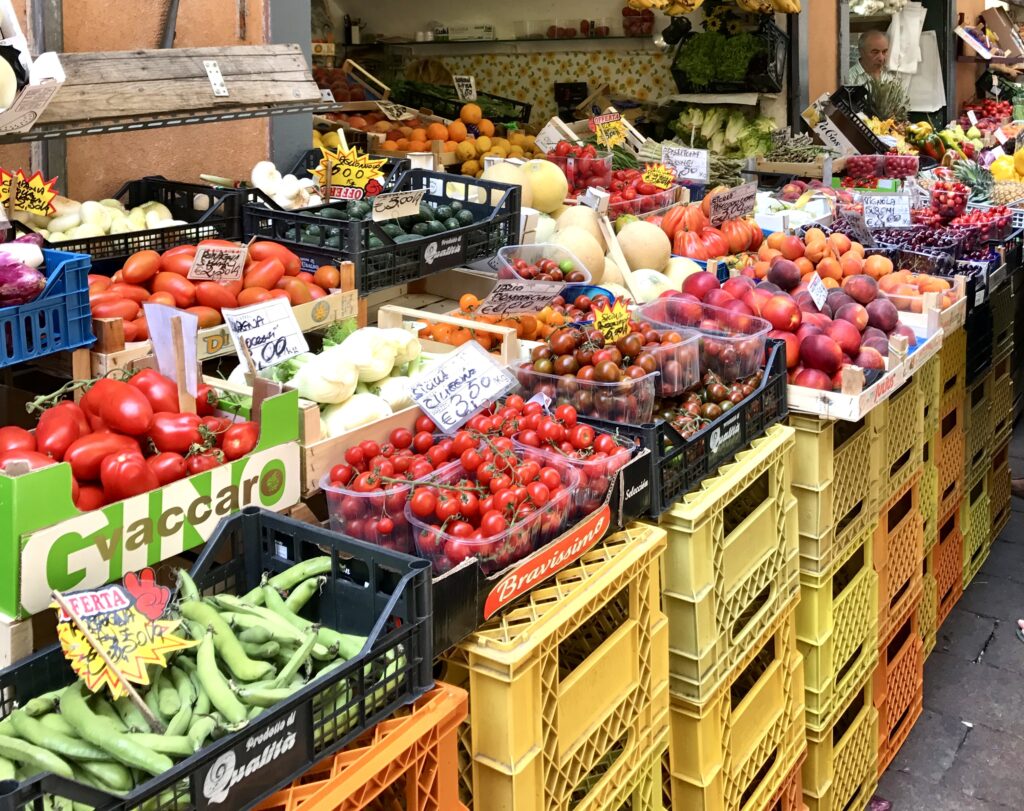
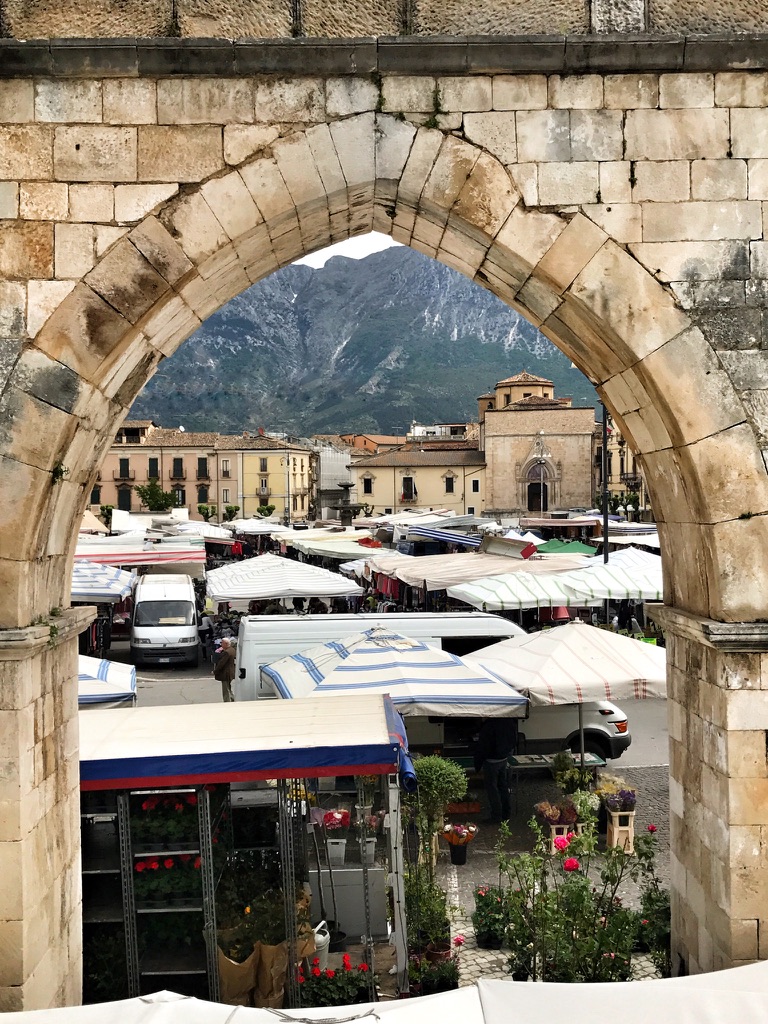
Shopping in Abruzzo is best at weekly open-air markets held in nearly every town.
Mercati showcase fresh produce, meats, cheeses, antiques, crafts, and practical clothing. Some markets, like Sulmona’s on Wednesdays and Saturdays, also offer ready-to-eat meals. Try porchetta there—slow-roasted pork seasoned with fennel, rosemary, salt, and pepper. Most vendors prefer cash, and some still do not accept credit cards. Check market schedules and locations online.
The Wine
Abruzzese vineyards cover more than eighty-one thousand acres with substantial wine output. The Montepulciano grape produces the region’s signature red, Montepulciano d’Abruzzo. Do not confuse it with the Tuscan wine named Montepulciano as this red tends to be darker, drier, and relatively low in acidity.
The Montepulciano grape also makes Cerasuolo, a cherry-pink wine similar to rosé.
Trebbiano yields light, fruity whites with softer acidity in the region. Pecorino, a crisp white, pairs wonderfully with seafood, street food, and cheese. Many wineries offer tours and tastings for visitors.
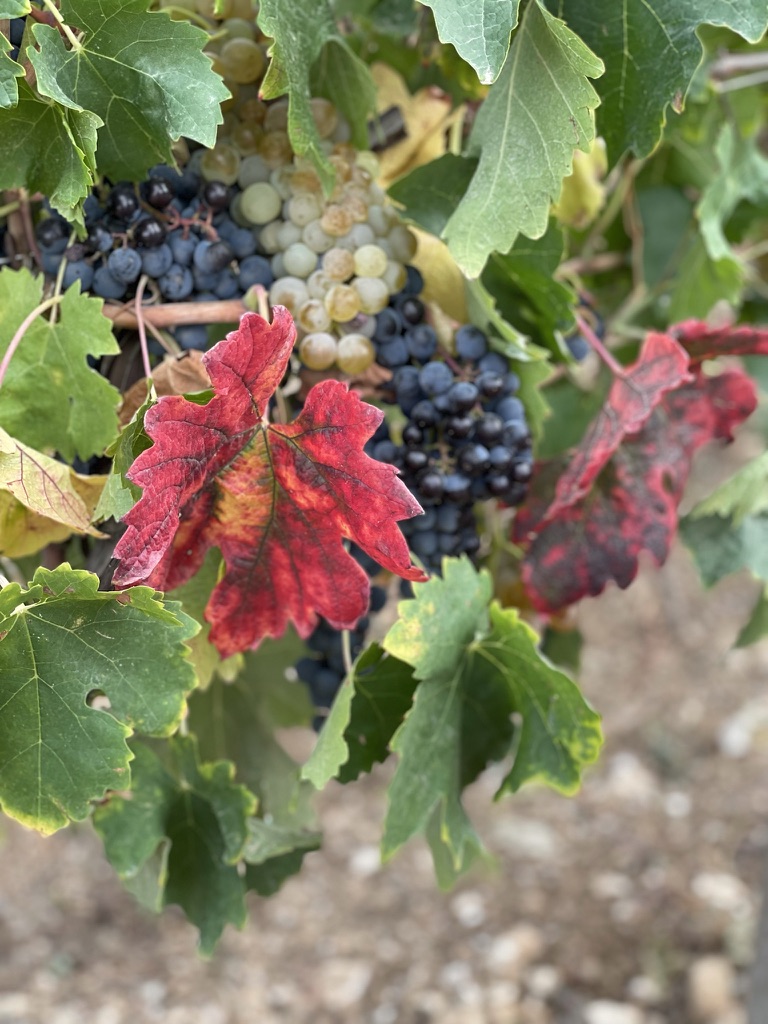
Abruzzo’s wine scene includes boutique, family-run producers making small-batch, low-intervention wines with strong sense of place. These artisan wineries revive old grape varieties and favor sustainable, hands-on viticulture.
A wave of craft breweries has also emerged, brewing beers with local grains, herbs, and seasonal fruits. Together, these winemakers and brewers create delicious, convivial pairings that showcase Abruzzo’s terroir and culinary traditions.
The Food! The Food!
Food is the truest way to know a place and its people, and critics regard Abruzzese cuisine as among Italy’s purest and most authentic.
Abruzzese cuisine draws on pastoral, mountain, and coastal traditions and ingredients. You’ll dine on maccheroni alla chitarra, arrosticini, polenta rognosa, and salted cod preparations. Pecorino cheese, torrone, and fried dough drizzled with honey are regional favorites.
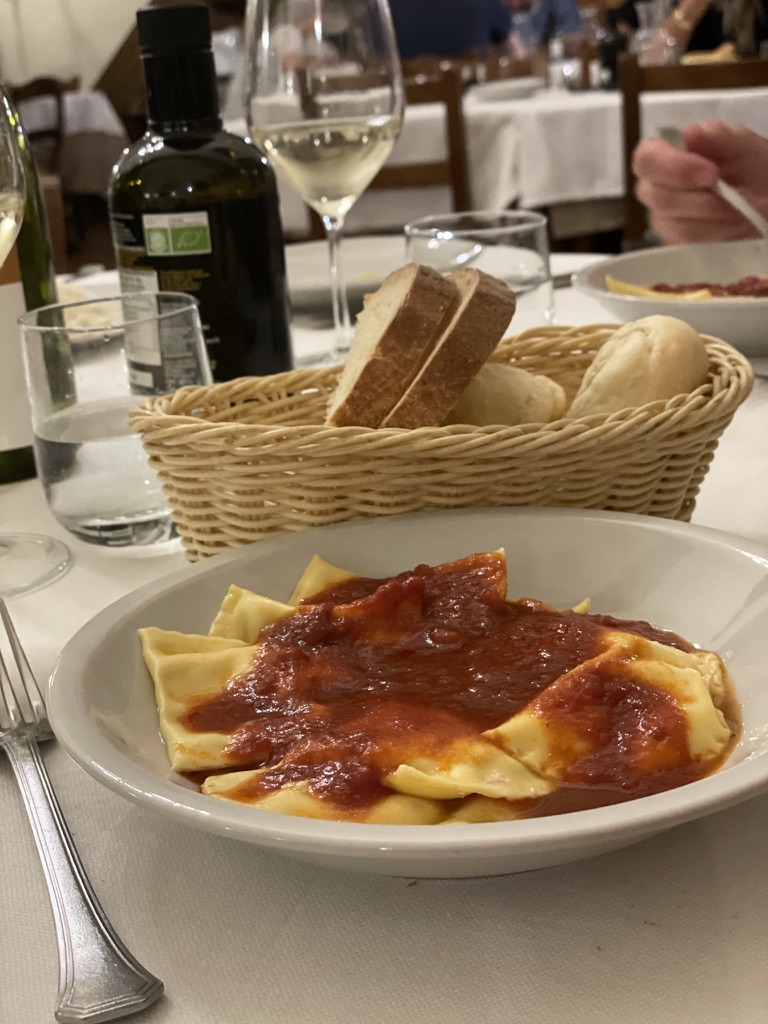
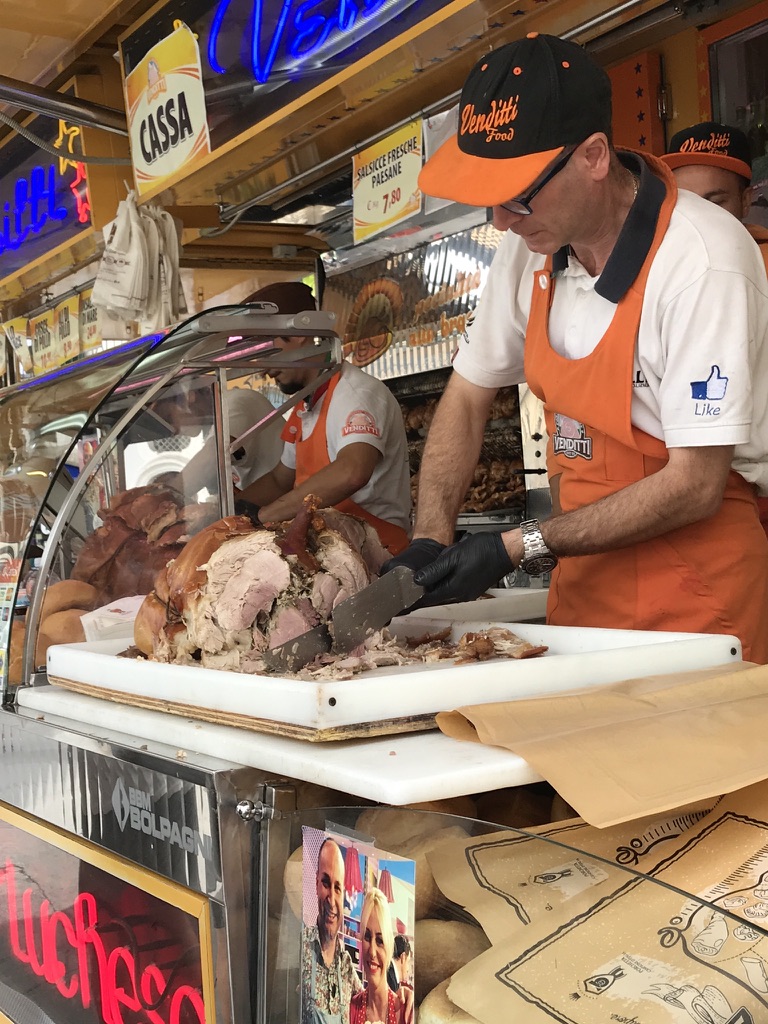
In recent years Abruzzo’s food scene has blossomed with small artisan producers crafting exceptional specialty olive oils and other pantry treasures. Slow Food presidia protect heirloom varieties and traditional techniques, while farm-to-table restaurants bring hyper-local ingredients straight from nearby fields to the plate. Cooking schools and village workshops teach old family recipes, and lively food festivals celebrate everything from olive harvests to confetti and truffles. I love how these grassroots efforts keep Abruzzo’s flavors alive, authentic, and joyfully shared.
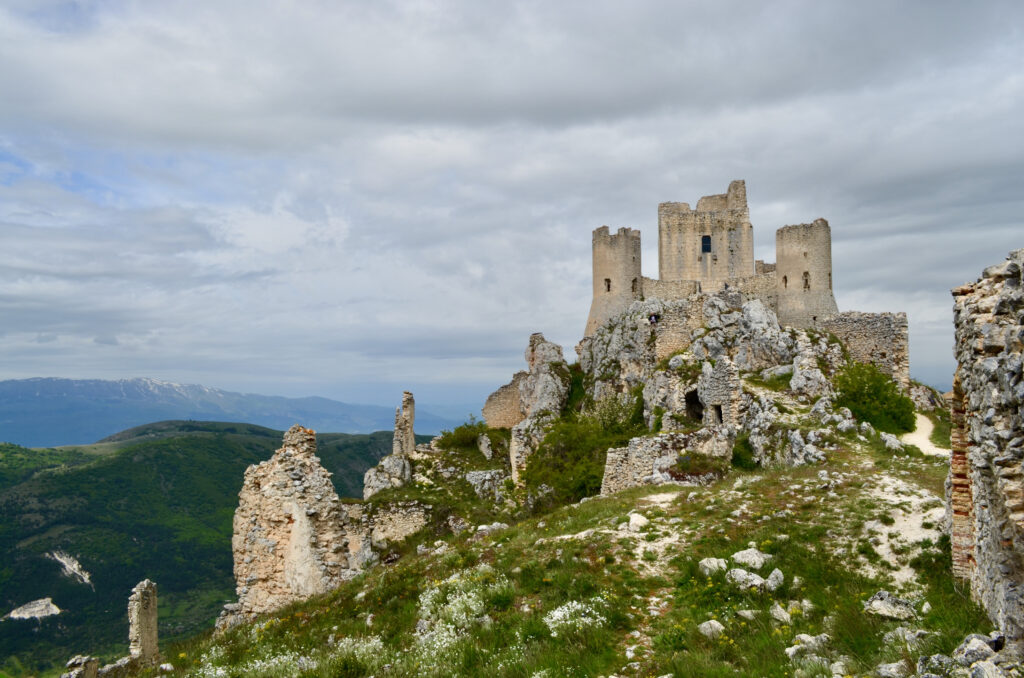
Whether you seek wild mountains, sunlit beaches, slow-paced hilltowns, or honest food and wine, Abruzzo offers a quietly powerful Italy that feels unchanged by time—an inviting patchwork of protected landscapes, storied villages, and hands-on culinary traditions that reward travelers who trade crowds for authenticity; come for the views and stay for the flavors, and you’ll leave with memories as rich and enduring as the region itself.