
Amid numbers, more selective markets, and new consumers, the Verona fair confirms the strength of the wine system. But it also shows that reputation alone is no longer enough.
Vinitaly 2026 closed with an apparently reassuring image: full pavilions, tight meeting schedules, international delegations, institutional presence, and a national system gathered compactly around wine. The 58th edition recorded 90,000 total attendees, with 4,000 exhibiting companies and operators from 135 countries; 26% of visitors came from abroad, while the selected top buyers hosted in collaboration with ITA Agency numbered more than 1,000 from over 70 countries.
But precisely within these numbers, if read carefully, lies the deeper meaning of this edition: Vinitaly 2026 was not merely the story of Italian wine’s resilience. Rather, it was the place where the sector measured the growing distance between representation and market, between identity and demand, between celebration and the need for rethinking.
A Fair That Remains Central, but in a Less Automatic Market
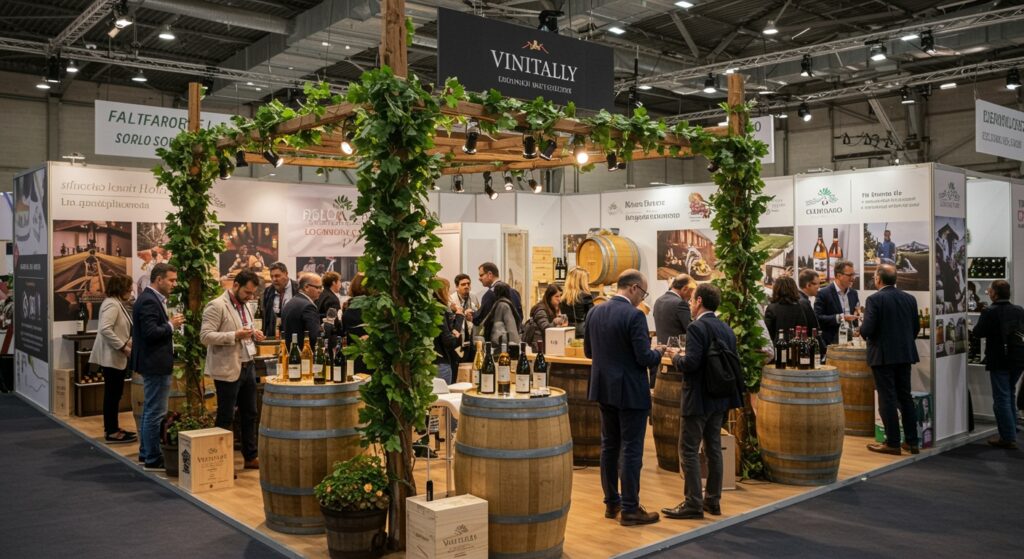
Compared with 2025, when Vinitaly recorded 97,000 attendees and a share of foreign operators equal to 33%, the 2026 edition marks a clear numerical contraction: 90,000 attendees, around 7% fewer than the previous year, and a foreign share down to 26%.
This figure, however, must be interpreted with caution. It does not necessarily indicate a weakening of the event but rather points to a transformation in how international operators select fairs, travel, and business opportunities.
The time when attending a fair was almost automatic seems to be over. Today, a buyer decides whether to travel based on stricter criteria: cost, schedule, commercial return, priority markets, geopolitical stability, and margin pressure. In this sense, Vinitaly 2026 revealed a twofold truth. On the one hand, Verona remains a central platform for Italian wine. On the other hand, it can no longer limit itself to being the great national stage.
It must increasingly become a machine for relationships, selection, and conversion.
From Attendance to the Quality of the Encounter
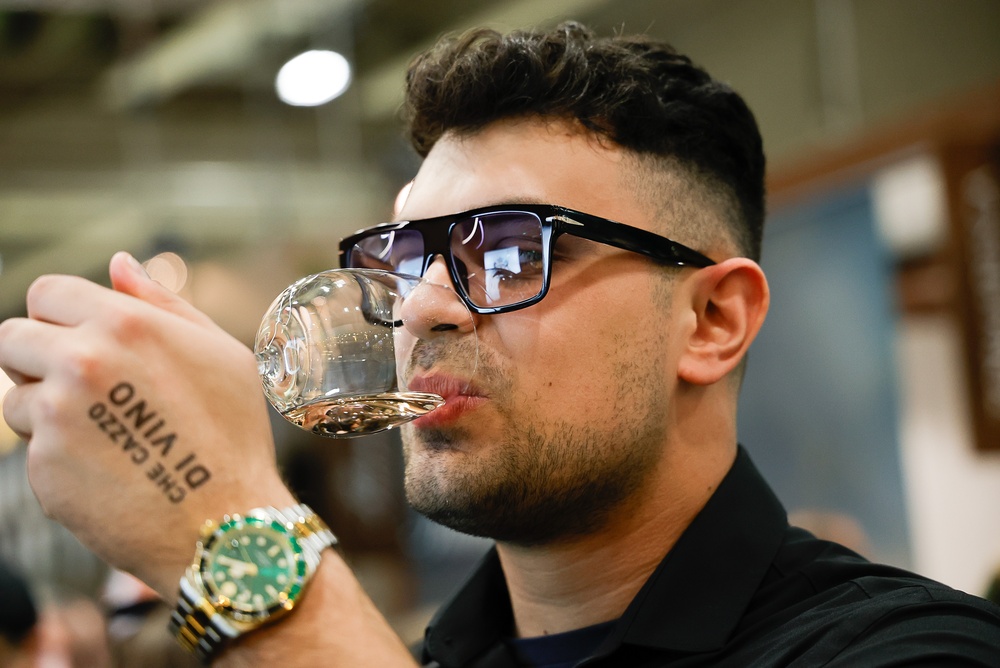
Significantly, Veronafiere insisted on Vinitaly’s role as an “infrastructure” for internationalization, capable of fostering high-value meetings and supporting the competitiveness of Italian wine in foreign markets.
The word infrastructure is perhaps one of the most fitting to describe what a wine fair needs to become today: not only an exhibition space but also a system of connections, market reading, training, storytelling, and qualified networking.
In a more difficult context, success is measured not only by the number of visitors but also by the quality of the relationships generated. A fair can bring people to a stand; it cannot, on its own, turn that encounter into a lasting commercial strategy.
The new geographies of Italian wine
The presence of consolidated markets — Germany, North America, Switzerland, the United Kingdom, Belgium, the Netherlands, the Scandinavian countries, Poland, and Austria — confirms that the historic axis of demand for Italian wine remains strong.
But the top 10 markets identified by Vinitaly 2026 as having the greatest potential also look elsewhere: China, Brazil, Australia, Mexico, South Korea, Thailand, the Baltic Republics, Serbia, and Singapore. These are joined by signs of interest from Africa, with South Africa, Tanzania, Nigeria, and Angola, and from Asia, where Japan and Vietnam are showing dynamism towards Italian labels.
Here, one of the most important issues opens up: the geography of Italian wine can no longer be read only through mature markets. The United States, Germany, and the United Kingdom remain fundamental, but the future will not be built simply by defending acquired positions.
A new ability will be needed to oversee markets that differ in culture, channel, purchasing power, and familiarity with wine. In other words, internationalization can no longer be a commercial extension of Italian identity: it will have to become a strategic translation.
The United States issues and commercial uncertainty
The American theme ran throughout the entire fair because the United States remains the leading destination market for Italian wine. In 2024, Italian wine exports to the USA reached €1.938 billion, accounting for 23.8% of total Italian wine exports by value; between 2018 and 2024, US demand for Italian wines grew by 6.8% in volume and 32.5% in value.
However, 2025 marked a reversal. According to the Unione Italiana Vini Observatory, based on Istat data, Italian wine exports closed the year at €7.78 billion, down 3.7% from 2024, with volumes down 1.9%. The US market weighed decisively on this result, falling by 9.2% in value to €1.76 billion: a contraction of €178 million, equal to almost 60% of the overall Italian export deficit compared with the previous year.
In Verona, however, the atmosphere was not only one of fear. Rather, there was a sense of pragmatism: the awareness that complex markets are not abandoned, but managed with more sophisticated tools. The point is no longer only to “sell in the United States”, but to understand how to remain competitive in a market that remains central, yet has become more fragile, more costly, and more selective.
The Italian reputation is no longer enough.
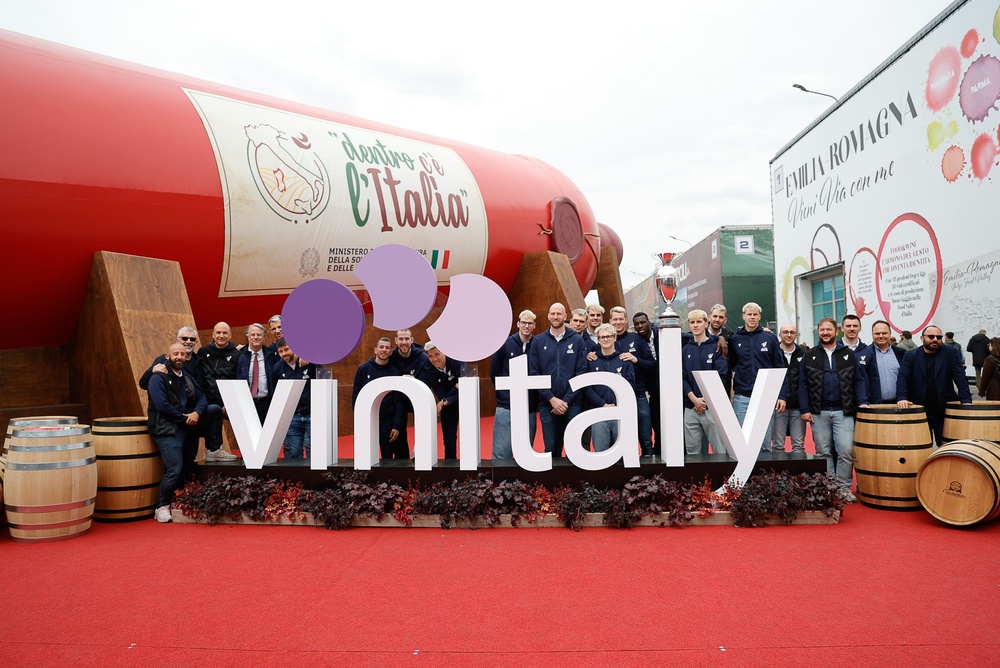
The point, however, is that Italian wine can no longer rely solely on its reputation.
Italy is loved, recognized, and desired. But this is not enough. In the most competitive markets, the beauty of origin must be accompanied by constant work on positioning, education, channel presence, and clarity of language.
Territorial storytelling remains fundamental, but it cannot become self-referential. It must answer a very concrete question: why should a buyer, importer, sommelier, or consumer choose this particular wine today in a saturated, more cautious market?
This is perhaps the question that Vinitaly 2026 put to the Italian wine system with the greatest force.
No-Low: Opportunity or Identity Provocation?
In this scenario, one of the most visible new features at Vinitaly 2026 was the attention paid to the no- and low-alcohol segment. Following the previous year’s pilot project, NoLo–Vinitaly Experience had a dedicated platform, developed in collaboration with Unione Italiana Vini, featuring a dedicated exhibition area, masterclasses, and in-depth discussions.
The issue is delicate because it touches deep chords of identity. For part of the sector, no-low represents an opportunity to intercept more health-conscious consumers, new consumption occasions, and markets where alcohol content also affects taxation. For others, it risks appearing as a cultural concession, almost a questioning of the very essence of wine.
But perhaps the most useful question is not whether no-low is “wine” in the traditional sense of the term. The question is whether the sector is willing to recognize that the contemporary consumer no longer moves within rigid categories.
Wine Tourism: Not only hospitality, but also a relationship
Alongside no-low, Vinitaly 2026 also strengthened the theme of wine tourism, with Vinitaly Tourism and an agenda of meetings, talks, research, and best-practice sessions dedicated to the relationship among wineries, territories, and specialized operators.
This, too, is not an accessory theme. Wine tourism is not only a complementary source of income: it is one of the most powerful forms of consumer education. In a world in which wine risks becoming, for many, a difficult, technical, or distant product, direct experience restores concreteness: landscape, people, time, work, memory.
Yet maturity is needed here as well. Wine tourism cannot be reduced to aesthetic hospitality or content for social media. If it is to become a strategic lever, it must build relationships, loyalty, and understanding. It must transform a visit into a memory, and a memory into a future choice.
Italian wine has an extraordinary competitive advantage: no other country possesses the same density of territories, cuisines, denominations, landscapes, and local narratives. But if this richness is not organized, it risks remaining fragmented.
The fair is a mirror, not a solution.
Vinitaly 2026, therefore, returned the image of a sector in motion, but also of a sector under pressure. The fair served as a powerful mirror: it revealed the strength of the Italian system, but also its unresolved questions.
The fair served as a powerful mirror: it revealed the strength of the Italian system, but also its unresolved questions.
- Can historic markets be defended without becoming prisoners of them?
- What is the best way to open new markets without dispersing resources?
- Wine must now be discussed in an era of declining consumption and changing attitudes toward alcohol.
- Trade fair participation also raises another issue: how can presence be turned into measurable results?
- Finally, how can the beauty of the narrative avoid becoming a refuge rather than a strategic tool?
The answer, probably, does not lie in a single edition of Vinitaly, nor in a single fair. Fairs remain fundamental, but they can no longer be considered the solution in themselves. They are moments of acceleration, not substitutes for strategy.
They can open doors, but they do not build a market on their own. A trade fair may generate encounters, but it does not guarantee relationships. Visibility also cannot compensate for the absence of clear positioning.