
How ponca soil, a shifting border, and family tables give Friuli’s white wines their sense of place.
Collio is a wine region shaped like a crescent moon, with gentle hills. It sits in Italy’s far northeast, right on the Slovenian border. I spent a week here on a trip hosted by the Consorzio Tutela Vini Collio, and I left sure of two things: it makes some of Italy’s finest white wines, and it sets one of its best tables.
My first night made the case. At a welcome dinner with the winemakers, the food came before the introductions finished: crispy frico lollipops, San Quirino bean fritters (a Slow Food Presidium) with horseradish cream, and a Carnaroli risotto with spring herbs and smoked duck. Frico is Friuli’s most beloved dish, traditionally a hearty griddled cake of Montasio cheese and potato, born as a thrifty way to use up cheese rinds. Here it arrived reinvented as a lacy, crisp wafer of cheese on a stick, the region’s past dressed up for the present. Every bite pointed somewhere specific. That is the whole idea of Collio.
Where Italy Meets Slovenia
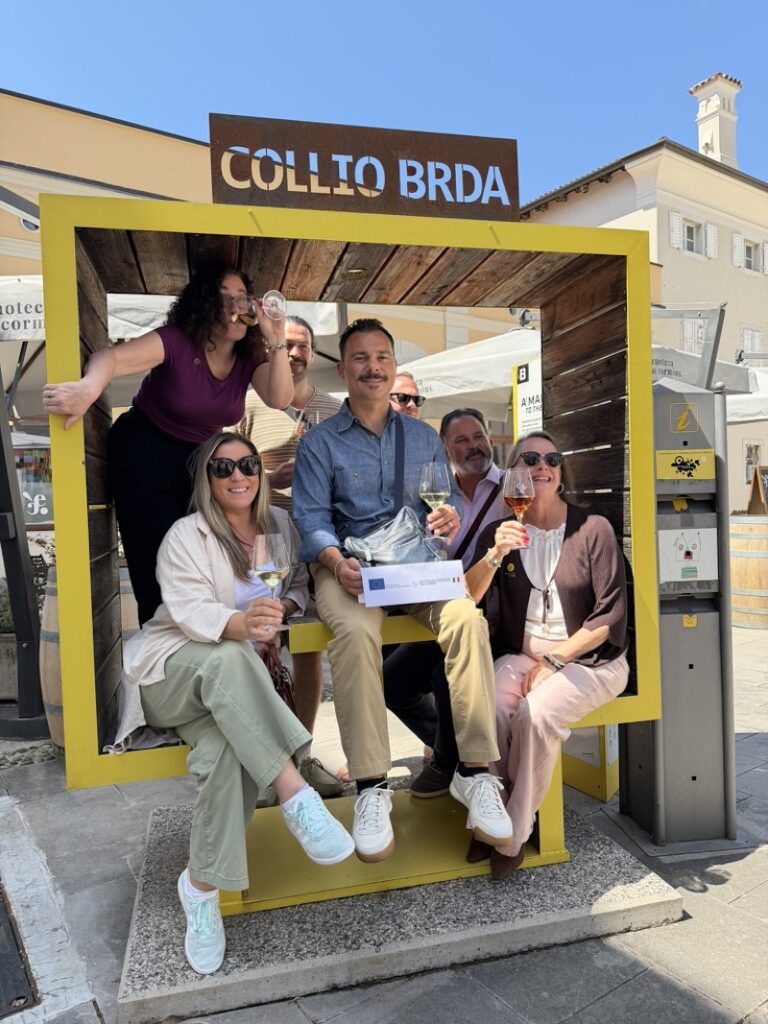
Collio sits on a border that keeps moving. These hills were Austro-Hungarian, then Italian after the First World War. After the Second World War, a new line split the region: Italian Collio on one side, Slovenian Brda on the other. Some families still keep a house in one country and their vines in the next.
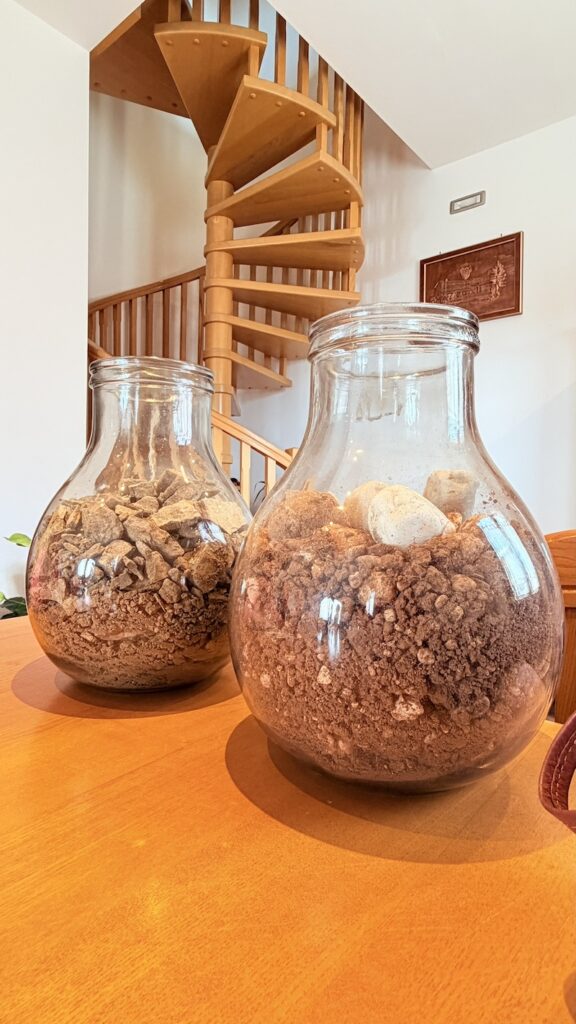
The hills here are gentle, not too steep, and each carries its own microclimate. Some roll softly, a little like Tuscany; others turn rugged and wooded. Cooled by the dry Bora wind, they are planted almost entirely to white grapes. Their secret is the soil: ponca, layers of marl and sandstone that crumble in your hand. Ponca stresses the vines and leaves a saline, mineral trace in the glass. Most growers farm their own fruit, so every wine carries the fingerprint of its hill.
You taste the border even in the names. For years the local Friulano was called Tocai. Then an EU ruling protected Hungary’s Tokaj, and by 2007 the word disappeared from the labels. The grape never changed. Only its name did.
Pinot Grigio, Friulano, and Ribolla Gialla
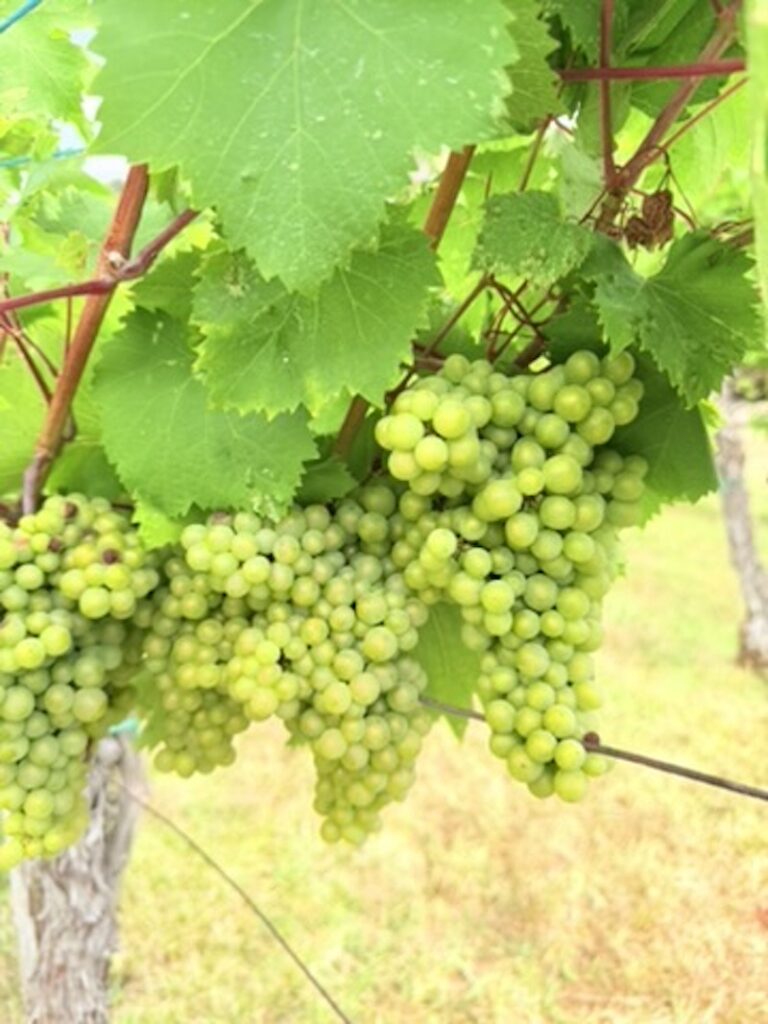
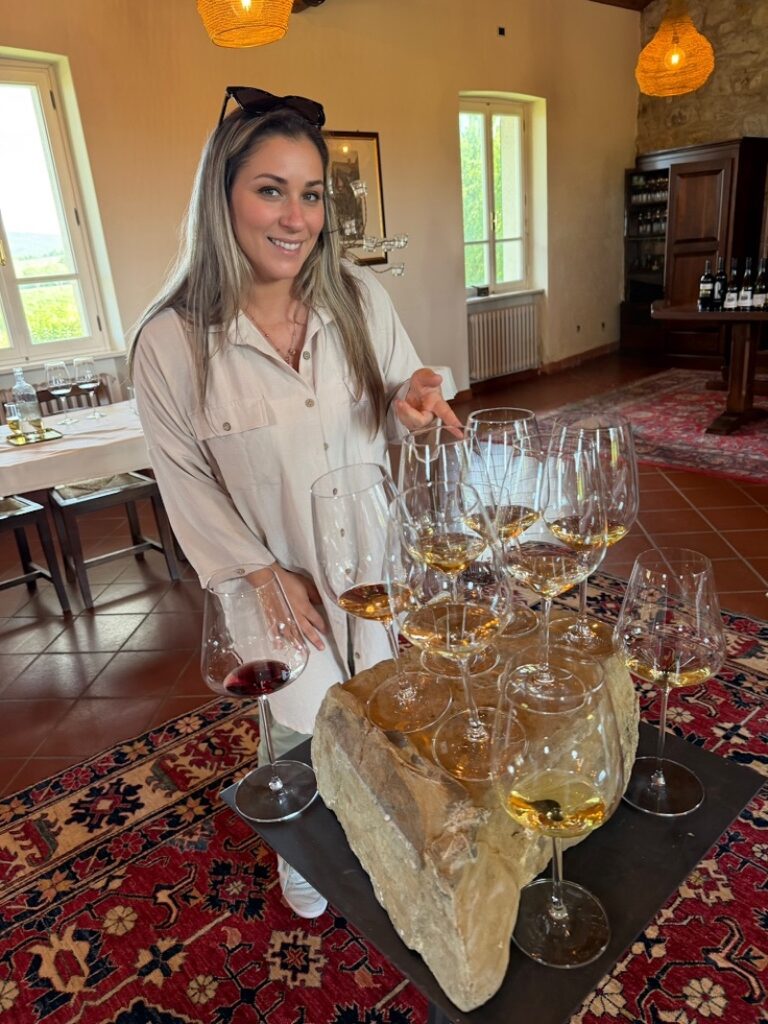
I have studied Italian wine for years, so I came to Collio already knowing its grapes. This was not an education. It was a reintroduction. It began formally at the Enoteca di Cormons, where the educator Cynthia Chaplin led a masterclass on Collio’s signature white grapes. And even for a familiar palate, the first surprise was Pinot Grigio.
In the United States, Pinot Grigio is usually a simple, easy-drinking white: crisp, clean, refreshing, reliable. In Collio, Pinot Grigios are shaped by place, philosophy, patience, and terroir.
At Paraschos, I met one unlike any before. Jannis Paraschos leaves the juice on the grape’s coppery skins, ferments with wild yeasts, and bottles it unfiltered, without added sulfites. It poured a deep copper-rose, savory, grippy, and long. It looked nothing like the usual pale glass.
Next came Friulano. If Collio has a signature white, I believe Friulano makes a strong claim. The tell is the finish: as the wine turns round and almost waxy, it closes on a note of bitter almond (mandorla).
The one that stood out to me was Raccaro’s, where Luca and his father, Dario, farm their own hillsides and let the vineyard speak. Their label features a small 14th-century church, Santa Maria Apollonia, which the family restored and still opens twice a year for special occasions. After the tasting, they sat us down for a plate of spaghetti al pomodoro, made from tomatoes grown in their gardens. Honest wine, honest food, one family table.
Ribolla Gialla: From Ancient Grape to Modern Expression
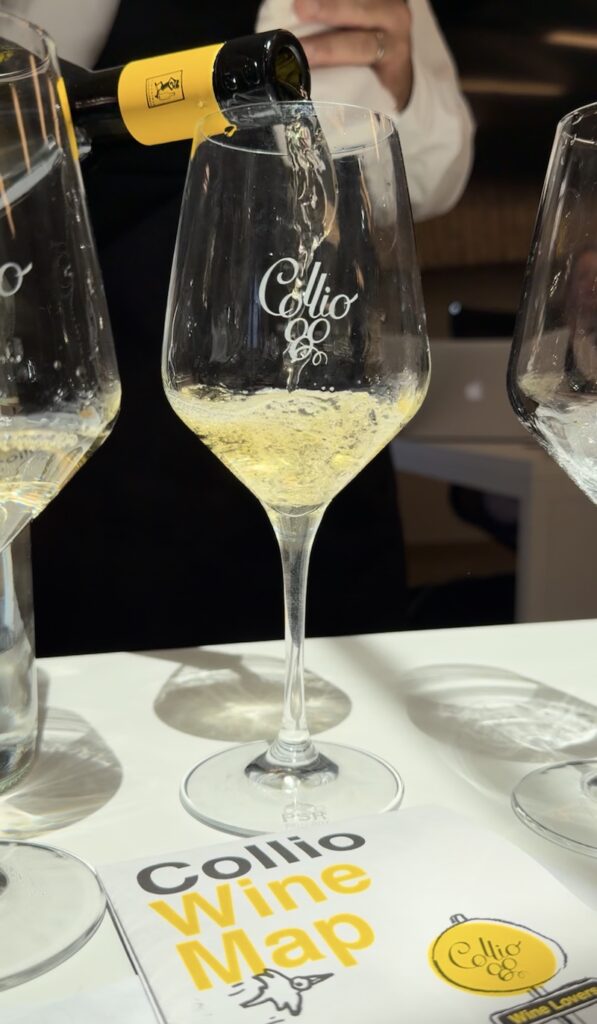
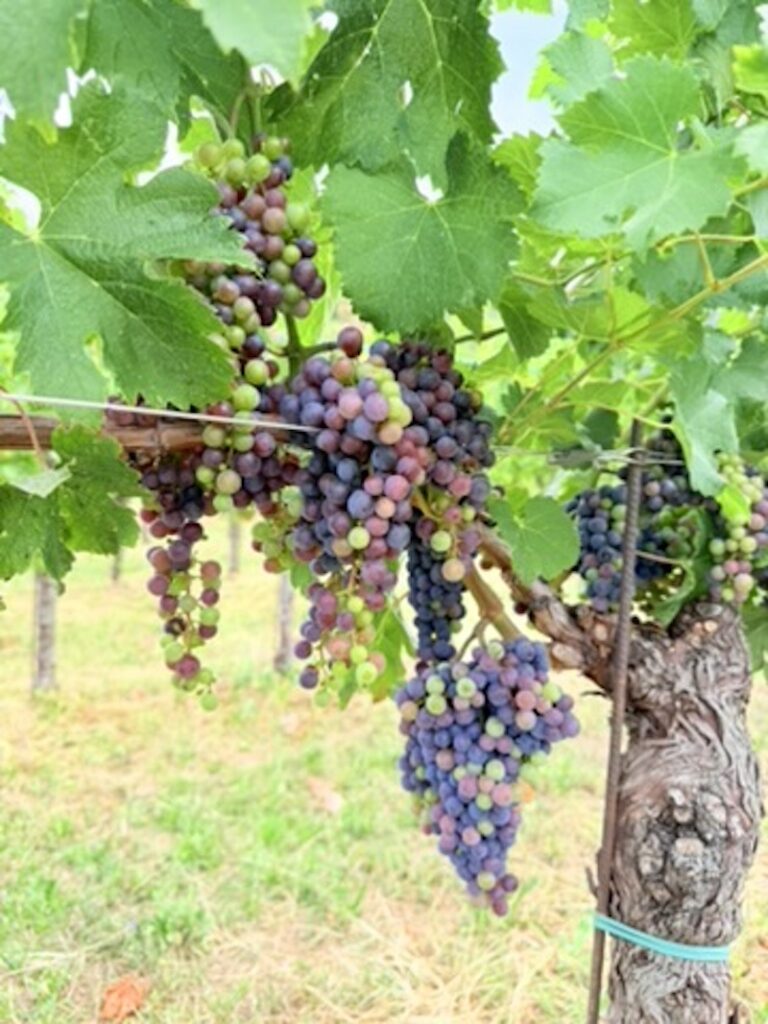
Lastly, ask a Collio winemaker which grape excites them most, and watch their eyes light up. It is almost always Ribolla Gialla.
Ribolla is ancient here, grown in these hills since the 1200s, yet it feels brand new. It can be a crisp sparkling wine, a mineral still white, or a deep-amber “orange” wine aged for years on its skins. On the hill of Oslavia, growers like Gravner and Radikon revived that skin-contact method and made Collio famous for it.
The range shows up fast. At Tenuta Villanova, founded in 1499, we opened the morning with a sparkling Ribolla, crisp and dry and, honestly, a fine breakfast wine. At Primosic, Nicola poured from a fresh steel version up to a powerful, barrel-aged Riserva. Same grape, a very different dress.
At Sgubin, we tasted their Ribolla Gialla under the mulberry trees while the kitchen sent out fried zucchini flowers and, for dessert, the family’s own peaches steeped in wine. The winery grew up around its restaurant, Al Cjant dal Rusignul, Friulian for “the nightingale’s song.” Here, the wine and the table have always come as a pair.
A Table That Tastes of Place
Our last dinner made the point one final time. La Tavernetta al Castello is a former windmill on the estate, now a restaurant that overlooks Castello di Spessa. Course by course, the kitchen took signature Friulian ingredients and gave them a modern turn. The trout, a staple of the region’s freshwater tradition, came cured with kefir and chives. A quail egg sat over a delicate anchovy mousse with green beans in salsa verde. The finale built a single dish around two Friulian classics: smoked ricotta, the prized dairy of the mountains, and sclopit, the wild herb usually stirred into risotto, here whipped into a bright pesto over gnocchetti, with grilled arugula, herring caviar, and milk kefir.
The techniques were modern, but the flavors that mattered came straight from these hills: the trout, the smoked ricotta, the sclopit. Like the wines, the heart of the meal belonged to Collio.
How to Taste Collio for Yourself
Start in Cormons. At the Enoteca di Cormons, a regional wine bar that pours dozens of local labels under one roof, you can taste widely and decide which producers to seek out. From there, slow down. The estates are small and family-run, and most welcome visitors by appointment. Book a tasting, and you may end up in the vineyard, or at the family table.
When it comes to the table, book La Tavernetta al Castello at Castello di Spessa for a special dinner, or settle in at Casa Vidussi, the osteria where we spent an evening with the region’s winemakers.
Come for the whites: the serious Pinot Grigio, the almond-kissed Friulano, the shape-shifting Ribolla Gialla. Stay for the frico, the trout, and the peaches in wine.
Somewhere between the cellars and the kitchens, you stop tasting grapes and start tasting a place. That, in the end, is Collio.