
England has little to do with it: this quintessentially Italian dessert originated somewhere between Emilia-Romagna and Tuscany. It may have acquired its name because it originally contained rum, a drink associated with English sailors, or simply because it resembles the British trifle.
Traditionally served at the end of a meal, especially during festive occasions, zuppa inglese was once a much-loved Italian dessert. It was my grandmother’s signature dish and the star of many birthday celebrations when we were children.
In recent years, however, it has become increasingly rare on restaurant menus and at family gatherings. So imagine my delight when I discovered it served in elegant little silver cups at a friend’s house one Sunday lunchtime!
Childhood memories and stories came flooding back. Everyone had a tale to tell about zuppa inglese.
Zuppa inglese is what Italians call a dolce al cucchiaio, a dessert eaten with a spoon, and its origins remain a subject of debate. But as you may have gathered, England has little, if anything, to do with it. This unmistakably Italian dessert is particularly popular in Emilia-Romagna and Tuscany, as well as other parts of central Italy.
The classic recipe calls for alternating layers of pan di Spagna (sponge cake, which, despite its Italian name, has nothing to do with Spain either—one of the mysteries of the culinary world!) or savoiardi (ladyfingers) soaked in Alchermes liqueur, followed by layers of chocolate custard and vanilla pastry cream, sometimes with chocolate chips added.
There are, however, countless variations.
The Emilian Theory: Ferrara
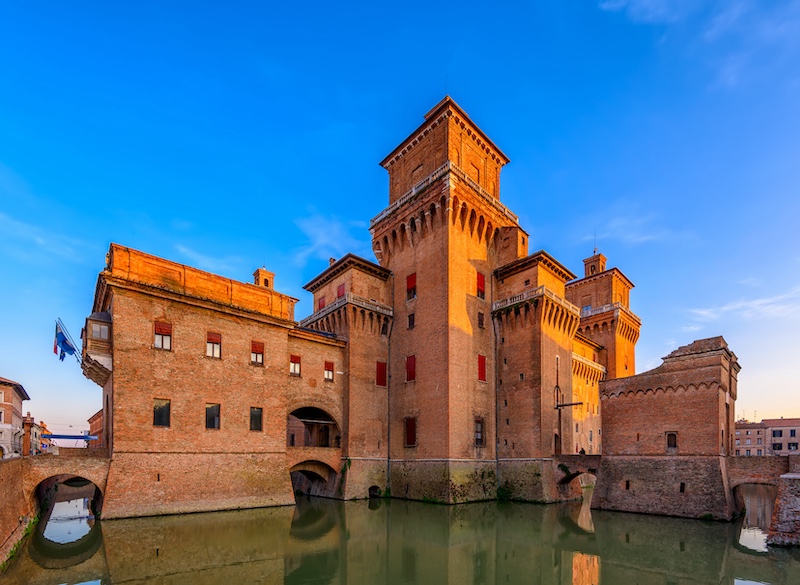
Ferrara is one of the first cities to claim the invention of zuppa inglese. According to tradition, the dessert originated in the 16th century at the court of the Este family, as an Italian reinterpretation of the English trifle—hence its name.
Initially, cooks are said to have replaced bread dough with bracciatella, a type of ring-shaped cake, which was later replaced by pan di Spagna in the 18th century.
Despite its Italian name, pan di Spagna is actually of Italo-French origin and was itself inspired by savoiardi, the biscuits often used in both zuppa inglese and tiramisu.
The Tuscan Theory: Florence
According to another theory, zuppa inglese originated in 19th-century Tuscany, thanks to the housekeeper of an English family living in Florence. She is said to have created a dessert using leftover biscuits softened in sweet wine, adding pastry cream and chocolate pudding.
The name of this dessert first appeared in print in 1832 in Vincenzo Agnoletti’s Manuale del cuoco (The Cook’s Manual), written while he was working at the court of Parma.
Towards the end of the 19th century, Pellegrino Artusi described the recipe, drawing particular attention to the differences between the Emilian version, which is denser and more distinctly layered, and the Tuscan version, which is softer and often served in a cup.
To this day, the dessert’s origins remain uncertain, with both regions laying claim to it. After all, Emilia-Romagna and Tuscany are close neighbors, and culinary traditions rarely respect regional borders!
Many people lean towards the Tuscan theory, partly because Tuscany is also home to zuppa del duca, an ancient Sienese dessert that some consider a forerunner of both tiramisu and zuppa inglese.
Alchermes and Other Clues
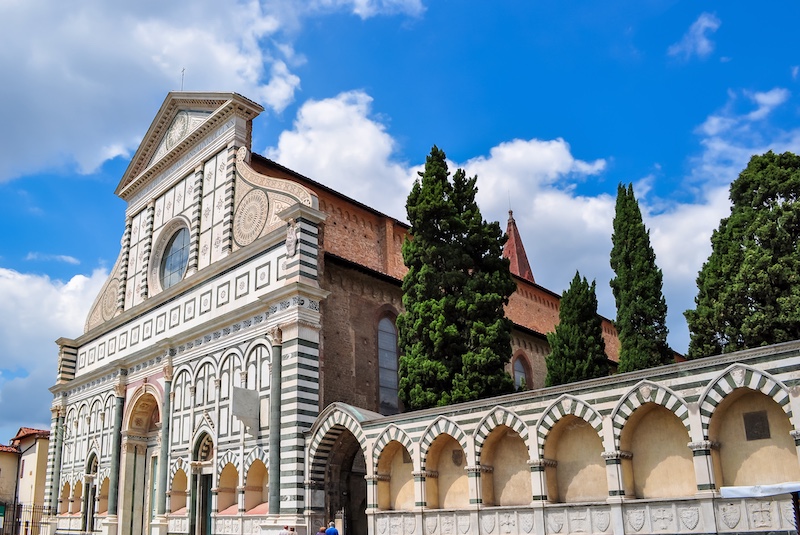
One thing is certain: Alchermes features prominently in the recipe. As Giovanni Ballarini of the Italian Academy of Cuisine points out, the presence of this liqueur—sometimes referred to more generally as rosolio—offers some interesting clues.
Floral infusions and liqueurs, such as orange blossom water, rose water and rosolio, were already fashionable in the Middle Ages but became particularly popular during the Renaissance.
Alchermes is a sweet, ruby-red liqueur traditionally associated with Tuscany, and Florence in particular, where it is still produced by the Officina Profumo-Farmaceutica di Santa Maria Novella.
It has a complex, spicy aromatic profile, with cinnamon, cloves, vanilla, nutmeg, coriander and rose water, combined with alcohol and a natural coloring agent. Its name derives from the Arabic al-qirmiz, meaning “cochineal,” a reference to the red coloring traditionally used in its preparation.
In France, it was known as liqueur des Médicis, or “the Medici liqueur.” It is said to have been brought to France by Marie de’ Medici and her alchemist, Ruggeri, and was later popularized by the monks of Santa Maria Novella.
Today, Alchermes is used almost exclusively in pastry-making, for example to soak the sponge cake in zuppa inglese or zuccotto, another specialty of Tuscan origin.
So, Is the Tuscan Theory the Most Convincing?
Not so fast!
Giovanni Ballarini suggests that we should look for the origins of zuppa inglese in Emilia, specifically in Parma during the early 19th century, under Marie Louise of Austria.
He identifies the original recipe for zuppa inglese in Vincenzo Agnoletti’s Manuale del cuoco e del pasticciere di raffinato gusto moderno (The Cook and Pastry Chef’s Manual of Refined Modern Taste), published in 1832.
But in the end, does it really matter where the dessert was first created?
Zuppa inglese is a Tuscan-Emilian creation made with ingredients that also reflect Italian and French pastry-making traditions, such as pan di Spagna, which originated in Genoa, and savoiardi, which come from Piedmont.
I would say that rather than an “English trifle,” it is a thoroughly Italian one!
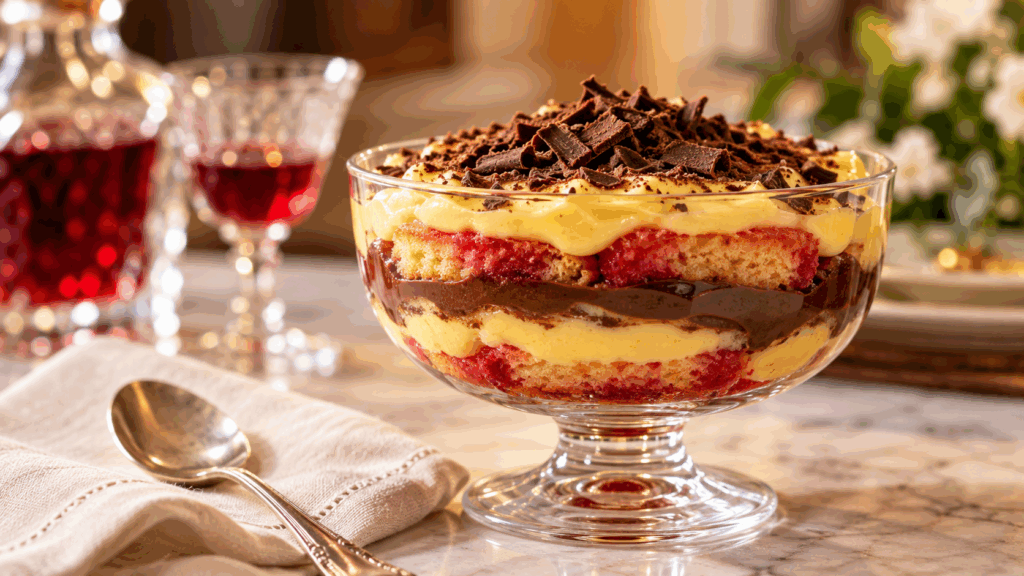
There are countless versions, of course. The classic choice is between ladyfingers and sponge cake, and between Alchermes, rosolio and rum. Other variations include ricotta, strawberries and many more ingredients.
But when in doubt, I stick to the classic: pan di Spagna, Alchermes, vanilla pastry cream and chocolate custard.
Simply divine! Buonissimo!
A Little Italian Vocabulary
- Zuppa — Soup
- Zuppa inglese — A traditional Italian layered dessert resembling a trifle
- Cucchiaino — Teaspoon
- Crema — Custard
- Strati — Layers
- Pan di Spagna — Sponge cake
- Savoiardi — Ladyfingers
- Zuccotto — A traditional dome-shaped Italian dessert