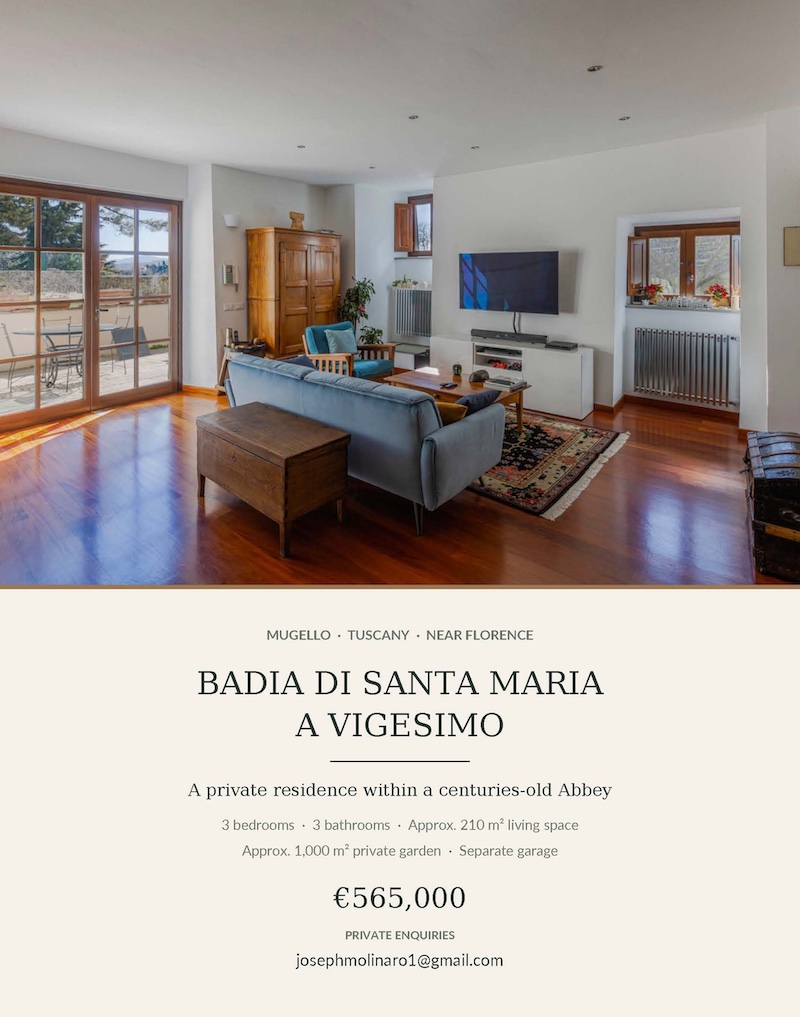
Joseph Francis Molinaro reflects on restoring a centuries-old residence in Mugello—and the opportunity for someone new to become part of its history.
Tuscany is often imagined through its rolling vineyards, Renaissance cities and centuries-old architecture. But what does it mean to make a home within that history?
For Joseph Francis Molinaro, an American who moved to Italy in 1996, the answer lies in Mugello, a quieter corner of Tuscany nestled in the foothills of the Apennines. After years working in the Italian footwear industry, including a career with Bruno Magli and Ferragamo, Joseph discovered an opportunity to help restore part of Badia di Santa Maria a Vigesimo, a historic abbey complex whose origins date to the eleventh century.
What began as an ambitious restoration became something far more personal: a family home where ancient stone walls, contemporary comforts and a close-knit community coexist.
In our conversation, Joseph reflects on his life in Italy, the rewards and challenges of restoring a historic residence, and why Mugello deserves a closer look from those dreaming of a life in Tuscany.
For additional information or to arrange a private viewing, contact Joseph Francis Molinaro at josephmolinaro1@gmail.com.
You’ve lived in Italy since 1996. What originally brought you here, and what eventually led you to make Italy your permanent home?
For many years before moving to Italy, I traveled regularly between the United States and Italy, developing men’s footwear collections for the American market and working closely with Italian manufacturers. In 1996, I was offered the opportunity to manage Bruno Magli’s design and production office in Florence, which meant making the significant move from the United States to Italy. After several years, I realized that Italy had become much more than a place to work. It was where I wanted to establish my home, while continuing to maintain the personal and professional relationships I had built in the United States.
How did you discover Badia di Santa Maria a Vigesimo, and what convinced you to purchase a residence within this historic abbey complex?
Until 2007, I lived in a beautiful attic apartment overlooking Florence. When my work shifted from Florence to Bruno Magli’s headquarters in Bologna, the daily commute became increasingly impractical, and I began looking for a home in a more convenient location. Through a friend and relative, I learned of a local builder who was planning to restore a historic abbey and convent, working with prospective owners and in agreement with the local parish, which continues to use the abbey church for special celebrations and religious holidays. I was immediately captivated by the opportunity to participate in the restoration of such a historic property while creating a comfortable, contemporary living environment within its centuries-old walls.
The abbey’s history stretches back nearly a thousand years. What have you learned about its past, and what makes living in such a historic setting special?
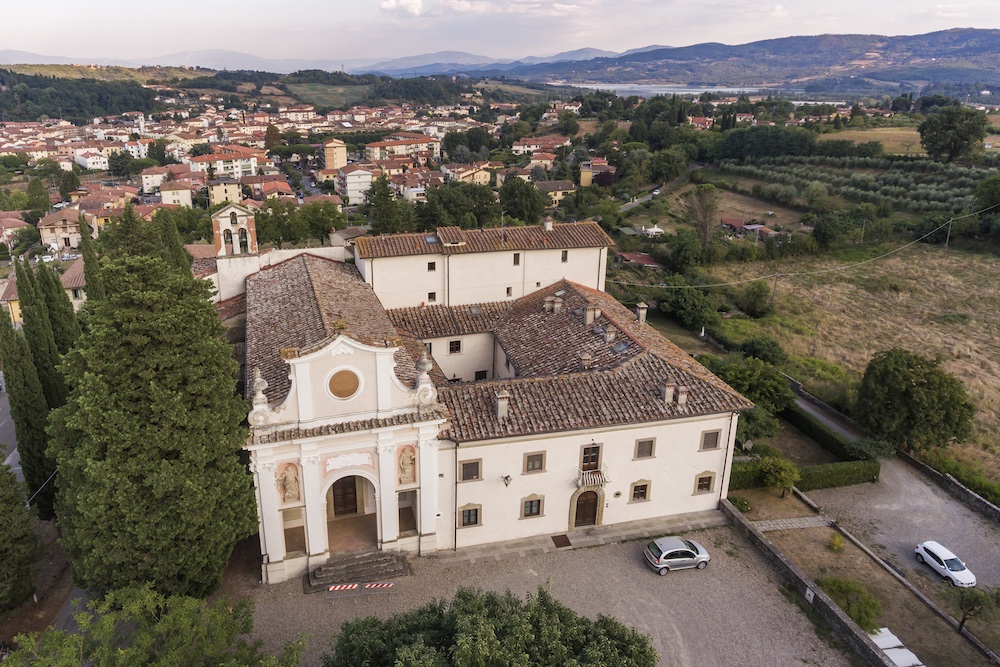
The history of Badia di Santa Maria a Vigesimo is extraordinary, dating back to around 1069, when it began as a place of shelter for pilgrims and the poor traveling between Florence and Bologna. Over the centuries, it evolved from a modest religious establishment into an abbey, with significant architectural transformations during the Renaissance and especially the eighteenth century. Following the suppression of religious orders in the early nineteenth century, parts of the convent were gradually adapted for residential and agricultural use. What makes living here so special is knowing that the building has served so many different purposes over nearly a thousand years, and that our restoration became another chapter in its continuing history.
The abbey has been transformed into a residential community. How many private residences are within the complex, and what is it like living among neighbors in such a historically significant setting?
Today, the abbey complex comprises twelve private residences, ranging from larger apartments to smaller individual dwellings, including a restored former chicken coop and the Bishop’s residence immediately behind the abbey. What makes this community special is that we all share a similar appreciation for the history of the property and the opportunity to restore these spaces while adapting them to our individual needs. Situated on a hillside overlooking the town, the residences have become a close-knit community of families, each contributing to the continuing life of this remarkable historic setting.
What were your priorities when restoring your residence, and how did you preserve its architectural character while introducing the comforts of contemporary living?
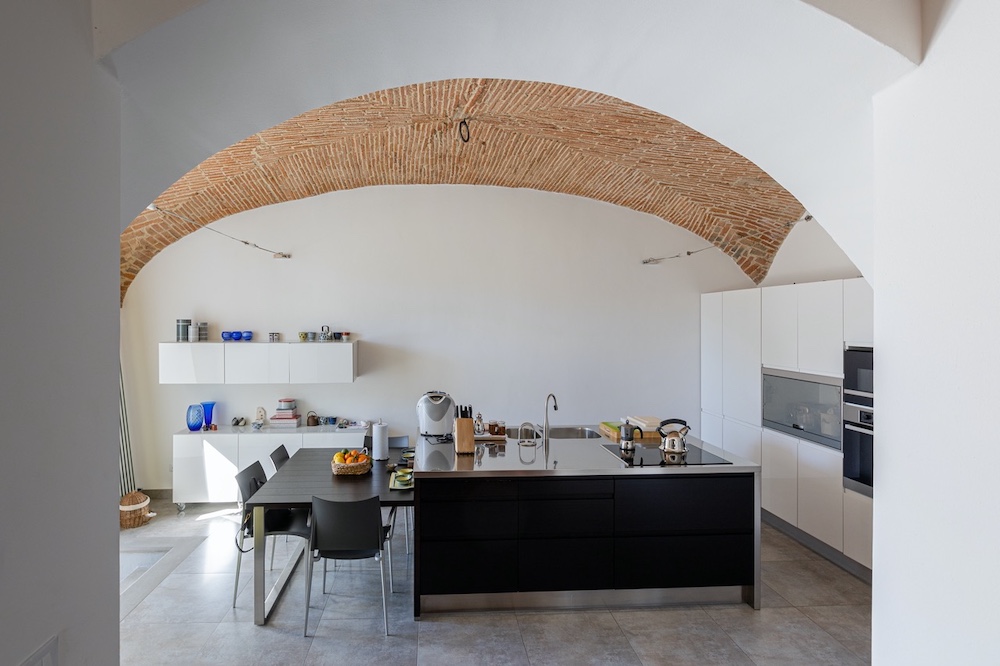
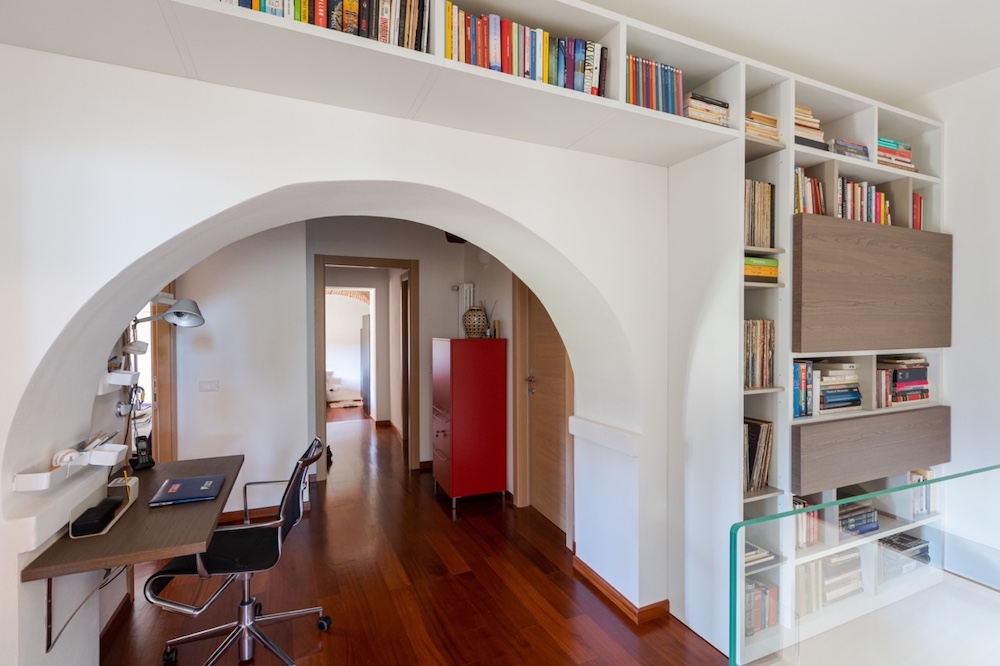
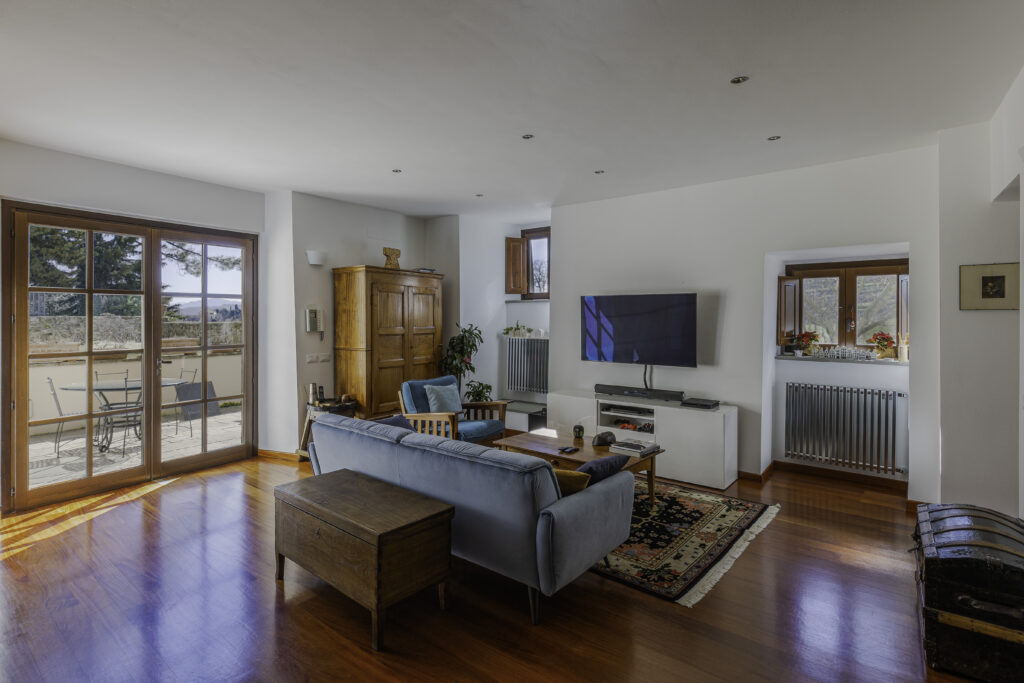
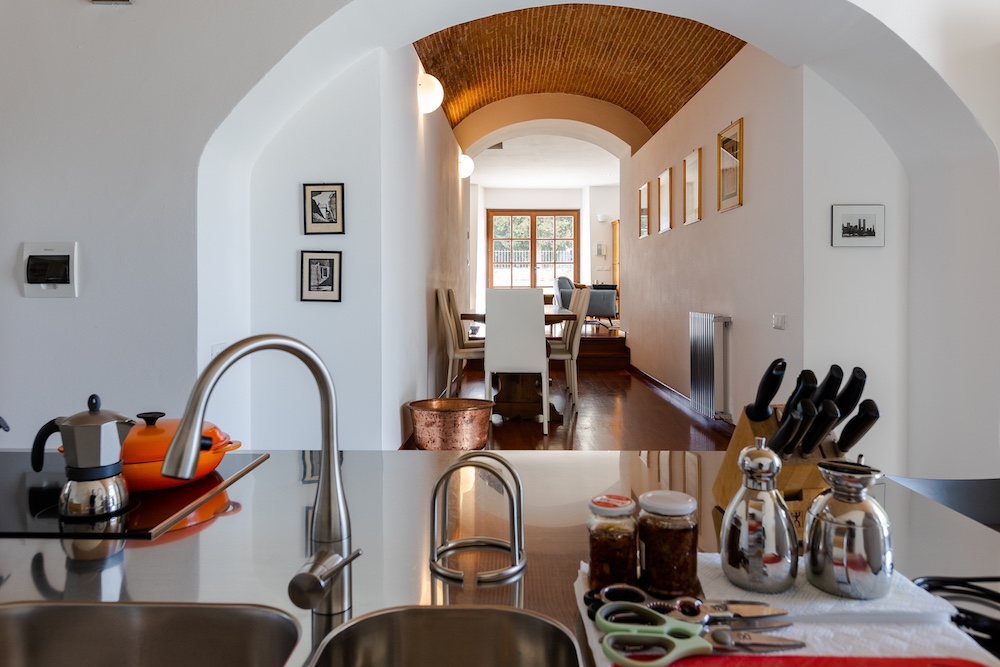
When I acquired the property, it was a completely rustic space that had originally served as part of the abbey’s lower granary and storehouse for the agricultural lands surrounding the complex. The extraordinary walls, approximately five to six feet thick, along with the original wooden beams and terracotta ceilings, were essential features that I wanted to preserve and restore. I deliberately chose this portion of the convent for its generous outdoor space, two private entrances and greater independence within the complex. My approach was to respect the simplicity and authenticity of the original architecture while introducing natural wood floors, clean, functional window fixtures, carefully selected decorative lighting and high-quality Italian and German appliances. I have always believed in quality, durability and lasting functionality, and I wanted those principles to guide every aspect of the restoration.
Which features of the residence are you particularly proud of, and how do its layout and private garden contribute to everyday life?
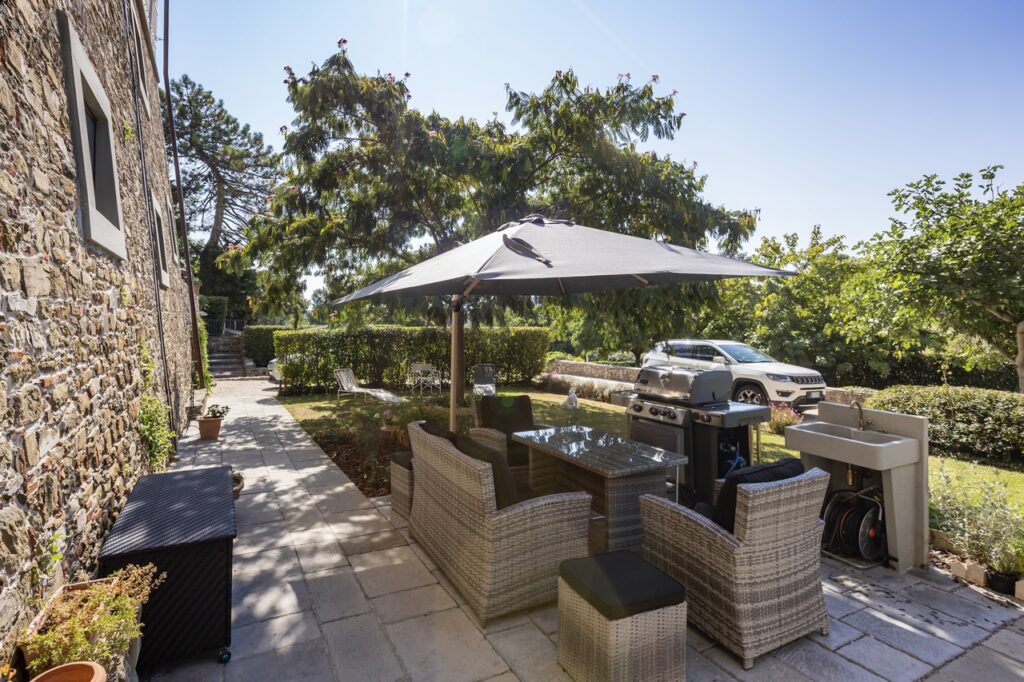
Having been born and raised in America, I have always enjoyed outdoor living and gathering with family and friends. Our private garden has become an extension of the home, and we use it almost every day, even during the winter, for barbecues, relaxing and entertaining. Several times a year, I host what I affectionately call our “pig outs,” outdoor gatherings that bring together neighbors and friends for good food and conversation. The residence itself is arranged over two floors, with the lower level dedicated to everyday living and entertaining, while the upper floor provides a quieter environment for my study, office and bedrooms. I particularly appreciate this balance between the sociable, open character of the garden and the privacy and tranquility of the upstairs rooms.
What do you appreciate most about living in Mugello, and what might surprise someone who knows Tuscany primarily through Florence, Siena or Chianti?
Mugello has become something of an unsung oasis in Tuscany. Nestled in the foothills of the Apennines and surrounded by beautiful agricultural countryside, it offers a healthy, relaxed lifestyle while remaining remarkably accessible to Florence, Bologna and Pisa. Its restaurants and local gathering places are lively, particularly during the summer months around the lake, yet the area retains a genuine small-town spirit where people know one another while respecting each other’s privacy. The region’s wine culture is also evolving, with a growing number of small vineyards producing Pinot Nero, reflecting the changing agricultural landscape. For me, Mugello offers an unusual combination of tranquility, authenticity and convenient access to the rest of Tuscany and Italy.
As an American who has lived in Italy for many years, what advice would you offer someone considering purchasing a historic home in Tuscany?
Purchasing a historic home in Tuscany can be a wonderful dream, but making that dream a reality requires careful research and a clear understanding of your personal needs. Whether the property is intended for vacations, family life, retirement or work, the location and the building must suit the way you actually want to live. Americans should also understand that restoration in Italy often requires patience, particularly when working with the finest local artisans, who are usually the busiest and most sought-after. I would strongly recommend investigating a property’s condition, previous renovations, building regulations and any restrictions before committing to a project. I was fortunate to be part of a group of buyers who shared the same vision for restoring the abbey, and by working together we were able to achieve excellent results in a relatively short period.
The residence is now offered for sale. What makes this property a distinctive opportunity, and what would you most like its next owner to appreciate about living here?
I believe this residence offers a rare opportunity for a family that appreciates outdoor living, generous space and the freedom to enjoy both privacy and time together. For our small family, including our dog, who is known and loved by the neighbors, it has been a wonderful home, with ample room for entertaining friends as well as enjoying quieter moments. There is a genuine sense of trust and community here, and we have often felt so comfortable that we rarely lock our doors. Now that our son is attending university in Florence, my wife and I are looking toward a simpler lifestyle with greater freedom to travel and spend more time in the United States. I hope the next owners will appreciate the extraordinary history, independence and quality of life that have made this such a special home for us.
Joseph’s story is a reminder that living in Italy is about more than finding a beautiful property. It is about understanding a place, respecting its history and becoming part of the community that gives it life.
After nearly two decades at Badia di Santa Maria a Vigesimo, Joseph and his family are preparing for a new chapter, offering their restored residence to someone who shares their appreciation for historic architecture, outdoor living and the quieter rhythms of Tuscany.
For the next owner, the opportunity is not simply to purchase a home in Mugello, but to become part of a story that has been unfolding for nearly a thousand years.
Property Details & Private Inquiries
Badia di Santa Maria a Vigesimo | Mugello, Tuscany, near Florence
This restored residence within a centuries-old abbey offers three bedrooms, three bathrooms, approximately 210 m² (2,260 sf) of living space, a private garden of approximately 1,000 m² (10,764 sf) and a separate garage.
Asking Price: €565,000
For additional information or to arrange a private viewing, contact Joseph Francis Molinaro at josephmolinaro1@gmail.com.