
A film by Nicolangelo Gelormini (Fortuna), exploring love, illusion, and emotional architecture in Turin
The 43rd edition of the Miami Film Festival brought together over 160 films from 45 countries, continuing its role as a platform for international storytelling. This year, I was invited by the festival’s press office to attend a screening of La Gioia, the latest film by Italian director Nicolangelo Gelormini.
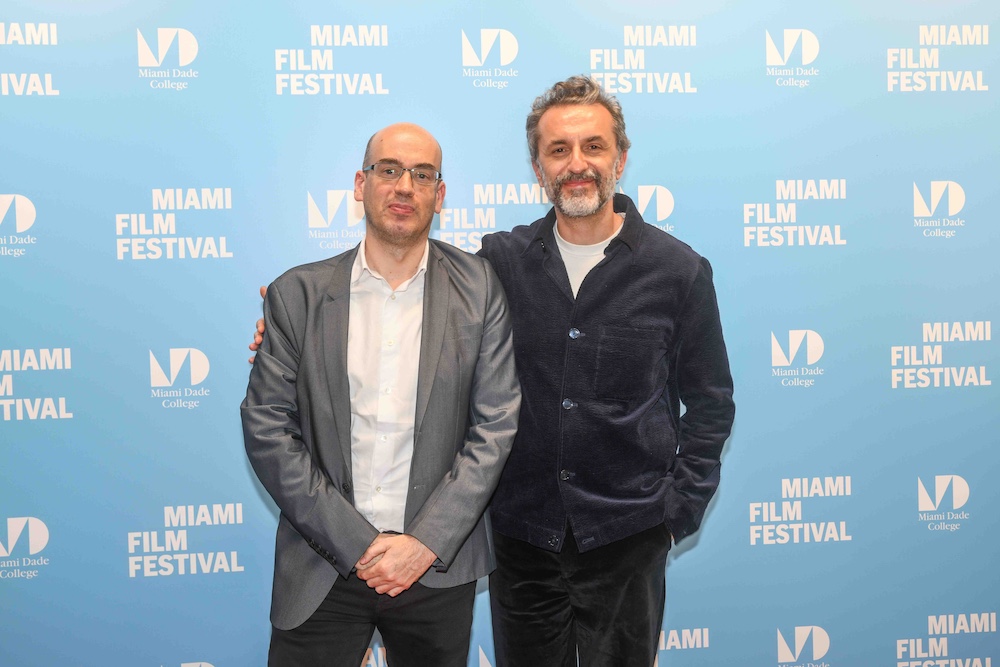
Supported in part by the Istituto Italiano di Cultura Miami, the film’s presence reflects an ongoing effort to bring contemporary Italian cinema to international audiences.
And sitting in that theater, watching La Gioia, I found myself unexpectedly transported—not to Italy, but back to my university days studying cinema.
A Personal Return to Italian Cinema
There’s something about watching an Italian film in a festival setting that feels different.
Maybe it’s the weight of history—neorealism, Antonioni, the quiet devastation of everyday life. Maybe it’s the awareness that Italian cinema has never been afraid of discomfort. Or maybe it’s simply the way these films ask you to work as a viewer.
For me, it was a return to why I first fell in love with cinema.
Like many of us at Live in Italy Magazine, my connection to Italy runs through travel, food, and culture. But for me, it began with the arts—Caravaggio’s chiaroscuro, and the emotional landscapes of Italian film from neorealism through the late twentieth century.
Watching La Gioia felt like stepping back into that intellectual and emotional space. Not passive viewing, but active engagement.
Because this is not a film that gives you answers.
A Story of Misread Love

At its surface, La Gioia tells the story of Gioia, a reserved high school teacher in Italy’s Piemonte (Piedmont) region whose life is disrupted by an unexpected relationship with one of her students.
But this is not a conventional narrative of forbidden love.
Gelormini draws loosely from a real news story, but deliberately moves away from realism to explore something deeper: what he describes as a “diseducazione sentimentale”—a lack of emotional literacy that leads individuals to confuse love with manipulation.
“La gioia racconta un fraintendimento.”
(“La Gioia tells a misunderstanding.”)
— Nicolangelo Gelormini
This idea is not only thematic—it is embedded in the film’s objects, gestures, and cultural references.
Gioia teaches French literature. Madame Bovary becomes more than a classroom text—it becomes a mirror. Like Emma Bovary, Gioia constructs a romantic fantasy she cannot sustain. But where Bovary dreams through literature, Gioia ultimately consumes it—literally.
In one of the film’s most unsettling moments, after realizing Alessio has abandoned her and taken her money, Gioia tears pages from Madame Bovary, stuffs them into her mouth, and even tries to feed them to the rabbit he had given her.
It is a violent rupture of illusion.
The rabbit itself—initially a symbol of tenderness and projected love—becomes part of that collapse. What she nurtures, she also attempts to destroy. Love and delusion are indistinguishable.
Music, Illusion, and Rupture
Gelormini’s use of music reinforces this fragile emotional architecture.
A recurring motif is Richard Sanderson’s “Dreams Are My Reality,” from the French film La Boum—a song that carries adolescent longing and romantic projection. Its English lyrics overlay Gioia’s internal world, suggesting a love she has learned secondhand, through culture rather than experience.
In one scene, she kisses her own hand, rehearsing intimacy she has never known. The moment feels suspended—until it is abruptly broken by her mother’s intrusion.
This pattern repeats.
New Order’s Blue Monday introduces a colder, more detached rhythm—but rather than simply reinforcing a dreamlike state, it becomes a point of connection. Through music, Alessio seems able to meet Gioia in a space that transcends their age difference, drawing her into a shared cultural language that feels at once nostalgic and disorienting.
It also reinforces the film’s visual and tonal references—an 80s-inflected atmosphere noted in the cinematography—where sound and image work together to create a world that feels slightly removed from the present.
Then there is Erik Satie’s Gymnopédie No. 1, heard during the rooftop sequence at the Lingotto. Satie’s minimalist composition—cyclical and resistant to traditional structure—echoes the emotional logic of the film: unresolved, suspended, without clear direction.
Like Alessio himself.
There are moments when he appears moved by Gioia’s affection—particularly in that rooftop scene, where he pulls her away from an oncoming car and briefly embraces her. He photographs her in front of a mural of Monica Vitti, a possible visual nod to Michelangelo Antonioni and the tradition of Italian modernist cinema.
And yet, even here, something feels unstable.
His tenderness never fully resolves into care. It flickers, then disappears.
Architecture, Absence, and Emotional Inheritance
Gelormini’s background in architecture is central to how this story is told.
Torino (Turin) is not romanticized. It is cold, industrial, and subdued. The winter light flattens color into muted tones, contributing to an aesthetic that recalls a restrained, almost 1980s visual language.
This is not the Italy of postcards.
And for a travel publication, that matters.
Turin—and the broader Piemonte region—is often overlooked in favor of more obvious destinations. Yet here, it becomes the perfect setting for a story about isolation, monotony, and emotional disconnection.
Interiors are fragmented. The family home is never fully revealed—divided by walls, thresholds, and visual barriers that mirror the characters’ psychological states.
Even the family structures themselves are incomplete.
Gioia’s father is physically present but unable to speak. Alessio’s father is absent—whether real or imagined remains unclear. In both cases, authority is replaced by dominant maternal figures.
This absence is not incidental. It is inherited.
Performance and the Refusal of Judgment
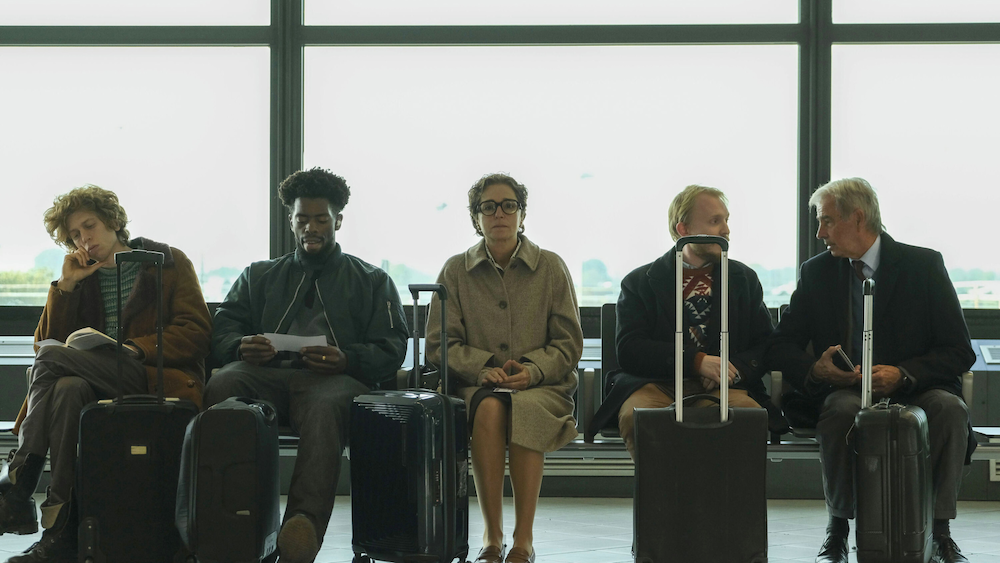
At the center of the film is Valeria Golino’s performance—delicate, unsettling, and at times painfully transparent.
We laugh at Gioia’s innocence. We judge her. And then we recognize something deeply human in her need to be seen.
Alessio resists definition. He oscillates between vulnerability and calculation, tenderness and indifference.
We want to believe he cares.
But the film never confirms it.
“Non è un film che giudica… cerca di mostrare le cose per quello che sono.”
(“It’s not a film that judges… it tries to show things as they are.”)
— Nicolangelo Gelormini
The Final Image: Suspension
The film returns to the Lingotto—this time not as a space of fleeting connection, but as one of abstraction.
Within La Pista 500 appears Julius von Bismarck’s installation Die Mimik der Tethys—a buoy suspended in space.
Earlier in the film, Alessio brings Gioia here, presenting it as a place of memory and intimacy—perhaps even tied to his father, though the truth remains uncertain.
By the end, that meaning shifts.
The characters recede. The space remains.
The suspended buoy—detached, unanchored—becomes less a shared experience and more a visual echo of absence.
Architecture takes over.
And we, as viewers, are left suspended—without resolution, without judgment, without certainty.
Cinema That Asks Us to Return
La Gioia is not an easy film.
It is, at times, uncomfortable, ambiguous, even disorienting. But this is precisely what makes it meaningful.
“Questa cosa lo costringe ad affrontare una storia tragica senza avere lo strumento giudicante.”
(“This forces the viewer to confront a tragic story without the tools to judge it.”)
— Nicolangelo Gelormini
Good cinema—like a good book—demands multiple readings.
A Bridge Between Cultures
Through the support of institutions like the Istituto Italiano di Cultura Miami, Italian cinema continues to reach audiences beyond Italy, fostering a deeper understanding of contemporary culture through film.
Looking Ahead
Our full bilingual interview with Nicolangelo Gelormini is now available to hear and watch on our “Italy Answered” podcast found on Apple Podcasts & Spotify.
Because films like this are not meant to be experienced once.
They are meant to be revisited.
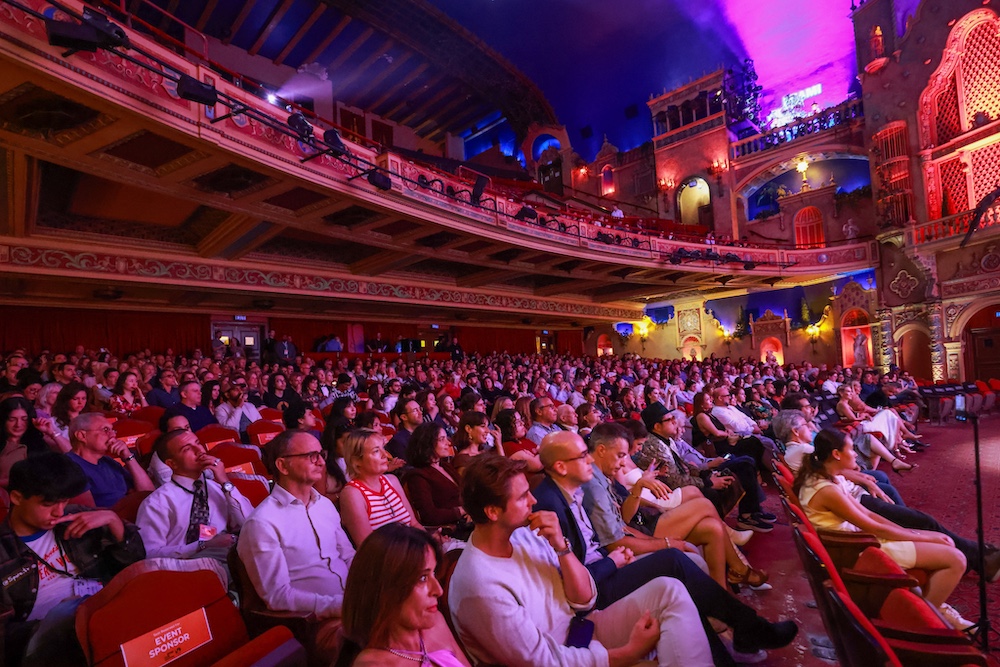
To learn more about the Miami Film Festival, visit miamifilmfestival.com.
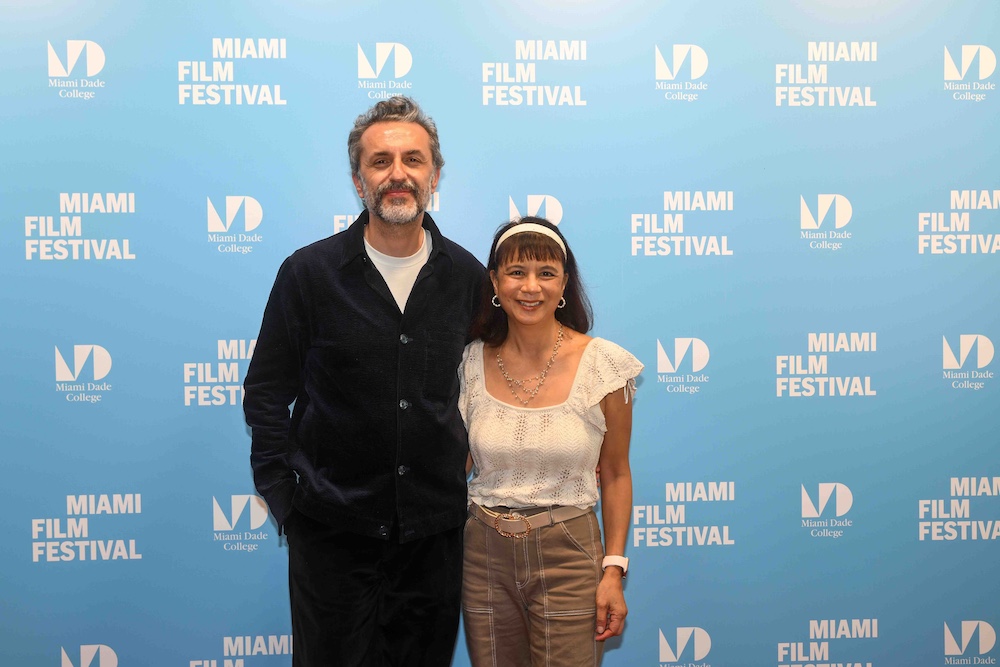
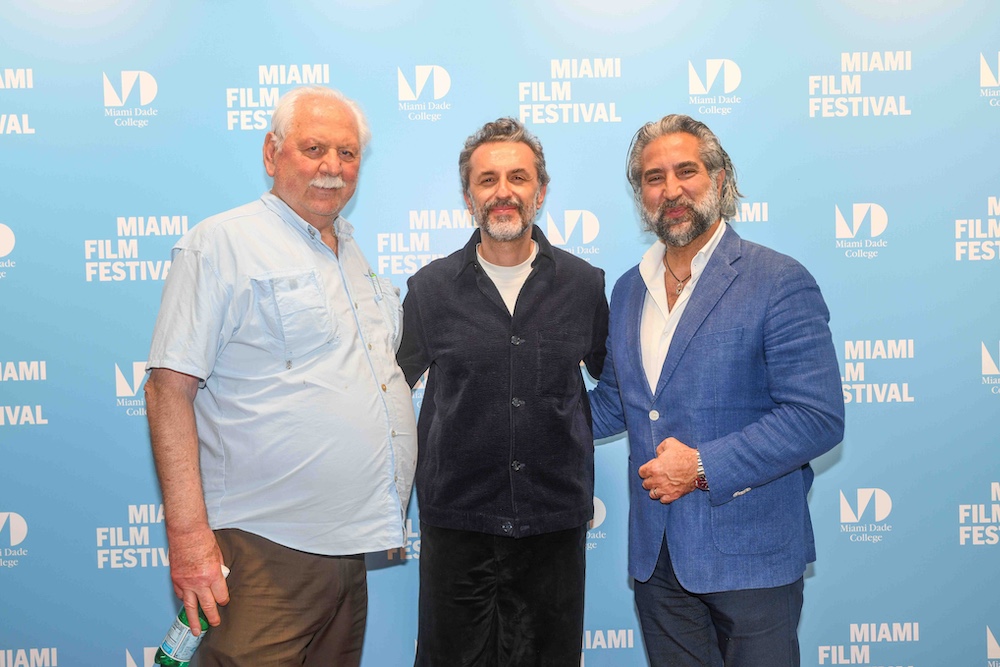
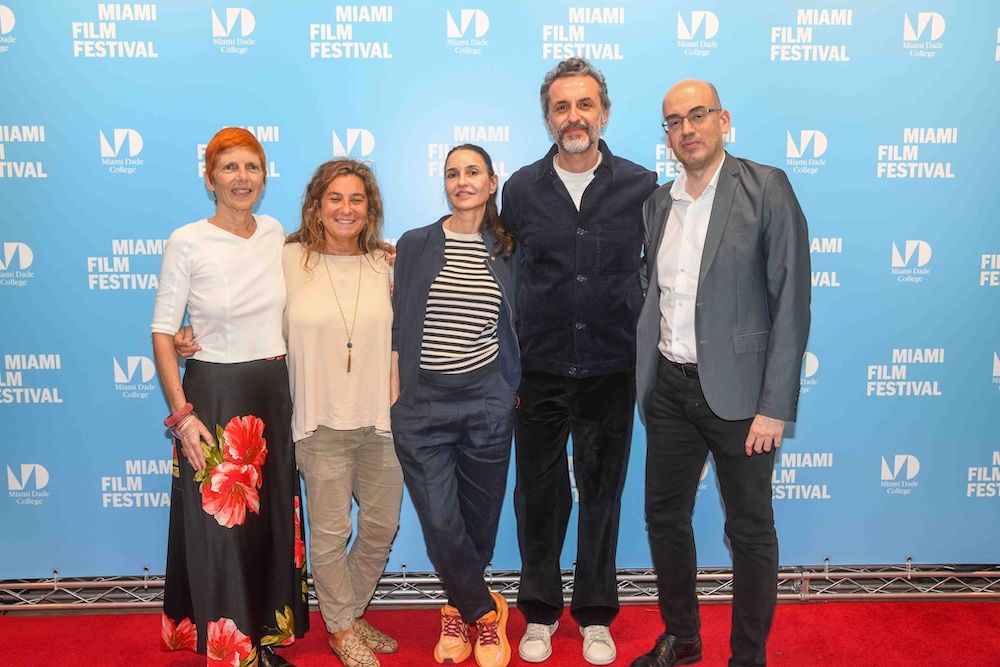
All images courtesy of The Miami Film Festival.