
Extraordinarily beautiful, surrounded by the azure Mediterranean sea, effortlessy glamorous with fashion boutiques and the famous Piazzetta where you might spot a VIP, Capri is the island in the Gulf of Naples that needs no introduction, but there’s more to it than its most iconic sights.
If you want to experience a less polished but more authentic side of Capri, take the opportunity to leave the luxury fashion and fine dining behind for a while and discover Anacapri, the island’s largest town, nestled in the green hills.
Capri vs Anacapri: what are the differences
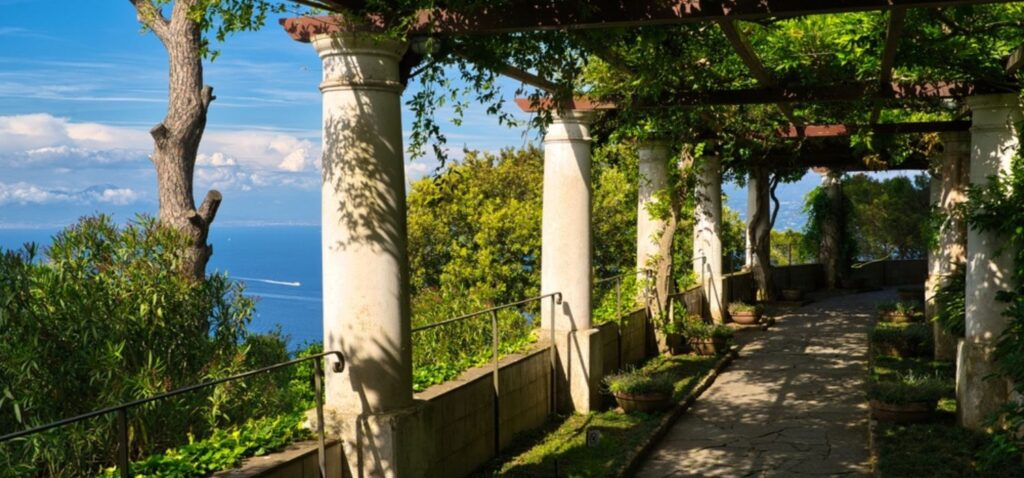
Capri’s only port is Marina Grande, and this is where most visitors arrive and often remain. From Marina Grande, however, a bus departs that reaches Piazza Vittoria, the heart of Anacapri, in just fifteen minutes.
The village’s relaxed and tranquil atmosphere welcomes newcomers with flower-filled balconies and cobbled streets. Here is where, as far back as two centuries ago, artists and intellectuals chose to live in order to escape the crowds and social scene of the island’s more famous side.
The historic centre of Anacapri seems made for slow travellers, and it is almost entirely pedestrian. You will find narrow lanes weaving into one another, traditional restaurants and artisan workshops where to enjoy a peaceful, restorative walk.
There are lesser-known monuments waiting to be discovered too, and panoramic views that are truly unique in the world. Also, many people don’t know that one of Capri’s top attractions is right here.
What to see in Anacapri
The Baroque churches of Chiesa di Santa Sofia and Chiesa di San Michele Arcangelo are Anacapri’s two main landmarks. The latter, in particular, is renowned for its magnificent majolica floor depicting the expulsion of Adam and Eve from the Garden of Eden.
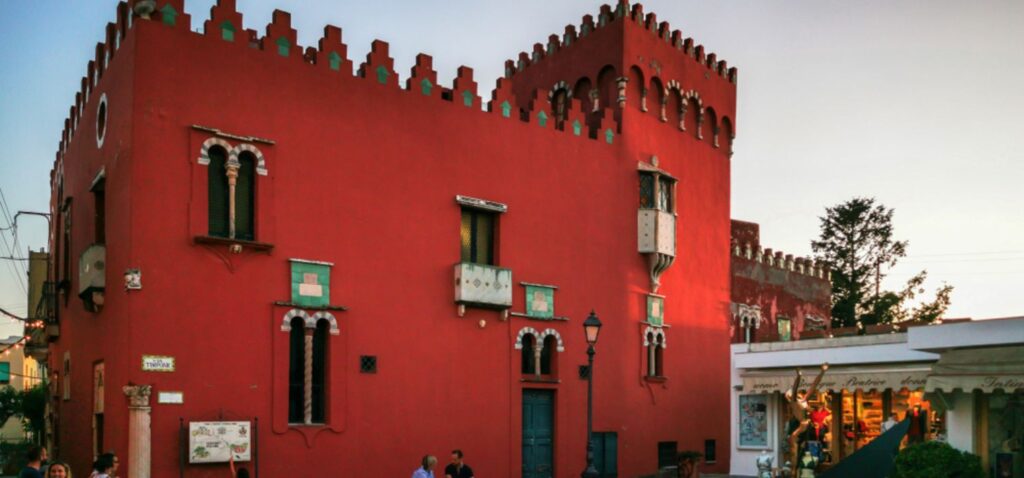
Casa Rossa is another emblematic site of the village. It owes its name to the Pompeian red that colours its walls and stands close to the Church of San Michele. In the 18th century it was home to the American colonel John Clay MacKowen, a collector of archaeological artefacts he himself discovered on the island. Today, the collection is part of the exhibition which also includes statues recovered from the seabed and a number of paintings.
A staircase links Piazza Vittoria to Villa San Michele and its panoramic garden, once the home of the Swedish physician Axel Munthe. Today, the museum houses archaeological finds as well as the art collection of the villa’s original owner.
Trekking on the hill
If you venture just a bit beyond the centre, you can enjoy Anacapri’s unspoilt beauty along the paths that wind through the Mediterranean scrub. Among them are the trail leading to the Eremo di Santa Maria a Cetrella and the Sentiero dei Fortini, both offering truly breathtaking views. The latter connects the Faro di Punta Carena with the Damecuta pine grove, also known for preserving the remains of Villa Damecuta, one of the twelve villas built on Capri by the Emperor Tiberius.
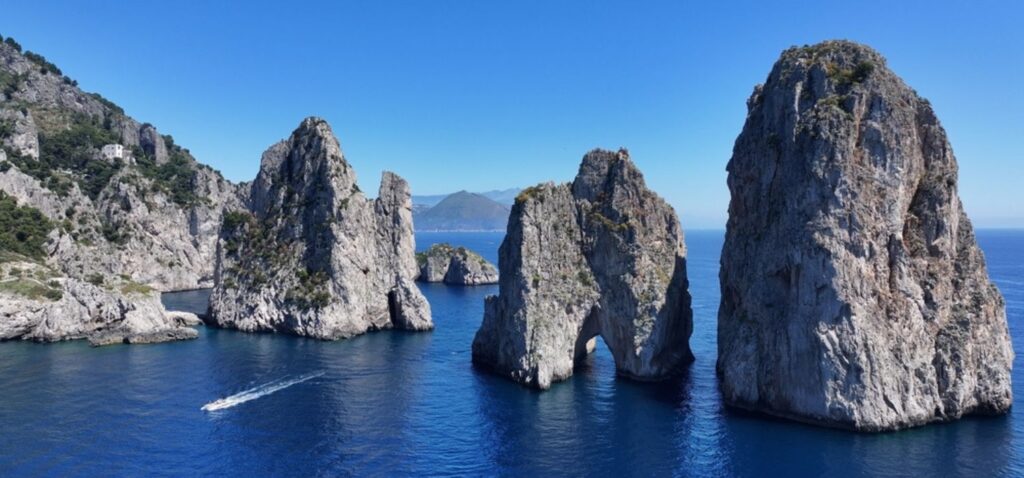
If you wish to climb even higher, a chairlift takes you to the summit of Monte Solaro, from where the views over the Amalfi Coast and the Faraglioni become, if possible, even more spectacular.
In the opposite direction, rather than a trail, a staircase known as the Scala Fenicia leads all the way down to Marina Grande. Keep in mind that the descent involves nearly one thousand steps, so it is best tackled only if you are in good shape!
Where to swim in Anacapri and find its greatest wonder
Anacapri has no sandy beaches, but this only adds to its wild charm. You can still swim from piers and rocky outcrops, just as locals do, in waters that quickly become deep.
Gradola and the Faro di Punta Carena are the two main spots to dive into Anacapri’s crystal-clear sea, provided conditions are calm. When the sea is rough, the waves crashing against the rocks create a heart-stirring spectacle, best admired from a safe distance.
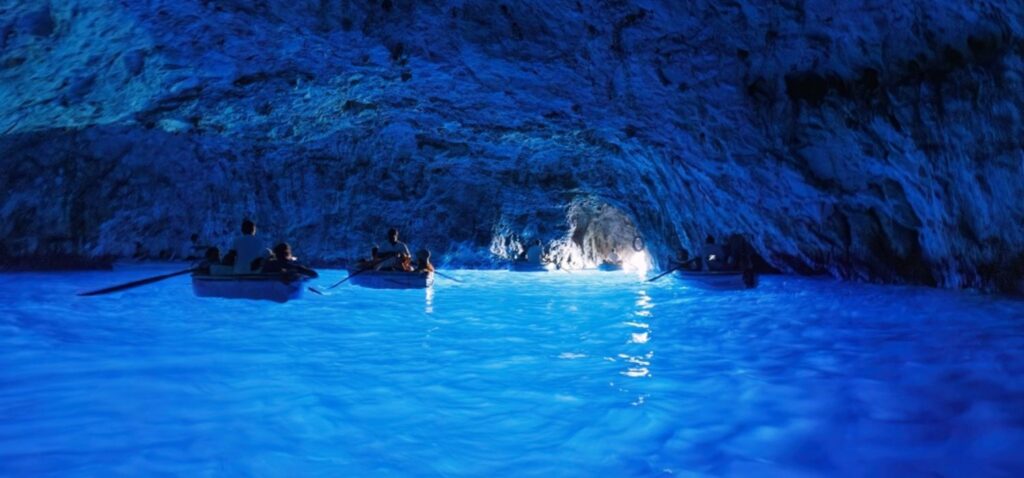
Anacapri feels like a world apart, remote and almost suspended in time, yet it is home to one of the island’s greatest attractions, and perhaps one of Italy’s most remarkable sights. The Blue Grotto, famed for its astonishing colours, is located here. Most visitors reach it by boat from Marina Grande, but Anacapri has its own access point at Gradola, about a ten-minute bus ride from the village centre, offering an alternative way to experience this natural wonder.
Author