
After leaving demanding careers in Toronto, Dustin Cox and Luigi Albanese moved from Canada to Italy in 2024. In Abruzzo, they are building a slower, more creative life shaped by community, family, and a renewed definition of success.
What if success were measured less by professional momentum and more by having time to enjoy a morning coffee overlooking olive trees?
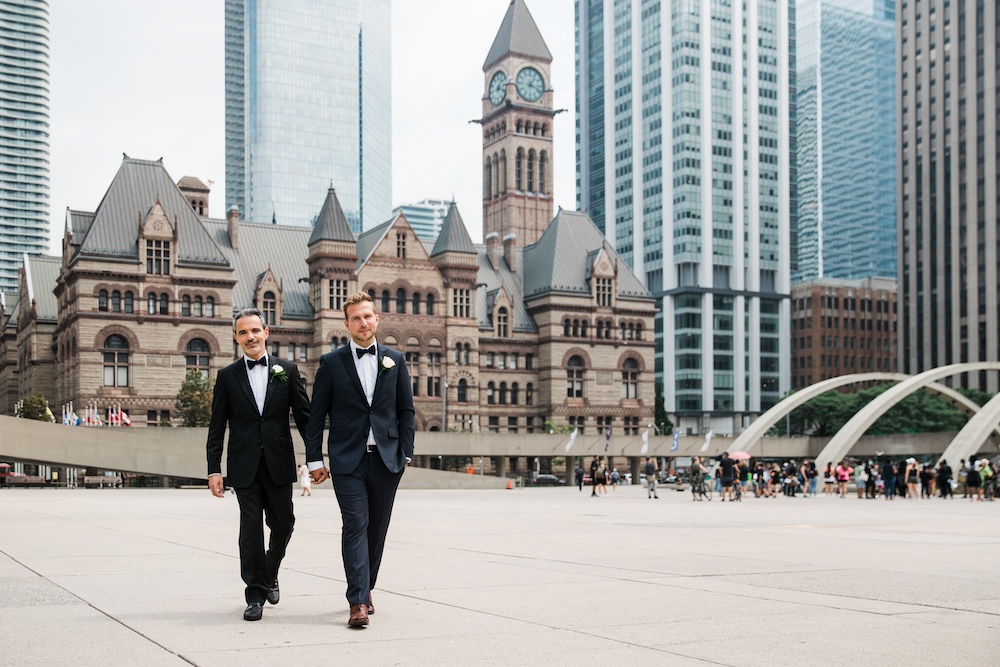
For Dustin Cox and Luigi Albanese, that question became increasingly difficult to ignore after years of living and working in Toronto. Both had established professional lives in Canada. Dustin worked in graphic design and fashion, while Luigi built a career as a piano teacher. Yet, following the pandemic, the cost and pace of city life began to feel unsustainable.
In June 2024, they sold their belongings and moved to Abruzzo, the region where Luigi was born and raised.
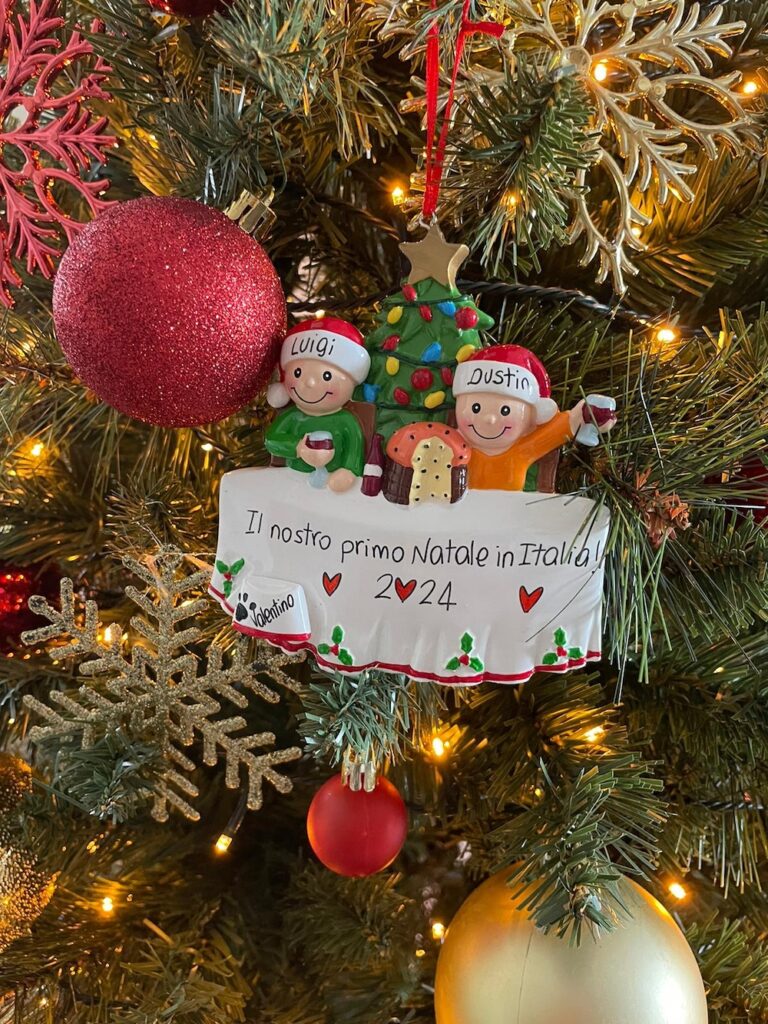
Unlike many of the relocation stories we’ve featured in Chat with an Expat, Dustin and Luigi are only a couple of years into their Italian journey. They are still navigating bureaucracy, learning the language, building community, and discovering what everyday life in Abruzzo is really like. At the same time, they are discovering the rewards of living in a smaller community surrounded by mountains, olive groves, and the Adriatic Sea.
In this edition of Chat with an Expat, we discuss their journey from Canada to Italy, the realities of beginning again, and how a slower pace of life has helped two creatives feel more grounded.
You can listen to the full conversation on Italy Answered while following along with this edited transcript on Spotify, Apple Podcasts, or YouTube.
Where are you both originally from? (01:35)
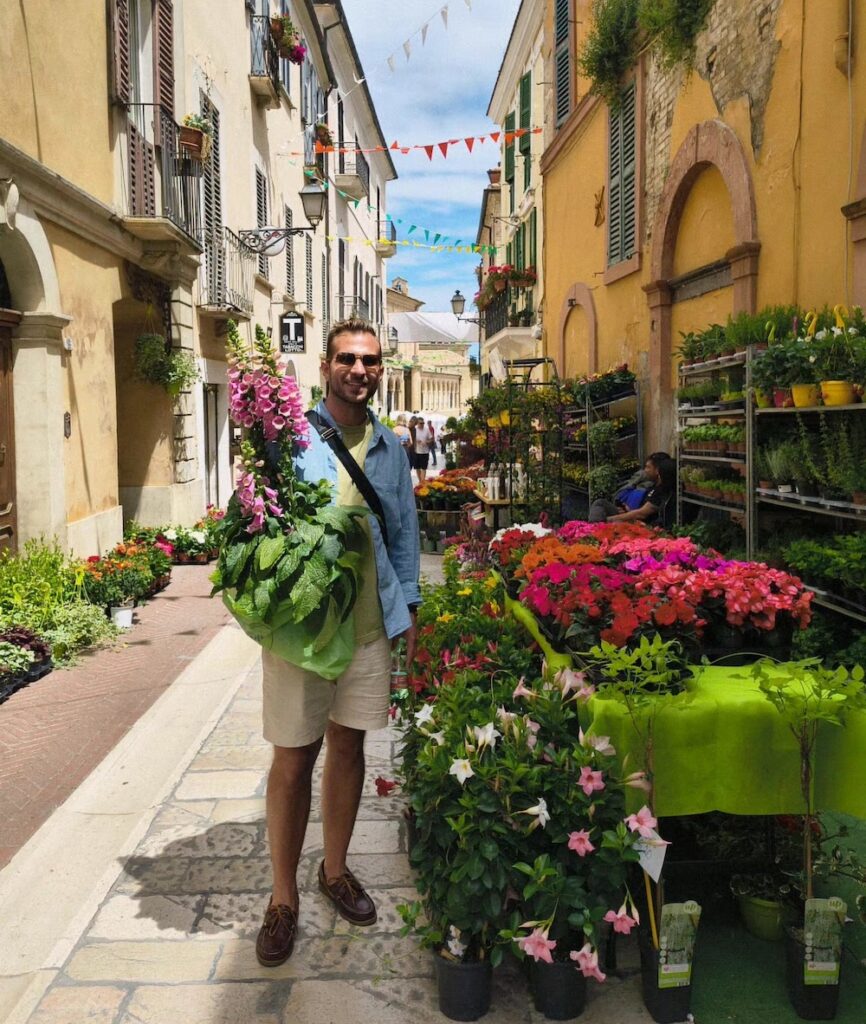
Dustin: I’m originally from Sioux Falls, South Dakota, right in the center of the United States. I’m from the Midwest.
I studied fine art for about a year in South Dakota, and then I had a crisis where I felt like I had to get out. I moved to Minneapolis with about $2,000 in my pocket.
It was there that I discovered my passion for graphic design. Minneapolis was also the city where I figured out who I was as a person. I would say it shaped me.
The day after I graduated from college, I packed my little black BMW and drove to Los Angeles. I had no job lined up, although I did have a place to stay. I wanted to experience life in a new way and avoid another Minneapolis winter.
I lived in Los Angeles for a couple of years. I fell in love with the ocean and the weather, and I felt like I had really found myself. Then I met Luigi.
After that, I lived in Toronto for about seven years. Luigi had already been there for 16 years. I feel like I did a little hop around North America, and now here we are in Italy.
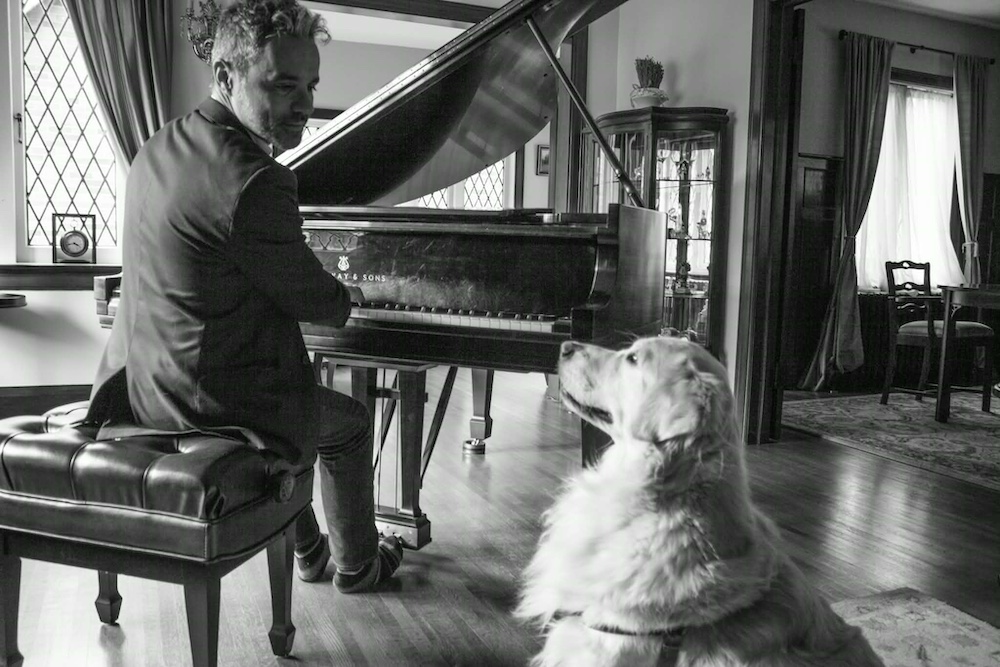
Luigi: I was born and raised in Pescara, a city by the Adriatic Sea.
I studied music at the conservatory for many years. After that, I decided to move to Canada for a new experience.
When I moved to Canada, I didn’t know any English, so it was a challenge. I slowly learned the language and began working as a piano teacher. That was also where I discovered my passion for teaching.
How did the two of you meet? (04:18)
Dustin: We met online while I was living in Los Angeles.
Los Angeles can feel very transient, and I was finding it difficult to meet a partner. I felt that was really missing from my life.
Luigi and I met online and did long distance for about eight months. At the time, I didn’t even have a passport. I had to get one quickly so I could visit him in Toronto.
We traveled back and forth for about eight months. For me, it just felt right. Dating in the gay community can be difficult, and I know many people can relate to that. But this felt like it was the one.
That’s why I decided to move to Toronto.
Luigi: It was a beautiful experience. After about eight or nine months of long distance, we decided it was time to make a decision.
I had already made the big move from Italy to Canada. As much as I would have loved to move to California, I didn’t think I could handle another major move. Getting a green card in the United States is also very difficult.
I said, “Why don’t you try coming to Canada?”
We lived together in Toronto for about seven years and got married during COVID. Our wedding was in our backyard. It wasn’t what we had originally imagined, but it was beautiful.
What led you to leave Toronto and move to Italy? (07:01)
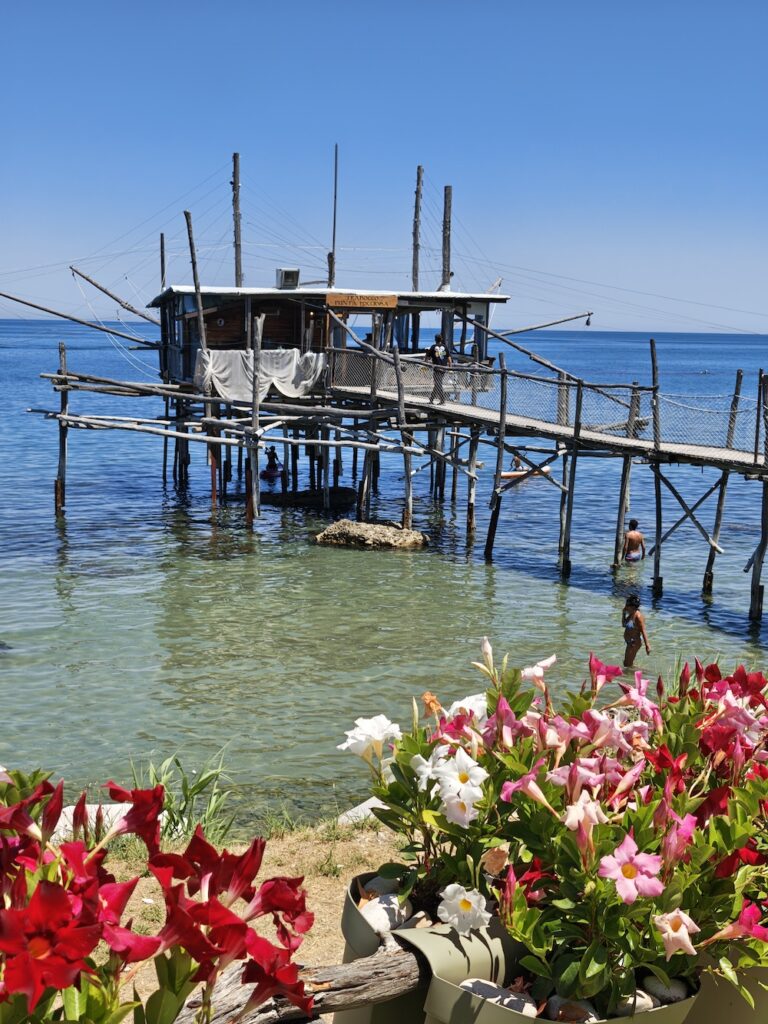
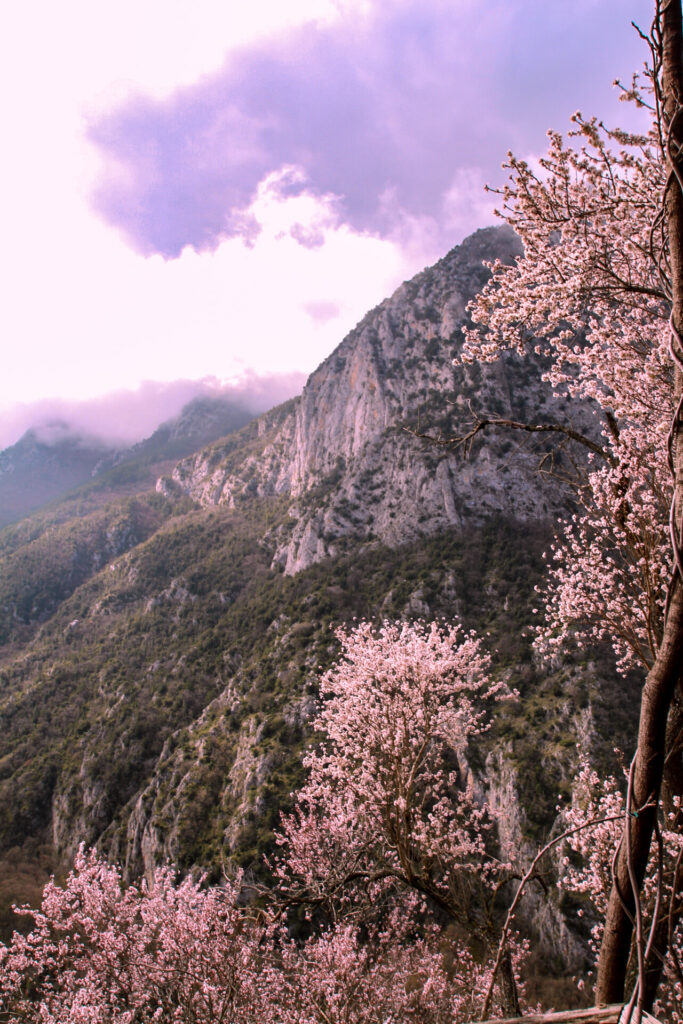
Luigi: I really missed the sea.
I was born by the Adriatic, and I missed being able to go to the beach every day during the summer.
The cost of living in Toronto was also becoming very expensive, especially after COVID. We both needed two jobs to afford a simple life.
My parents and the rest of my family were still in Italy, so we decided to move.
One of the good things about Abruzzo is that it is still not very well known. I would also consider it much more affordable than some other parts of Italy.
What should people know before moving to Italy? (08:07)
Dustin: Any American, Canadian, or expat who wants to move to Italy should know what they’re getting into, especially if they don’t have an Italian partner to help them navigate the process.
I have to be honest: it’s not for the weak of heart.
There is a lot of bureaucracy. Social media has helped people see more of what the process of moving to Italy can actually look like.
The first thing I would say is that you need to learn the language. I say that with my chest because, in the beginning, I underestimated the importance of it.
There can be an American mindset of thinking, “We can go there and just speak English.” It doesn’t work that way, especially in Abruzzo. You really have to make the effort.
You also need to understand how to navigate the bureaucracy. If you are alone, do your research and know that your experience may depend on who you are dealing with that day at the Questura or the Comune.
You have to be patient. If you have the courage and the mindset to make it work, you can. It has been completely worth it.
How are you learning Italian? (09:49)
Dustin: I started, like many people, with Duolingo.
I first wanted to learn because Luigi’s family didn’t speak much English, and I didn’t want him to have to translate everything.
Then Luigi gave me an Italian course for Christmas while we were living in Toronto. That was during the pandemic.
After the course, I became more interested. I listened to podcasts, including Coffee Break Italian, and most recently Luigi found a school for me in Pescara.
I now have an amazing instructor from Torino. I would say I’m around a B1 level.
I still have a lot to learn, but you have to speak. You can’t be afraid. You’re going to make mistakes, and you’re going to be humbled.
There might be a table full of Italians and a child who speaks perfect Italian. You just have to work your way through the situation.
If you’re patient and push yourself, you can make it happen.
Do you speak Italian together at home? (11:13)
Luigi: Unfortunately, we speak mostly English.
We met speaking English, and it feels more natural for us to communicate that way. It’s strange, but speaking to Dustin in English comes more naturally to me.
I should speak more Italian with him.
Dustin: Even when we do speak Italian, my brain almost rejects hearing him speak it because it doesn’t feel natural between us.
But his family and friends speak Italian, and English is not as widely spoken in Pescara as it is in larger Italian cities. I’ve been forced to speak, which has been very helpful.
I also don’t think this is said enough: Italians are very patient with people who are trying to speak the language.
They’re always encouraging. They’ll say, “Bravo, you’re speaking Italian.” Without that support, I don’t think I would be where I am today.
What drew you to Abruzzo? (14:26)
Dustin: I first visited Italy shortly after moving to Canada.
I moved to Toronto in June 2017, and in July I came to Abruzzo with Luigi to meet his family.
I remember arriving in Rome and then traveling toward Pescara. I was taken aback by the beauty of it.
I kept thinking, “People actually live here. My partner grew up here.”
As a creative, it felt almost unreal.
We returned every summer to visit Luigi’s family, and it became a tradition. Eventually, we started joking, “Should we move here?”
I think we said it enough times that it finally came to fruition.
What has made Città Sant’Angelo feel like home? (15:48)
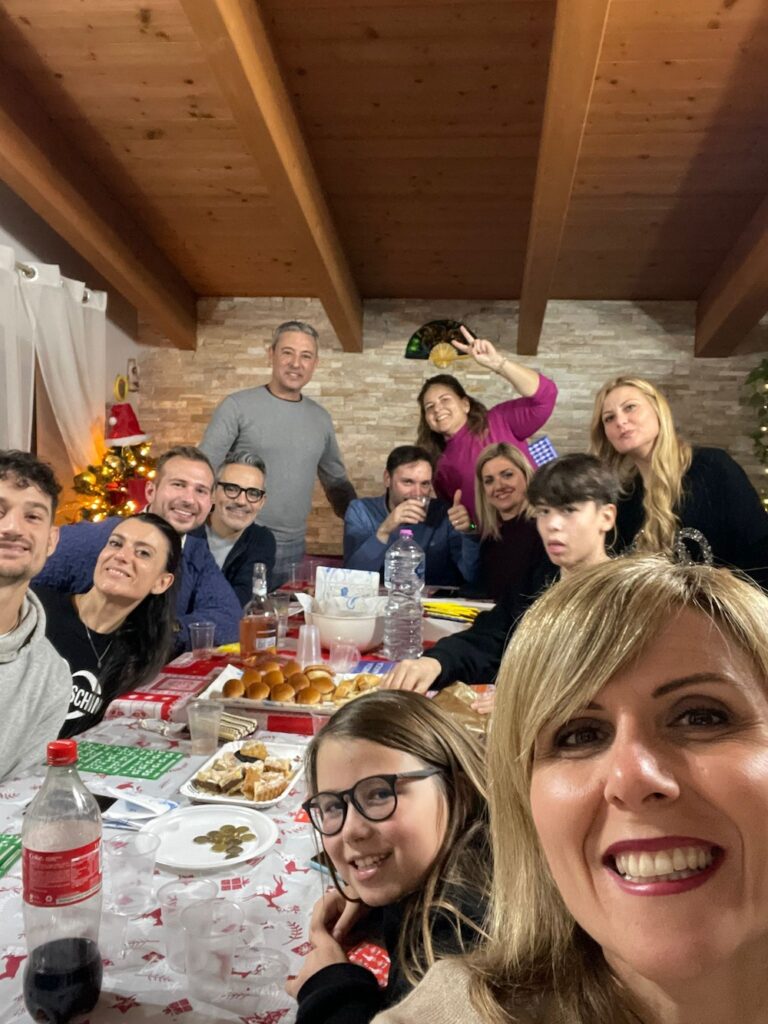
Dustin: The community.
We live near Città Sant’Angelo, about 20 minutes from Pescara. It’s a small town.
As a gay couple, I was a little skeptical at first. I knew we would be living in the countryside, and I understood that it might not be as progressive as Toronto. I was nervous.
Then we met our neighbors, Sonia and Roberto. I remember one of the first times we spoke, they mentioned that they had just attended a lesbian wedding. It felt like their way of saying, “You’re welcome here.”
We can see Sonia from our balcony, and we have conversations while we’re having coffee in the morning.
I feel blessed to be part of this community and to have been welcomed with open arms. It has been beautiful.
How have your careers changed since moving to Italy? (17:24)
Luigi: Canada was an amazing professional experience.
North America offers many work opportunities. Italy has fewer opportunities, especially in a smaller region like Abruzzo.
In Canada, I worked as a piano teacher through conservatories and privately. It was a beautiful experience.
Here, I’m teaching music at a private school and offering private lessons. It is going well, although it is not yet as much as I would like.

I also work with my family’s company, which manufactures handcrafted crystal chandeliers. They are all made by hand, and I consider them works of art.
Dustin: I feel fortunate to still have a Canadian job and a connection to Toronto.
I work for Peace Collective, an independent apparel company founded in Toronto, where I’m currently the art director. Previously, I worked as a graphic designer for Roots Canada.
Remote work has been a great opportunity. I have a six-hour time advantage, so I can wake up, get work done, and have everything ready by the time my colleagues come online.
I return to Toronto twice a year.
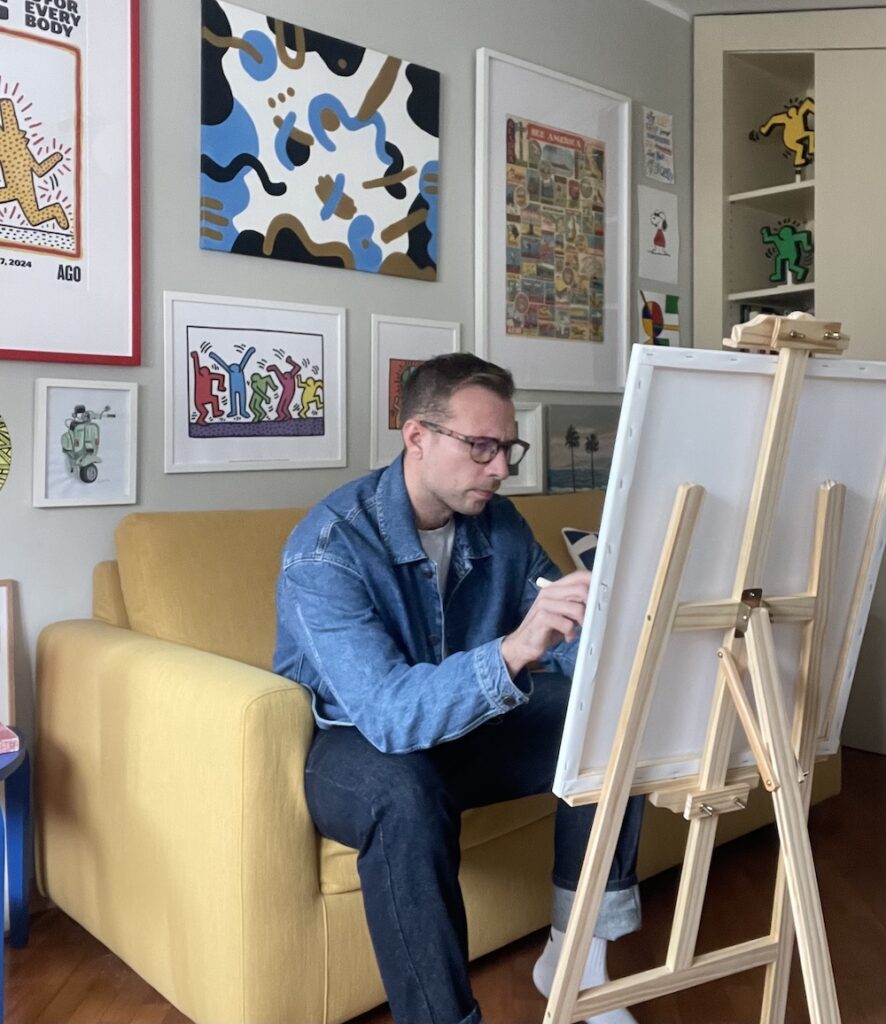
When I have free time, I freelance and paint. The fine artist in me always finds time to paint because that is really my passion.
Has a slower pace of life changed the way you create? (20:44)
Dustin: I think it begins with having space, the landscape, and the peace.
I start the morning with coffee and look at the view. Even after two years, I still have to pinch myself and remember that we live here.
Starting the day with that feeling helps me feel rejuvenated.
I love big cities and I love North America, but I felt very burnt out. I felt as though I had reached a point where I couldn’t go any further in my career. I was exhausted.
When I came here, I felt almost like a new person.
The parts of myself that I didn’t like when I was living in Toronto slowly began to evaporate. It felt like a fresh start.
I can dive back into what it means to be creative, what it means to be grounded, and what it means to be where you are in the moment.
Before, I felt like I was on a hamster wheel, and it was never enough.
I feel much more grounded here.
What does your view look like in the morning? (26:00)
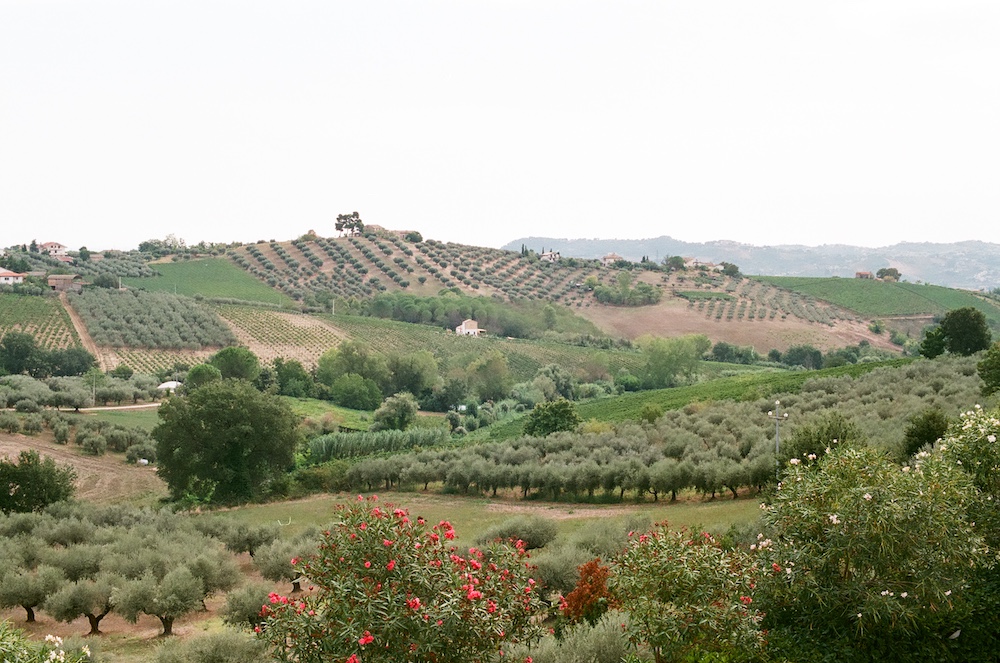
Dustin: We live just below the village of Città Sant’Angelo, so we can look directly toward it.
It looks like a painting. I can’t really describe it.
Luigi: It’s a medieval town on the hill.
We’re surrounded by olive trees, with the mountains behind us and the sea on the other side.
Why are you considering opening a B&B in Abruzzo? (25:04)
Luigi: We’ve looked at several properties near Città Sant’Angelo and in the village.
We’re still searching for the right one and deciding when to take that step.
I’m not too worried about buying another property because Abruzzo is in high demand at the moment. Tourism is becoming stronger, partly because of social media.
At the same time, it is still a relatively unknown region. There is a lot to discover.
I’m from Abruzzo, so of course I believe it is beautiful, but there truly is a lot to do and see here.
Dustin: I know many people say they want to open a B&B, but I think our approach is different.
We would like to call it a B&B artistico. Each room could be named after a composer or an artist.
We want to create a space for community, just as the community here created space for us.
We imagine offering cooking classes, taking guests to the olive groves for watercolor classes, and arranging excursions in the mountains.
Luigi’s cousin lives in the mountains and knows the area extremely well.
We want to create an experience that goes beyond simply having a place to sleep.
That’s why we’re taking our time. We want to find the right property and avoid taking on a project that doesn’t align with our vision.
What lessons have you learned from Italian bureaucracy? (28:28)
Dustin: The processes here are very different from what you would expect in North America.
I once received a check from the United States and wanted to deposit it into my account.
The first time I went to the bank, it was open, but I was told that service was closed.
The second time, I went in the afternoon and learned that international checks could only be deposited in the morning.
The third time, I was told I had to visit the specific branch where I had opened the account.
On the fourth attempt, I was finally able to deposit it.
I don’t tell that story to criticize Italy. It’s simply important for people to understand that the process is different.
At first, I was frustrated and kept wondering why it had to be that way. Now I’ve learned to embrace it.
Things do get done. People help you, but you have to be patient.
What do you miss about North America when you’re in Italy—and what do you miss about Italy when you’re away? (31:47)
Dustin: When I’m in Italy, I miss the efficiency of the systems in North America. I miss how quickly things can get done.
I also miss Trader Joe’s. Every time I go back, I visit because it feels nostalgic.
I miss the national parks in the United States. Italy is beautiful, but there is something special about the parks in my home country, especially Yosemite, the redwood forests, and Joshua Tree.
When I’m in North America, I miss the color of Italy.
When I return to Toronto, everything can feel very gray. Italy feels vibrant and colorful, which is inspiring as an artist.
I also miss the quality of the food. Some foods that I didn’t eat in Canada became part of my diet here.
The grocery store near us sells food grown within five or ten kilometers. When I return to North America, I have to be more careful about what I eat because my stomach no longer handles everything the same way.
I also miss Italian culture. Family bonds are very strong, and time around the table is sacred.
Being in that environment makes you feel grounded. Those are moments you remember for a lifetime.
Luigi: I also miss the efficiency of North America.
Canada is very organized, and things get done quickly. Even though I was born and raised in Italy, I still struggle with the system here. A piece of paper can take days or weeks.
I also miss the professional environment because Canada offered more opportunities for my career.
When I was living in Canada, I missed Italian culture and the sea.
Even in winter, you can walk by the Adriatic. The climate is generally mild enough to enjoy life outdoors throughout the year.
What is your definition of an expat? (36:44)
Dustin: I’m on the fence about the word.
When I think of an expat, I think of someone who moves somewhere but perhaps not permanently. It could be someone using a digital nomad visa and moving between different countries.
I would consider myself an immigrant to Italy because I’ve had to navigate the system like anyone else.
I’m learning the language. I’m dealing with bureaucracy and many of the same problems that Italians face.
There is power in the word immigrant. It shouldn’t be a word that anyone is ashamed of.
Anyone who can move to another country, learn another language, work there, and adapt to another culture is doing something powerful.
There is beauty in that, and I think it should be celebrated.
I’m proud to be an immigrant.
Luigi: I began the immigration process for Canada in the early 2000s.
It wasn’t easy, but I met all the requirements. I found Canada to be a very welcoming country.
I integrated into the culture and the community quite easily. It was one of the most beautiful experiences of my life.
It opened my eyes, changed my point of view, and opened my mind.
I am a Canadian citizen, and I’m still very thankful for that experience.
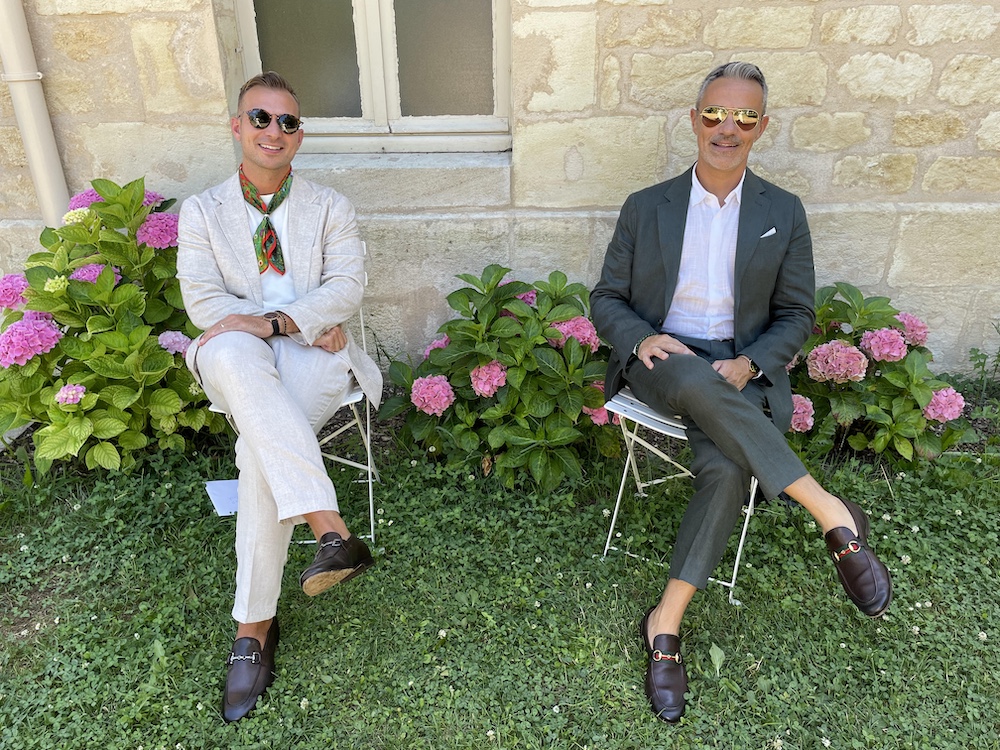
Connect with Dustin and Luigi
Dustin Cox Design
dustincoxdesign.com | @dustincoxdesign_
Luigi Albanese | @luigialbanese1980
Arredoluce
arredolucesrls.it | @arredoluce
TikTok: @thetasteofabruzzo
For more conversations like this, listen to Italy Answered and explore the Chat with an Expat series by subscribing to Live in Italy Magazine.