
Italy is often seen as a traditional country, a little resistant to change. While that is not entirely a wrong stereotype, it’s not the full story. Across the country, women entrepreneurs are reshaping what Italian success looks like. They’re not throwing tradition away, they’re reworking it, questioning it, and building something new from it.
These women prove that entrepreneurship in Italy isn’t always easy. Yet instead of being held back by funding, cultural bias, and work-life balance, they are creating businesses, cultural spaces and new ways of leadership.
Let’s find out more about those already creating change.
Miuccia Prada
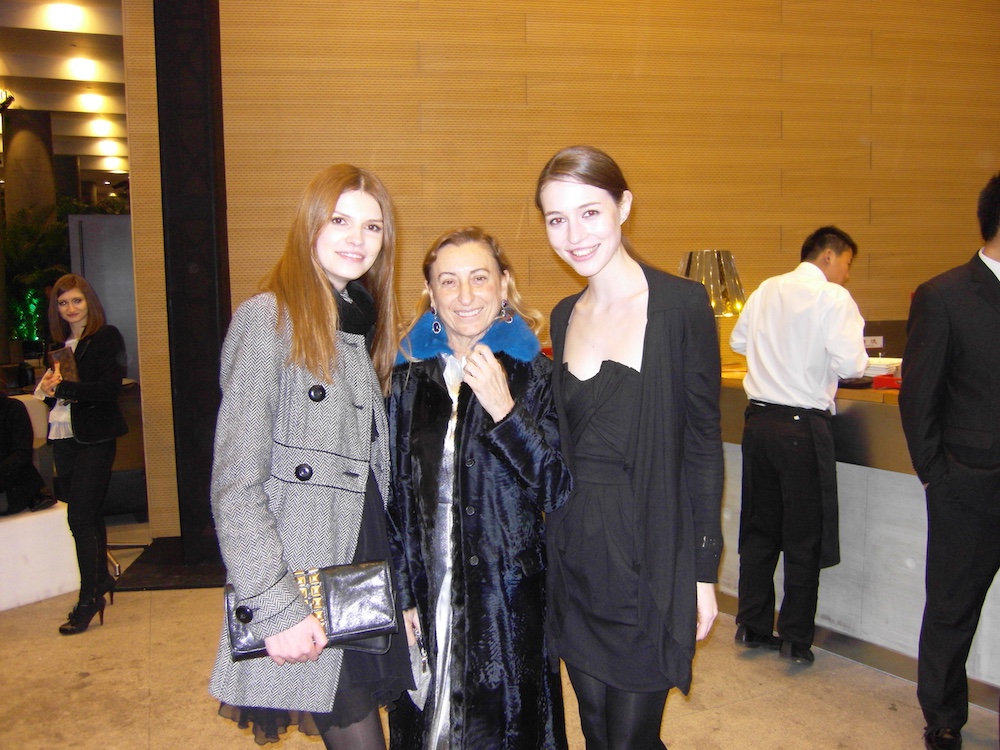
If there’s one woman who completely flipped the script on Italian fashion, it’s Miuccia Prada. When she took over the family business in 1978, Prada was respected, but not exactly boundary-pushing. When Miuccia came along, she turned fashion into conversation.
In 1985, she introduced nylon backpacks – simple and practical, yet shockingly unconventional for a luxury brand, flipping the ‘rules’ of the industry. A few years later, in 1992, she launched Miu Miu, a secondary line based on her own wardrobe.
Under her leadership, Prada has become one of the most influential fashion houses, making space for women in creative leadership roles. Bringing her feminism, intellect, and a slightly uncomfortable edge, she allowed women to dress confidently, challenging traditional beauty expectations.
Today, when people talk about contemporary fashion, Miuccia Prada’s name always pops up – and for good reason. She didn’t just design clothes; she challenged norms and proved that style can be smart, yet still incredibly powerful.
Follow: @whatmiuccia
Cristina Bowerman
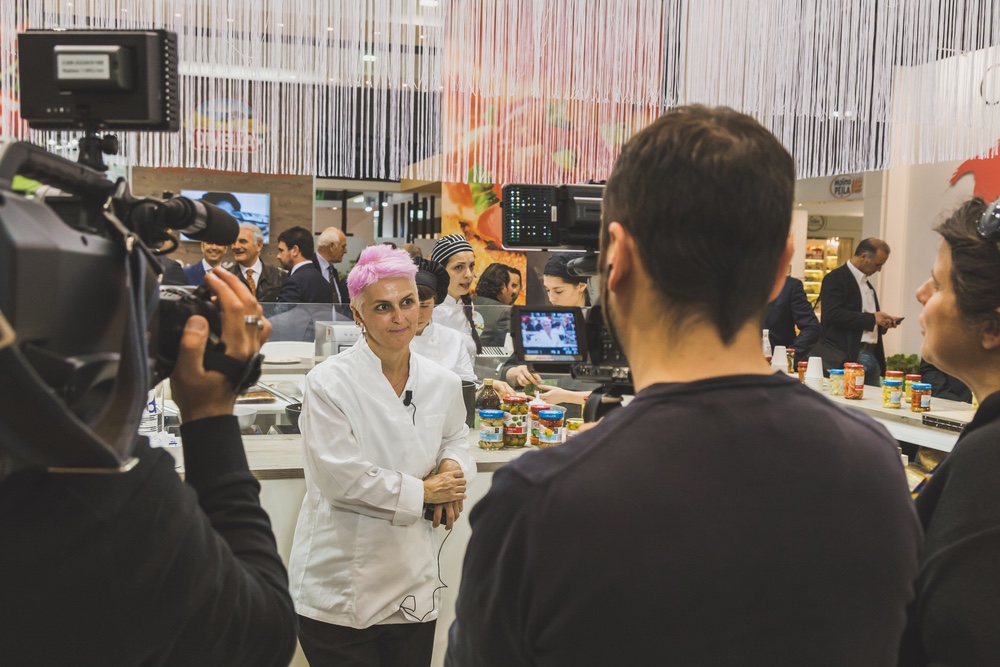
For a long time, the professional kitchen has been a ‘boys’ club’ – and a tough one at that. But Cristina Bowerman didn’t wait for an invitation. She built her own seat at the table and made sure others could sit there too.
A Michelin-starred chef and entrepreneur, Bowerman is known for food that’s bold, inventive, and thoughtful. What sets her apart from the rest is that her work goes beyond the plate. Sustainability and inclusion matter to her just as much as flavour and technique.
In an industry often fuelled by ego, Bowerman has been outspoken about the challenges women face in professional kitchens, such as rigid hierarchies. Rather than accepting those limits, she’s spent her career pushing against them. Instead of constant competition, she focuses on collaboration and support – especially for women trying to find their footing in such a demanding industry.
Follow @cristinabowermanchef
Antonella Ferrara
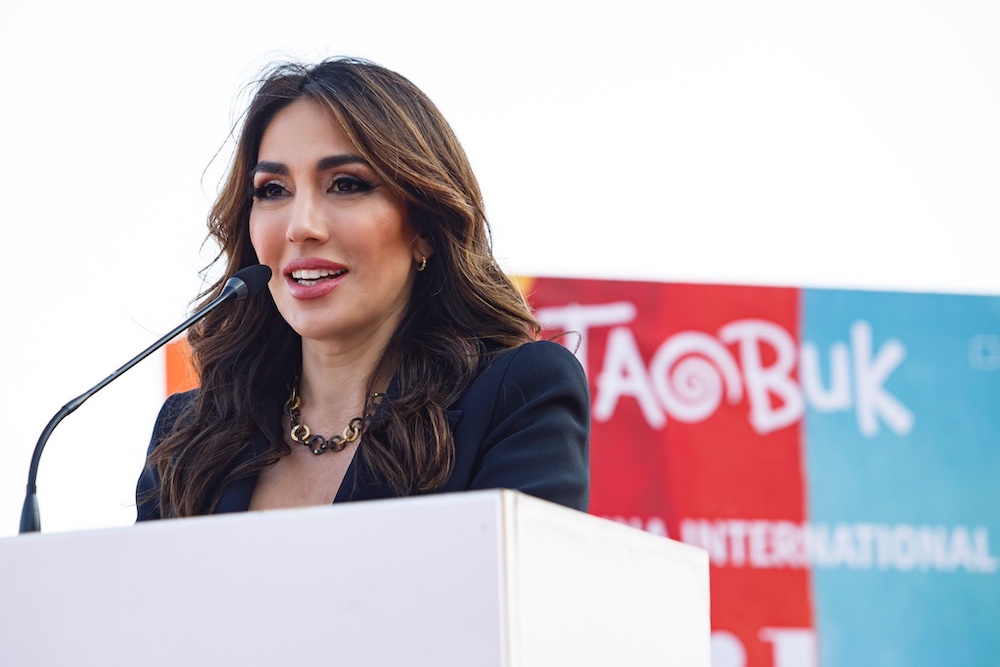
Sometimes, entrepreneurship and innovation can take its form as a cultural festival that slowly changes an entire region. That’s exactly what Antonella Ferrara, the founder of the Taobuk Festival in Sicily, accomplished.
What began as a local literary event has grown into an international cultural phenomenon. Every year, the Taobuk festival brings together writers, intellectuals and artists to explore a theme through debates, performances and events. By bringing together those from around the world to Taormina, Ferrara didn’t just create a festival – she created something much bigger. Each edition draws global attention, filling hotels, restaurants, and public spaces, and placing Sicily firmly on the international cultural map.
Ferrara’s work shows that entrepreneurship can also involve connection through culture. She saw an opportunity and through that has boosted tourism, encouraged cultural exchange, and inspired local pride.
Follow @antonellaferrara.event
Elisa Fuksas
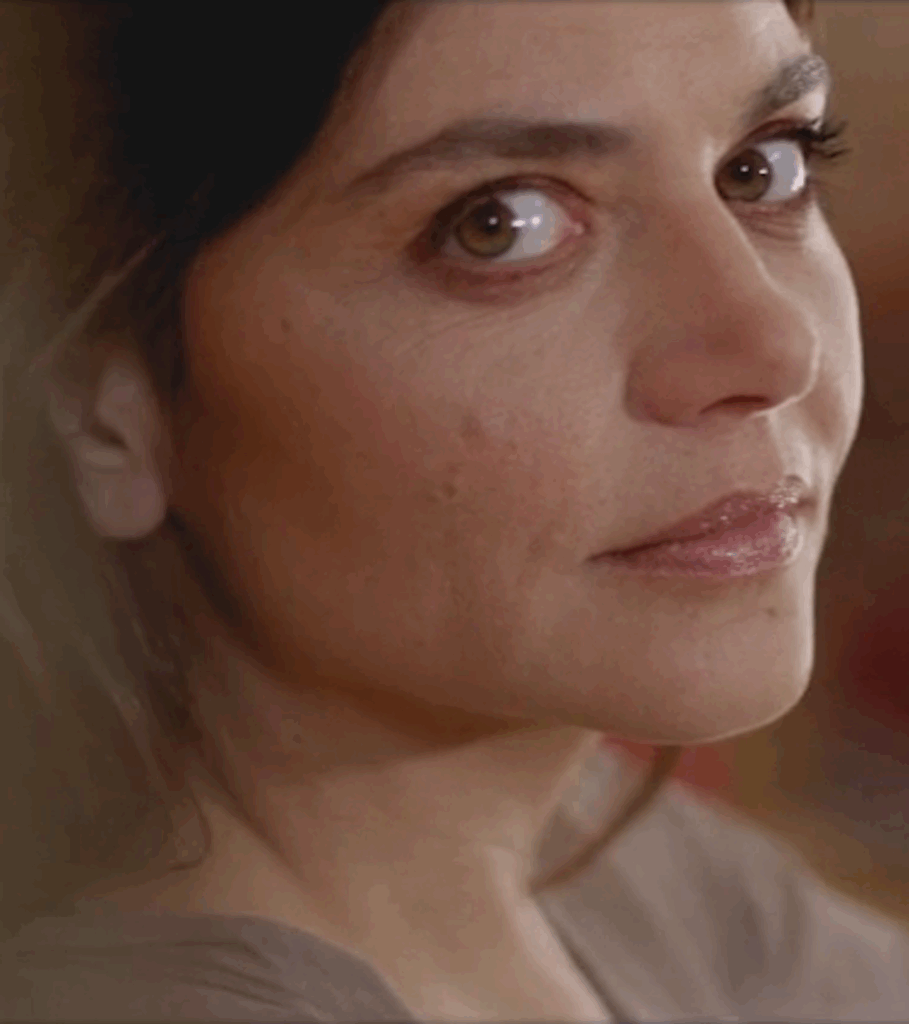
Italian cinema has long been shaped by familiar narratives, faces, and power structures. Elisa Fuksas, however, chose a different route. As a film director and writer, she builds independent projects centred on women’s stories and perspectives, such as her debut feature film, Nina.
Rather than waiting for an industry slow to open doors, Fuksas creates her own space. She develops personal, thoughtful projects that prove creativity and business can support each other.
She avoids fitting into trends and neat categories, instead focusing on overlooked stories that challenge cinematic norms. Her narratives explore relationships, identities, and contemporary issues, inviting viewers to empathise with her characters. She asks new questions and offers fresh ways of seeing the world, often leaving audiences feeling intellectually engaged.
Through her sustainable, independent productions, Fuksas shows how women in creative industries can redefine success on their own terms.
Follow @elisafuksas