In the northern heart of Sardegna (Sardinia), among time-shaped hills and sea breezes, one of Italy’s most expressive white wines is born: Vermentino di Gallura DOCG. Here, Vermentino, the island’s emblematic white grape, finds unique pedoclimatic conditions that give rise to a wine with a clear, mineral, and saline character, capable of telling the story of its landscape in the glass.
The Technical Identity of Vermentino di Gallura DOCG
When we speak of Vermentino di Gallura DOCG, we are not only referring to a great wine, but to a journey that led this grape to become, in 1996, the first Denominazione di Origine Controllata e Garantita of Sardegna. This designation does not simply certify quality; it affirms the uniqueness of a terroir and a winemaking tradition that, while ancient, has found its highest expression in Gallura.
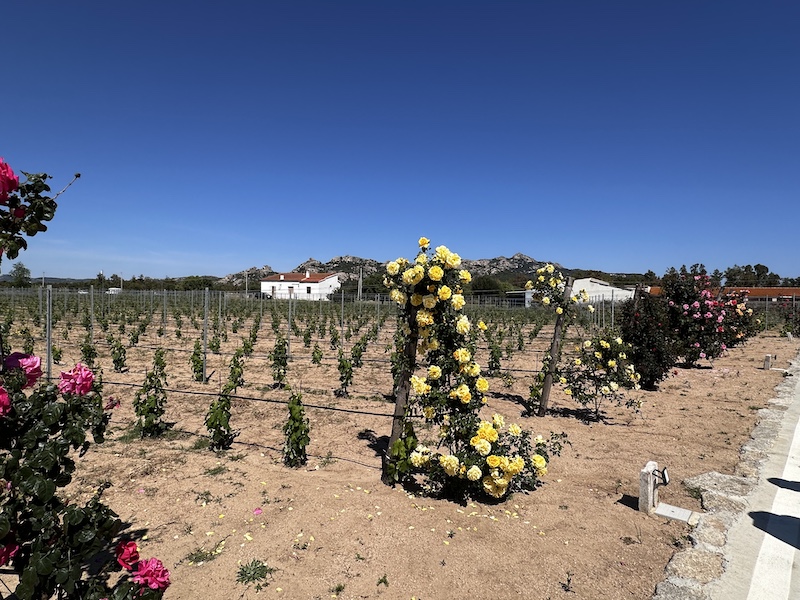
The production area lies in the far northeast of the island, across 23 municipalities between the provinces of Sassari. Here, granite soils, a Mediterranean climate, and constant sea breezes combine to create ideal conditions for cultivating Vermentino. The wine must be produced from at least 95% Vermentino grapes, with up to 5% of other non-aromatic white varieties permitted. This threshold preserves both varietal and territorial identity in the glass.
Within the DOCG, alongside the classic style, several expressions expand its range: Vermentino Superiore, with greater alcohol structure and depth; Frizzante and Spumante versions; and even Passito and Vendemmia Tardiva styles, where drying techniques concentrate aromas and sugars in a distinctive way.
Climate and Altitude: Alta and Bassa Gallura
The climate is Mediterranean, yet in Gallura it takes on a distinctive character. The light is intense, the winds are constant, and temperature variations, especially inland, support a gradual ripening process.
In Alta Gallura, at elevations between 250 and 500 meters, vineyards face more extreme conditions. Continuous ventilation, very poor soils, and slower ripening lead to wines with greater structural tension, sharper acidity, and a stylistic profile defined by precision and finesse.
In Bassa Gallura, closer to the sea and at lower altitudes, ripening occurs slightly earlier and the fruit reaches fuller expression. The wines tend to show a broader mid-palate and a softer progression, while maintaining the saline signature that defines the entire denomination.
These are not stark differences, but nuances — two interpretations of the same landscape.
The Profile in the Glass
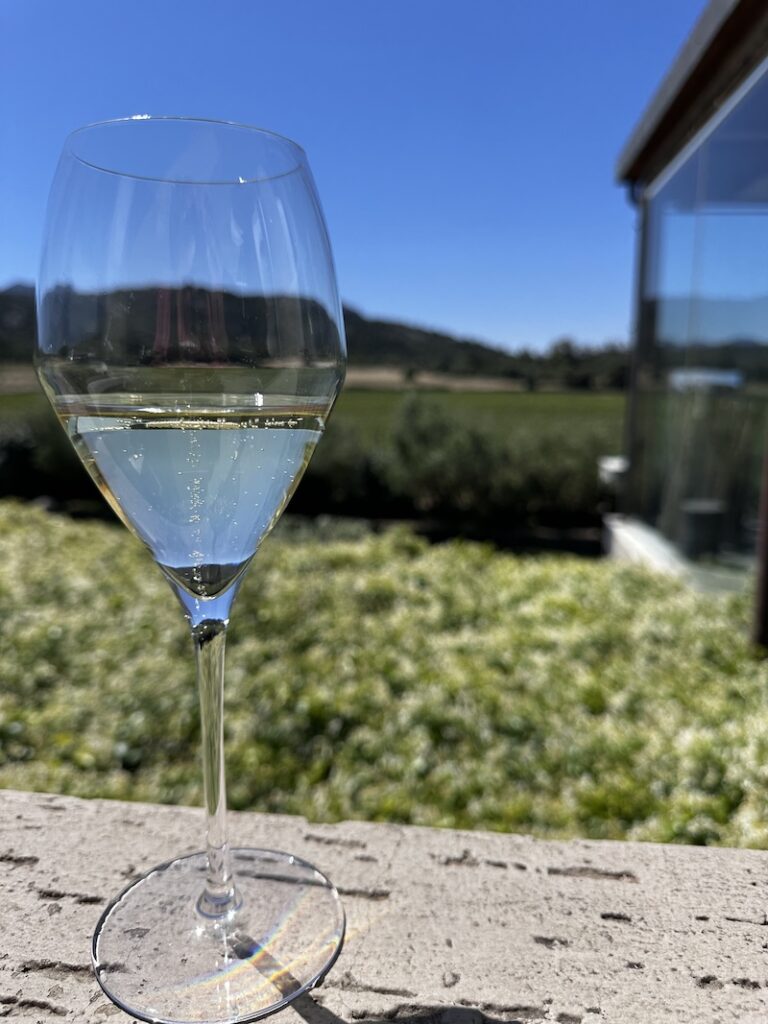
In the glass, Vermentino di Gallura DOCG is recognized by its luminosity: a bright straw yellow, with greenish reflections in younger wines.
On the nose, the first impression is clean and direct. Aromas evoke Mediterranean scrub, broom flowers, citrus peel, and at times fresh apple or aromatic herbs, with a subtle balsamic note on the finish.
On the palate, the wine reveals balance and restraint. The entry is energetic, the texture compact, and the progression linear. Salinity accompanies the sip without overpowering it, while the finish leaves a dry, slightly almond-like impression.
It is here that the territory becomes perceptible not as description, but as sensation — in the coherence between nose and palate, in the clarity, and in the ability to unite structure with momentum.
An Identity That Does Not Imitate
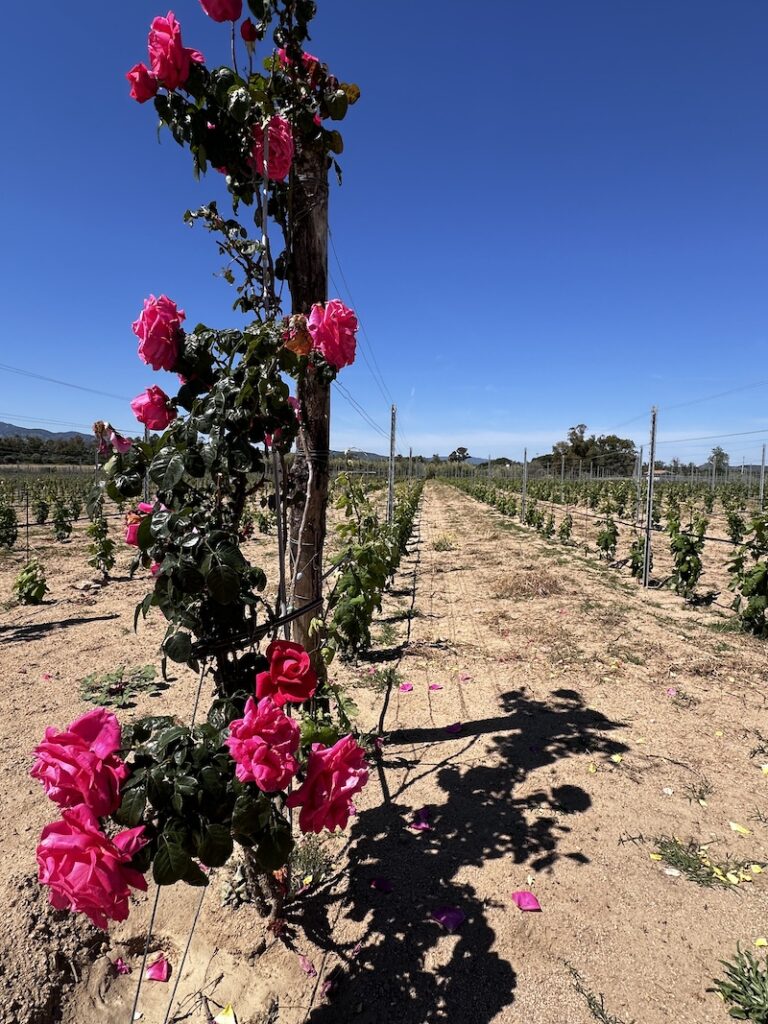
Vermentino di Gallura DOCG is not simply a high-quality Mediterranean white wine, but the result of a rare balance between geology, climate, and winemaking culture. At a time when many wines tend to conform to global tastes, Gallura continues to express its own language — one of precision, mineral tension, and stylistic coherence.
Within the broader world of Vermentino, this territory maintains a distinct position. Here, the grape is not adapted to international models, but finds an authentic form deeply rooted in its environment.
Granite, wind, and light are not merely elements of the landscape, but the forces that define the wine’s identity. Harvest after harvest, Vermentino di Gallura DOCG confirms itself as one of the most coherent and representative expressions of contemporary Sardinian winemaking.