
A conversation with the head of Tornabuoni Art Paris on museum-level Italian works, provenance, and how global collecting is evolving after Art Basel Miami Beach.
Italian art has always been the visual fiber of Western Civilization, a bridge between the classic and the modern worlds. From the flat Byzantine icons of the Middle Ages to the breathtaking human realism of the Renaissance; from dramatic chiaroscuro to the elegant neoclassic realism, Italian art has been the foundation for nearly every major movement in Western art history. Italian artists have shaped international visual language in ways that continue to influence museums, scholarship, and private collections worldwide.
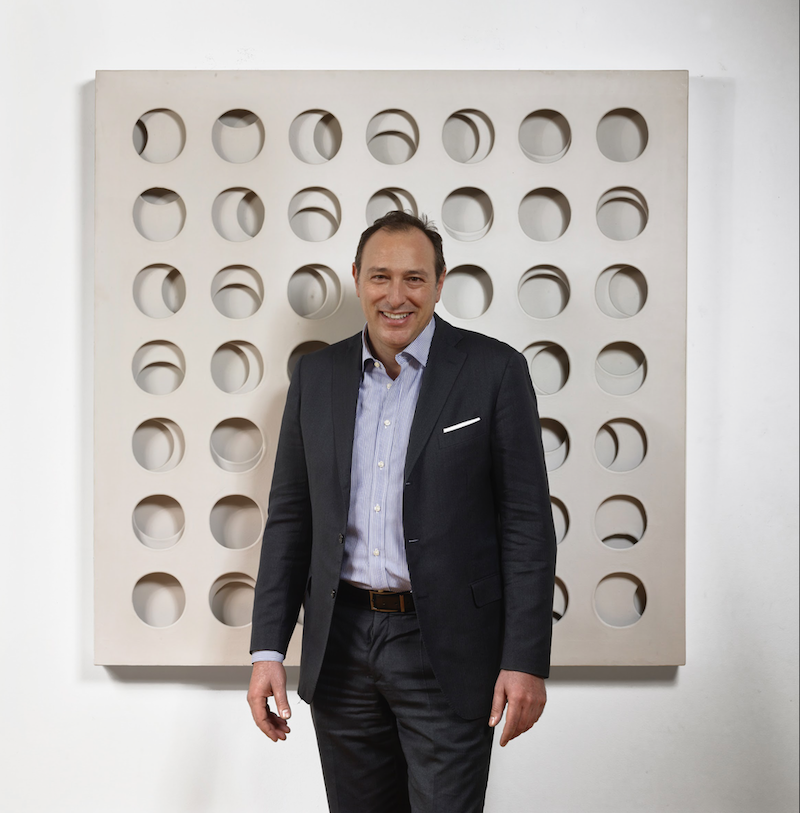
That legacy is the heart of Tornabuoni Art, a family-run gallery founded in Florence in 1981 and now active across Italy and Europe. Following Art Basel Miami Beach, where Tornabuoni Art presented a curated booth highlighting both Italian and Latin American masters, Michele Casamonti shared his perspective on collecting, provenance, and the shifting geography of the global art world. As head of the gallery’s Paris space and part of the second generation of the Casamonti family, Michele reveals a vision grounded less in market cycles than in art history itself.
Tornabuoni Art is internationally recognized for its museum-level holdings in postwar and 20th-century Italian masters. With spaces in Italy, France, and Switzerland, how do you see collectors across these regions engaging with historically significant Italian works—and what drives their interest today at an investment level?
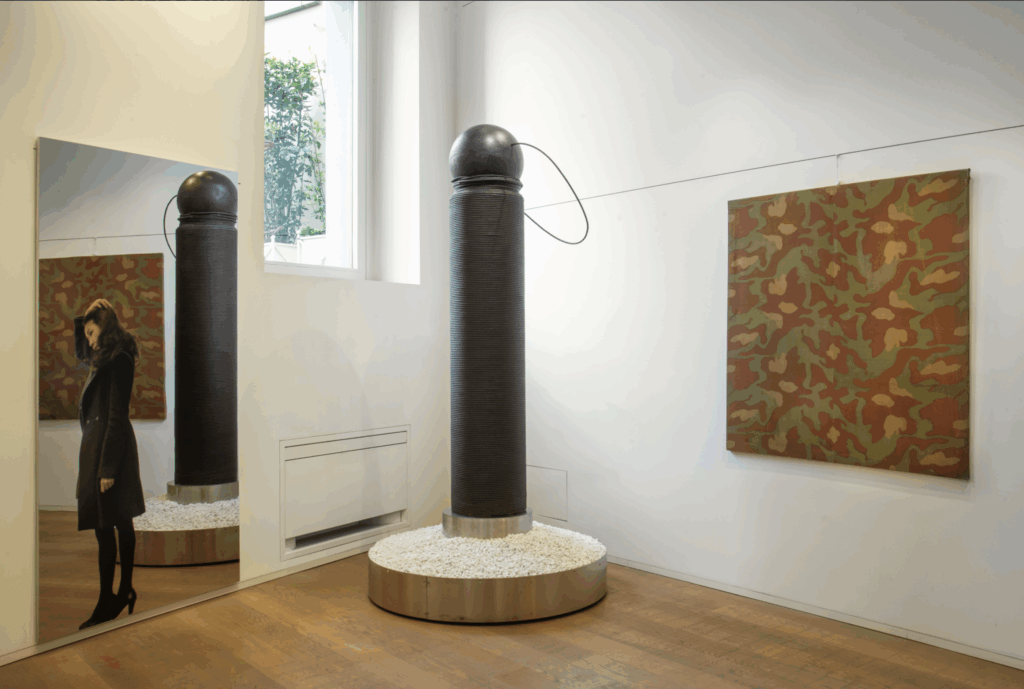
Italian art—particularly in the early part of the twentieth century with Futurism and Metaphysical painting, and in the immediate postwar period with Spatialism and Arte Povera—played a leading role on the global cultural stage. These two moments have become essential international points of reference and, alongside certain individual figures of Italian modern and contemporary art, have been collected not only by a national public but also by major European and international museums, as well as countless private collections around the world.
Shaping the Cultural Landscape
Naturally, although many Italian artists are collected throughout Europe, only a smaller group enjoys truly global recognition and stands as an absolute benchmark. The primary interest, of course, lies in Modigliani, de Chirico, and Morandi during the first half of the century, without neglecting the strong appeal of Marino Marini’s sculptures and other internationally renowned figures. In the postwar period, above all, Lucio Fontana, Alberto Burri, and the principal exponents of Arte Povera, such as Boetti and Kounellis, as well as artists like Castellani, have secured a presence in American, Asian, European, and even Middle Eastern collections.
Interest, therefore, is directed toward those figures who have shaped the international cultural landscape and who hold the highest value, not in terms of the art market, but in the history of art.
Your gallery has a long tradition of collaborating with major institutions and foundations in Europe. How does this curatorial depth shape the guidance you offer to collectors looking for works with strong provenance, long-term value, and scholarly importance—particularly in a market that is becoming increasingly global and digitally informed?
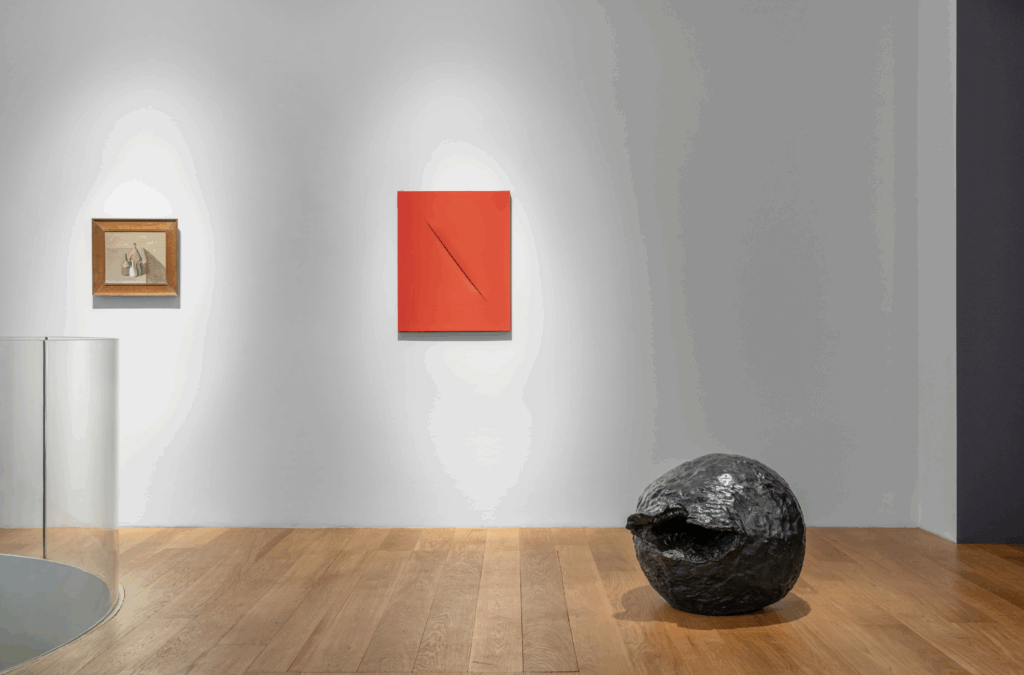
There is a constant connection between what we collect and offer to our collectors, and the research we carry out through our exhibitions. To do our work professionally means ensuring that every exhibition becomes an opportunity to learn and deepen our knowledge. This is automatically reflected in the type of works we select and present. The provenance of a work is not just a line on a label: it means enhancing and giving value to its history. And while this may not be particularly important in the primary market, it becomes essential in the history of the secondary market.
Recently, I happened to purchase an extraordinary work by Alberto Savinio that had belonged to Rosenberg and was sold at Drouot in 1941. The story of how Rosenberg left France in those years, and how the work later passed through private collections, represents added value that goes far beyond mere aesthetic appreciation. The same is true for works that have been in museums, exhibited in collections, featured in major public exhibitions, or included in publications. And I must say that this approach also pushes us to be generous lenders, ensuring that works—precisely in order to enrich their history—can always remain accessible to the public.
Thus, whenever public institutions request our works and circumstances allow, we lend them. This is why we have become among the most prominent lenders of Italian art to international exhibitions.
Art fairs have evolved dramatically in recent years, shaped by digital platforms, shifting global tastes, and new collector demographics. From your perspective, what are the most important differences between U.S. and European collectors today, and how do these shifts influence the way Tornabuoni presents Italian art across international fairs and exhibitions?
Art fairs are a crucial component of a gallery’s activity. We are among the galleries that participate in the largest number of them, across nearly every continent: throughout the United States, naturally in Europe, particularly in France and Italy, and increasingly in Asia.
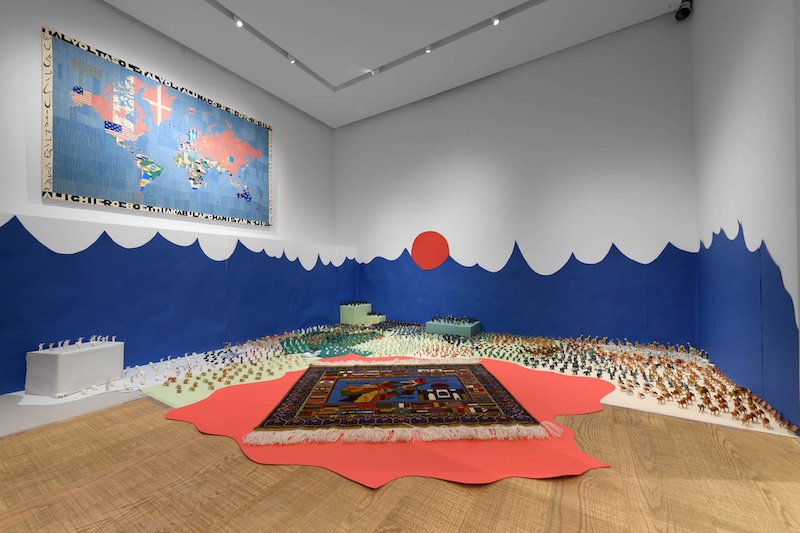
Yet art fairs are undergoing a transformation. Some now lend themselves to more ambitious, almost curatorial projects, and each year we dedicate at least two fairs to presentations prepared well in advance and developed with great conceptual rigor. We have done so on several occasions in Basel, where we presented Scheggi’s Biennale room, paid homage to Lucio Fontana’s Fine di Dio, and showcased a special survey of Burri’s plastic combustions. We have pursued similar approaches with Boetti’s Mappe, a focused presentation of Isgrò’s œuvre, and of Parmiggiani’s major museum works. While it is not feasible to mount such projects at every fair, we aim to present one significant and distinctive project at each event on a rotating basis.
In certain instances, fairs also offer an opportunity to expand the gallery’s cultural mission by developing dedicated exhibitions accompanied by fully fledged catalogues. Although fairs last only a week, the preparation and resources required can be substantial. At other times, therefore, we choose to present a more concentrated display built around a single, emblematic work.
A Movement Towards Local Engagement
Fairs continue to evolve, but the most striking shift concerns how they are now perceived. The pandemic prompted a moment of reflection on their usefulness and purpose. While fairs have regained their central role—much as they held in the 2010s—what we observe in the post-COVID landscape is a marked decline in globalization. Asian collectors are no longer encountered in Miami or Paris, nor do American collectors regularly attend fairs in Europe or Asia. There is a growing tendency toward local engagement. Only a select few fairs maintain a truly international appeal, and this suggests a rapidly changing ecosystem whose future contours are still taking shape.
Italian Art as Cultural Infrastructure
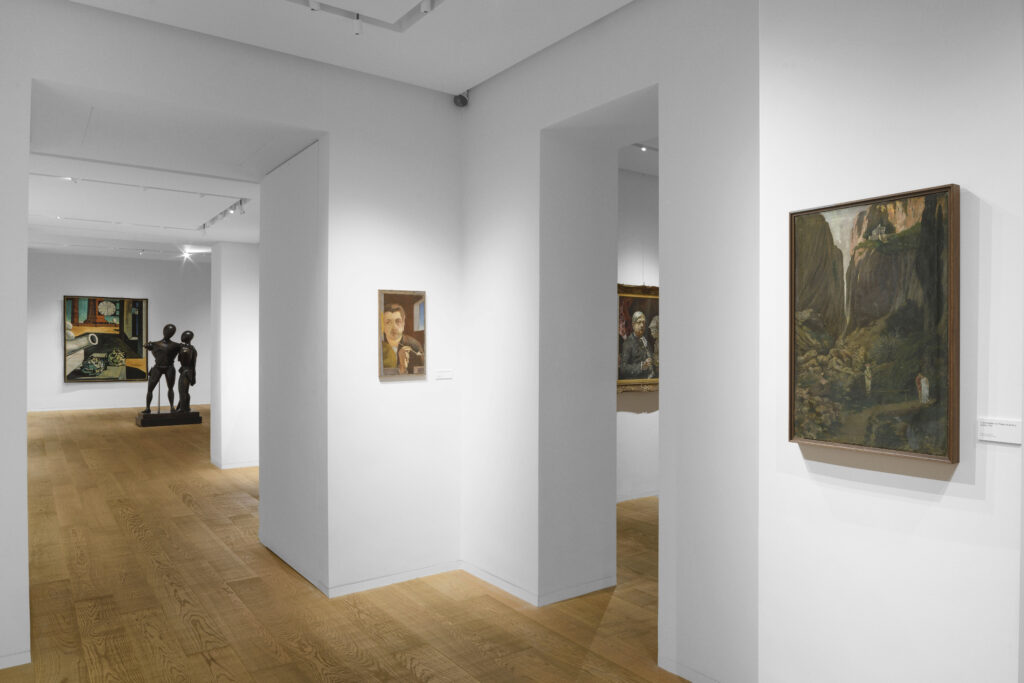
Michele Casamonti’s perspective reframes collecting as a long-term cultural responsibility rather than a transactional act. Throughout the conversation, you can see that value emerges, not from immediacy or visibility, but from scholarship, provenance, and sustained institutional dialogue.
In an art world recalibrating after years of hyper-globalization, Tornabuoni Art’s approach offers a steady counterpoint. By privileging museum-level works, lending generously, and situating Italian masters within a broader historical narrative, the gallery underscores the idea that art functions as a cultural framework. It is something built over time, maintained through care, and strengthened through shared knowledge.
As markets evolve and geographies shift, this model positions Italian art not simply as an asset, but as a living continuum—the bridge that connects past, present, and future through enduring value rather than short-term momentum.
Website: /www.tornabuoniarte.it
Instagram: @tornabuoniart\