Miami Art Week continues to be one of the most influential global platforms for contemporary art, design, and cultural exchange. Within that landscape, the Made in Italy presence stood out not through spectacle alone, but through depth, continuity, and a strong dialogue between art, design, and heritage.
From the main halls of Art Basel Miami Beach to satellite fairs such as Design Miami and Untitled Art, Italian galleries, institutions, and designers reinforced Italy’s role as a cultural anchor during Miami Art Week, balancing historical legacy with contemporary experimentation.
Art Basel Miami Beach: Italian Galleries on a Global Stage
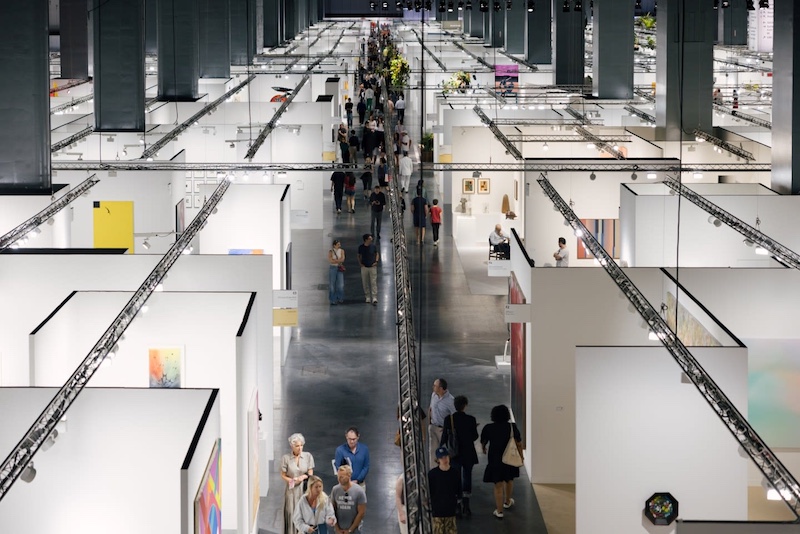
283 galleries from around the world participated in Art Basel Miami Beach 2025 | © Art Basel
Held at the Miami Beach Convention Center, Art Basel Miami Beach once again confirmed its position as the premier market and discovery platform for modern and contemporary art in the Western Hemisphere. The 2025 edition brought together 283 galleries from 43 countries, welcomed more than 80,000 visitors, and attracted representatives from over 240 museums and foundations worldwide.
Italian galleries played a significant role in this international dialogue. Exhibitors such as Cardi, Tornabuoni Art, and Mazzoleni presented museum-caliber works that traced Italy’s enduring influence on postwar and contemporary art. From Arte Povera to conceptual and material-based practices, these presentations reinforced Italy’s long-standing commitment to artistic rigor rather than trend-driven programming.
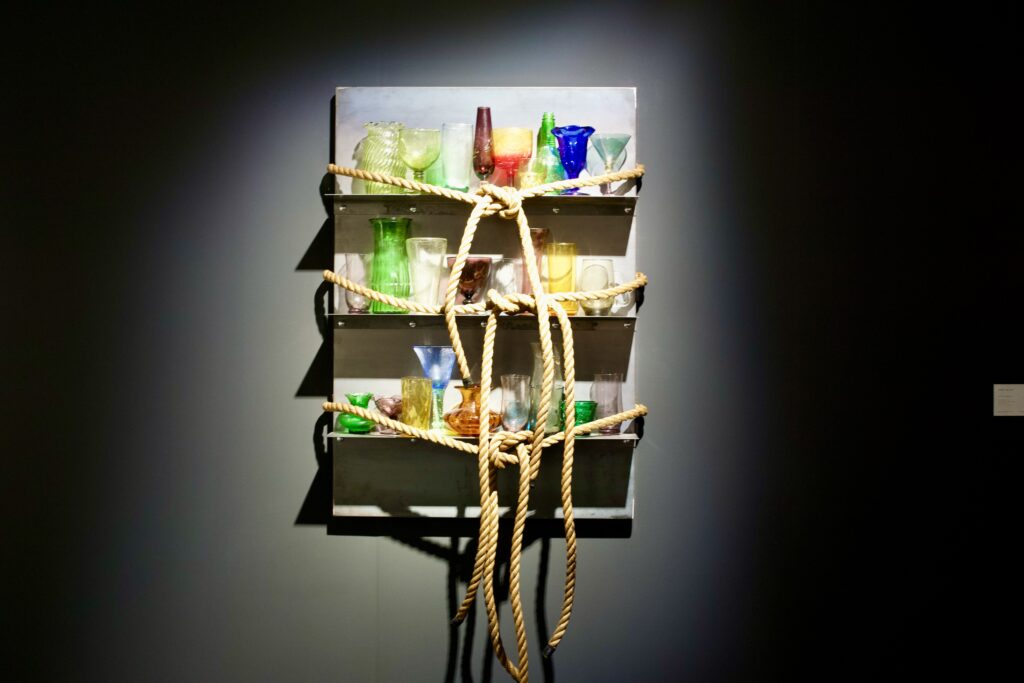
Cardi Gallery presented a focused selection rooted in postwar Italian abstraction and material experimentation. Long recognized for its authoritative stewardship of artists such as Alberto Burri and Lucio Fontana, Cardi’s booth positioned Italian modernism as a living reference point within contemporary discourse, emphasizing materiality and spatial inquiry over spectacle.
At Tornabuoni Art, the presentation centered on historically significant works tied to Arte Povera and postwar European movements. The booth attracted collectors and curators seeking depth and continuity, reinforcing Tornabuoni’s role as a bridge between scholarly context and the international market.

Mazzoleni continued its transgenerational dialogue between Turin and London. By juxtaposing postwar Italian figures with contemporary voices, the gallery underscored Italy’s ongoing relevance as a framework that continues to inform current artistic inquiry rather than a closed historical chapter.
Italian Voices Beyond the Gallery Booths
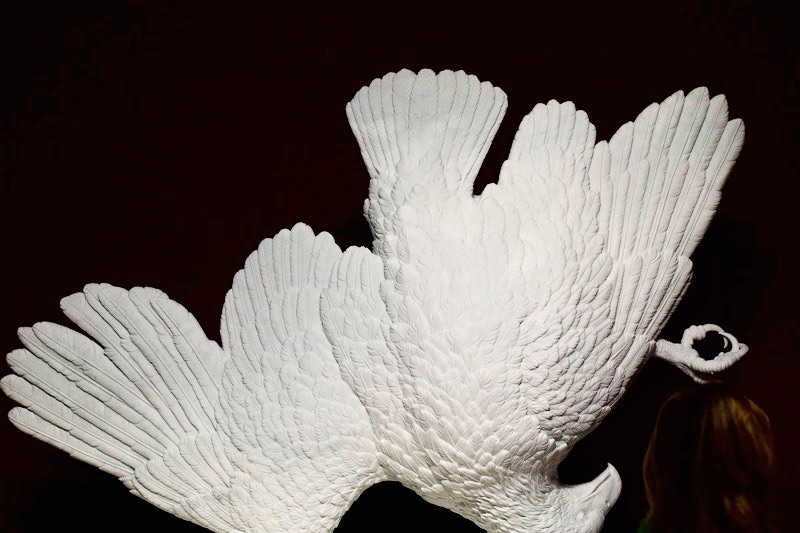
Italian artist Maurizio Cattelan was among the most discussed presences at the fair through Gagosian. Following the global attention surrounding Comedian in 2019, his recent work—executed in Carrara marble—introduced a quieter, materially grounded register that subtly referenced Italy’s sculptural tradition while engaging contemporary themes without overt narrative.
Within the fair’s ecosystem, curated spaces such as the Collectors Lounge played an important role beyond exhibition viewing. Designed by Salone del Mobile.Milano, the lounge functioned as an exclusive setting for informal conversations, small meetings, and press interviews, while also offering Champagne, light fare, and moments of quiet within the scale of the Miami Beach Convention Center.
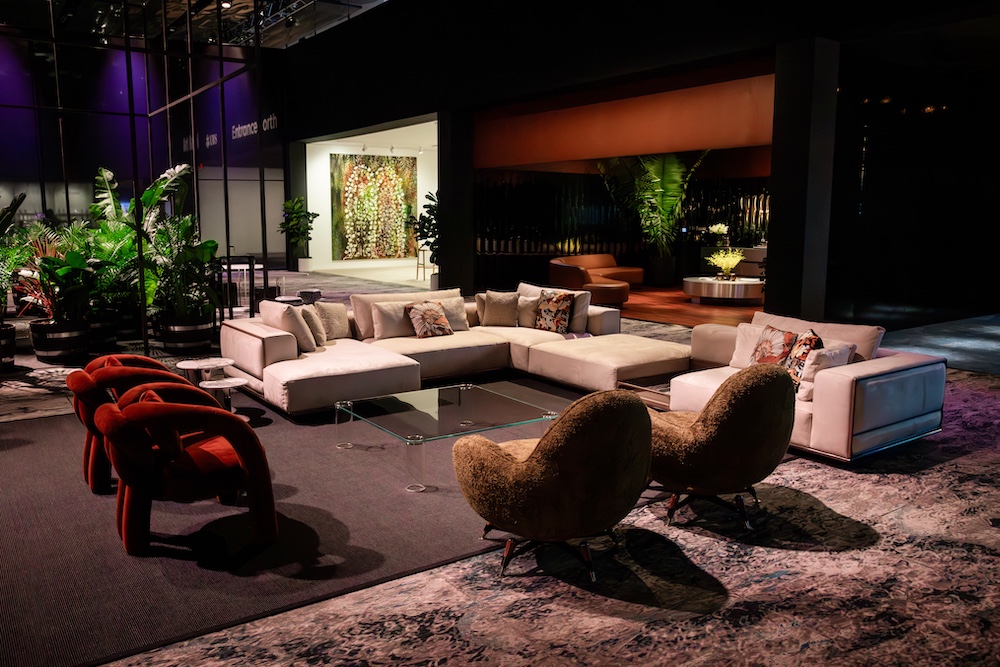
As an environment intentionally removed from the pace of the main halls, the Collectors Lounge offered a natural setting for dialogue. That atmosphere connects seamlessly to our recent conversation with Maria Porro, whose presence in Miami highlighted the growing intersection between Italian design leadership and the global art market.
Design Miami: Italian Craft in Contemporary Form
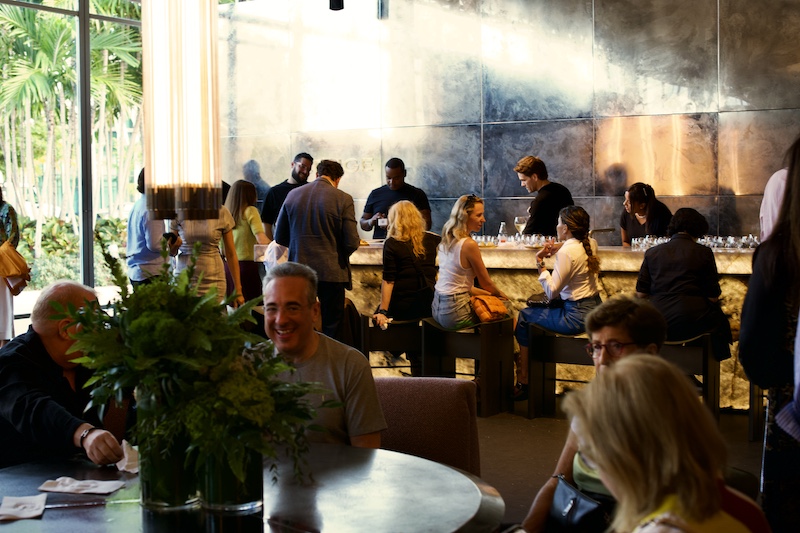
Just steps away from Art Basel, Design Miami celebrated its 20th anniversary with the theme Make. Believe., reaffirming its role as the leading fair for collectible design. Italian craftsmanship was prominently represented, particularly through immersive environments that highlighted material innovation and architectural sensitivity.
The Henge Collectors Lounge, designed by Ugo Cacciatori, exemplified this approach. Blending sculptural furniture, refined materials, and architectural restraint, the space reflected a distinctly Italian philosophy where design is experienced through tactility, proportion, and atmosphere. Rather than serving as a conventional lounge, it became a sensory extension of Italy’s design language within the Miami context.
Untitled Art and a Look Ahead: Francesco Pirazzi
At Untitled Art, the Italian presence extended beyond the fair floor itself. While Luce Gallery did not present Italian artists at its Miami booth this year, the fair provided an important introduction to emerging Italian voices shaping the next chapter of contemporary painting.
Among them is Francesco Pirazzi, a young Italian artist whose work has drawn increasing attention for its quiet tension and symbolic architecture. His painting Santa (2025), featured here, offers a dreamlike yet grounded vision that resonates with Italy’s long tradition of metaphysical and architectural painting, while remaining distinctly contemporary.
This mention serves as a natural segue into future coverage within Live in Italy Magazine’s Visual Arts section, where emerging Italian artists will continue to be explored beyond the framework of fair-week visibility.
A Living Cultural Ecosystem
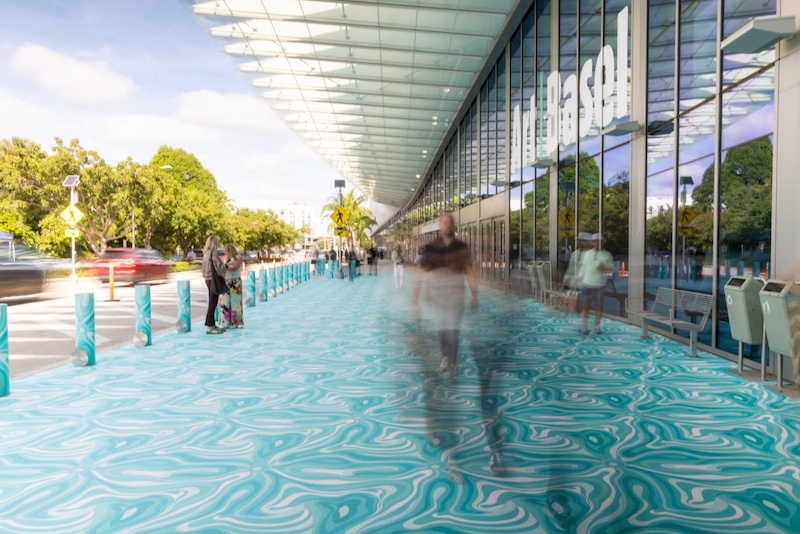
What emerged most clearly during Miami Art Week was not a single Italian moment, but a network of connections. Italian art, design, and architecture appeared across multiple platforms, reinforcing one another rather than competing for attention. This ecosystem approach mirrors Italy’s cultural reality, where art history, design excellence, and contemporary practice exist in continuous dialogue.
As Live in Luxury continues to explore architecture, design, real estate, and cultural leadership, art remains a central thread. Italy’s artistic heritage is not static; it evolves through fairs, institutions, and emerging voices that carry its values forward.
Miami Art Week offered a clear reminder of that continuity, positioning Made in Italy not as a trend, but as a sustained presence within the global cultural landscape.
Author