
There is a city in the green heart of Umbria that feels written in the ink of time. It is Gubbio—one of Italy’s most fascinating destinations for travelers seeking history, authenticity, and layered beauty.
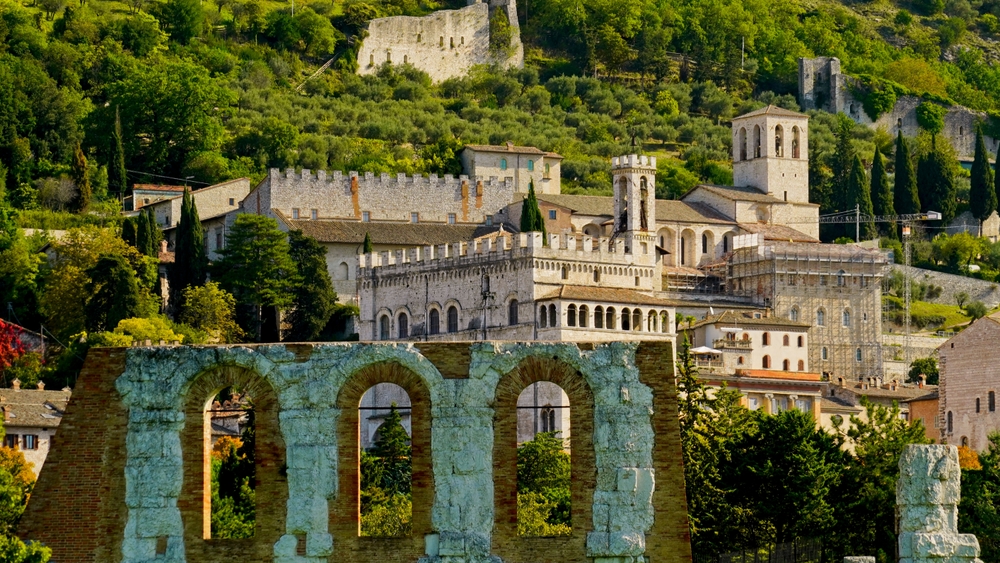
Here, the Middle Ages are not a reenactment. They are still alive.
Stone streets climb as they always have. Palaces hold stories not fully revealed. At the same time, Romanesque traces remain visible, especially in the lower town. Gubbio is home to the mysterious Eugubine Tables, among the most important ritual texts of antiquity.
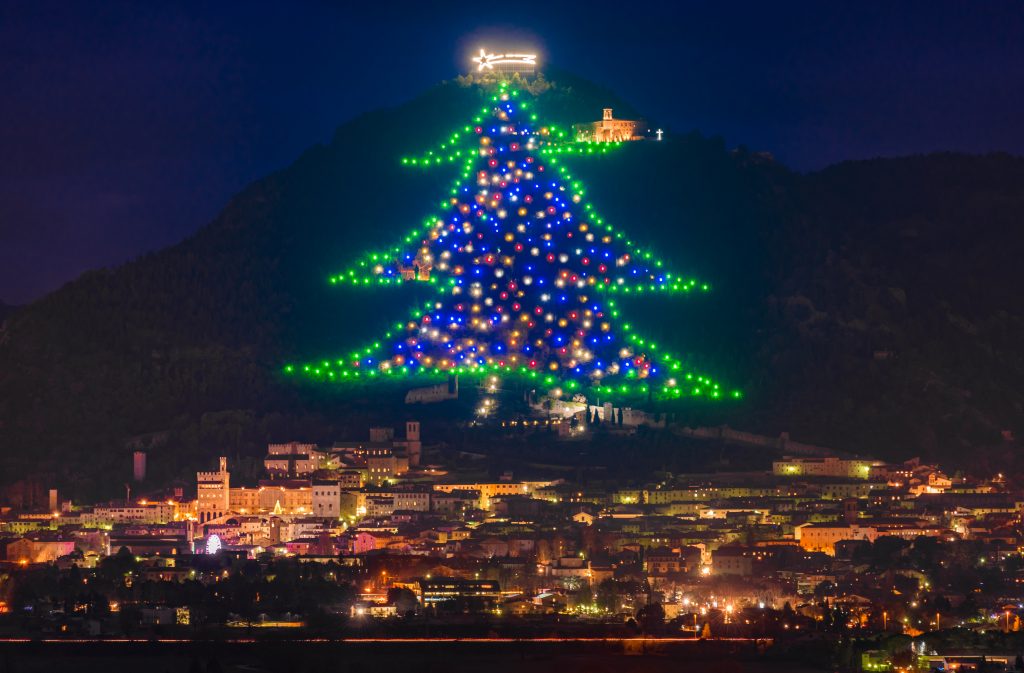
It is also a city of ceramic masters and deep traditions. Every year, the Festa dei Ceri fills the streets with energy and identity. In winter, the world’s largest Christmas tree lights up Monte Ingino, visible for miles.
Yet stopping here means only seeing the surface.
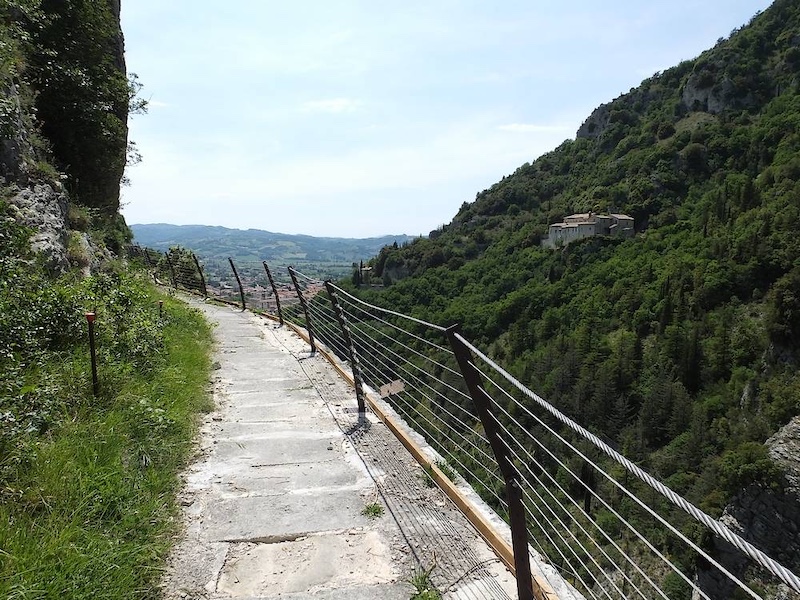
Beyond the Historic Center
Just outside the city walls, where crowds fade and silence deepens, Gubbio reveals another side. Here, history meets nature—and even science.
This is where a different kind of journey begins.
The Bottaccione Gorge: Where Earth Tells Its Story
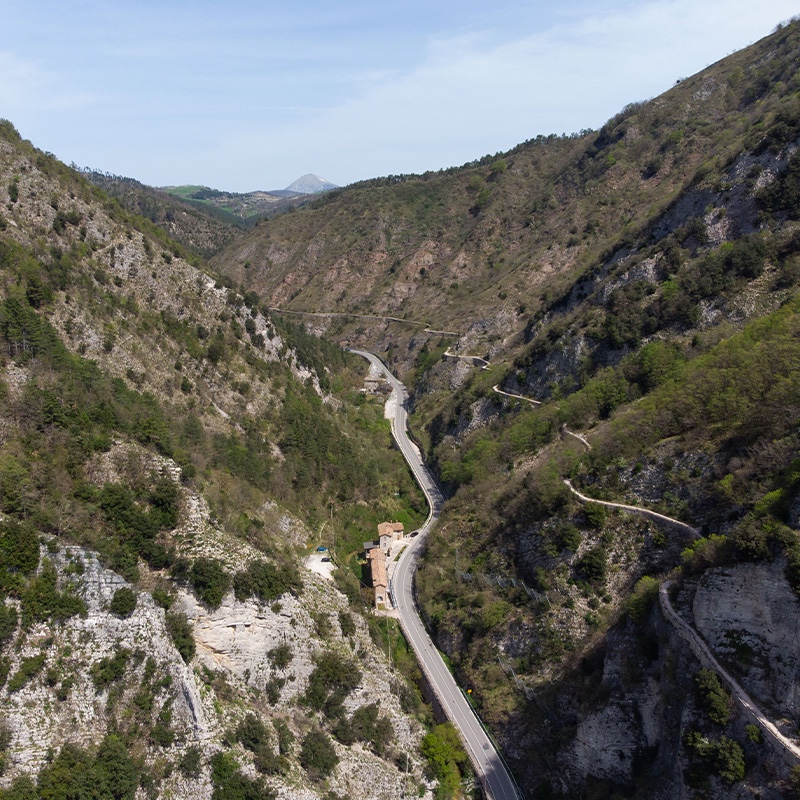
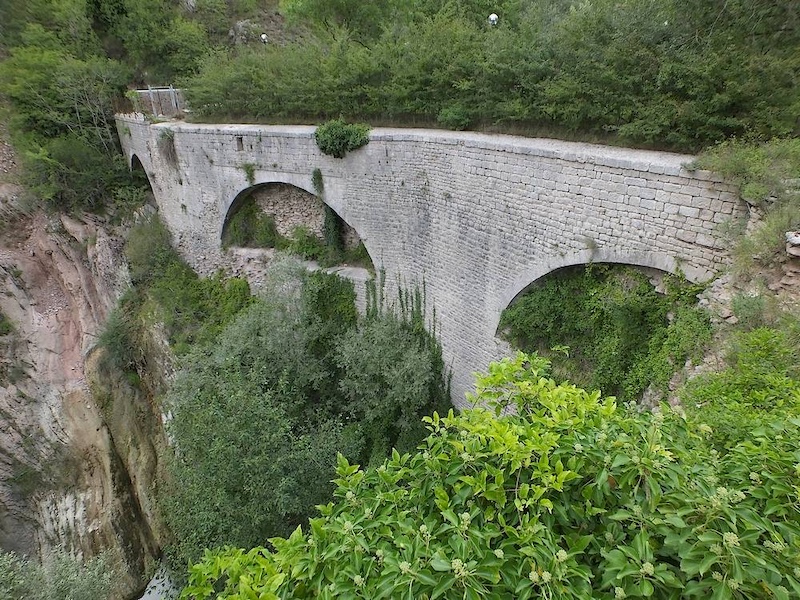
The journey starts at the Gola del Bottaccione. At first glance, it feels like a dramatic natural setting—steep rock walls, wild vegetation, and cool mountain air.
However, beneath this beauty lies one of the most important scientific discoveries of the twentieth century.
Geologist Walter Alvarez identified an unusual concentration of iridium here. This rare element helped support the theory that an asteroid impact caused the extinction of the dinosaurs 66 million years ago—known as the Cretaceous–Paleogene extinction event.
Walking through the gorge feels like stepping into Earth’s memory. Each rock layer tells part of a planetary story.
A Taste of Tradition at Osteria del Bottaccione
After touching geological time, it feels natural to return to something more human—food.
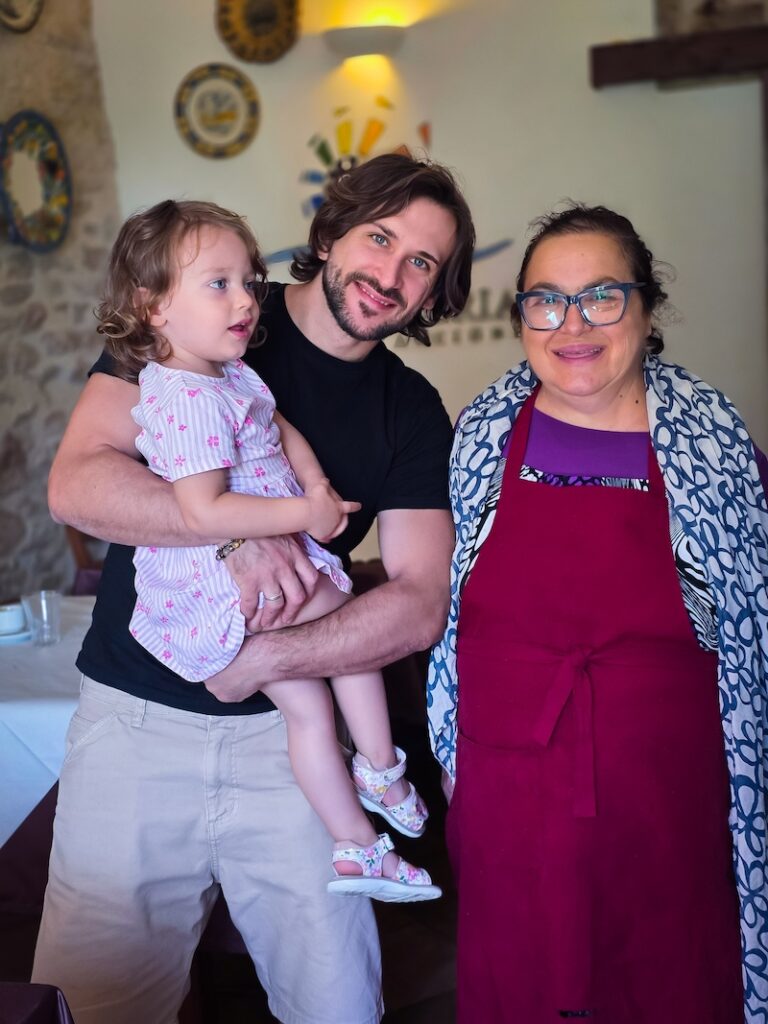
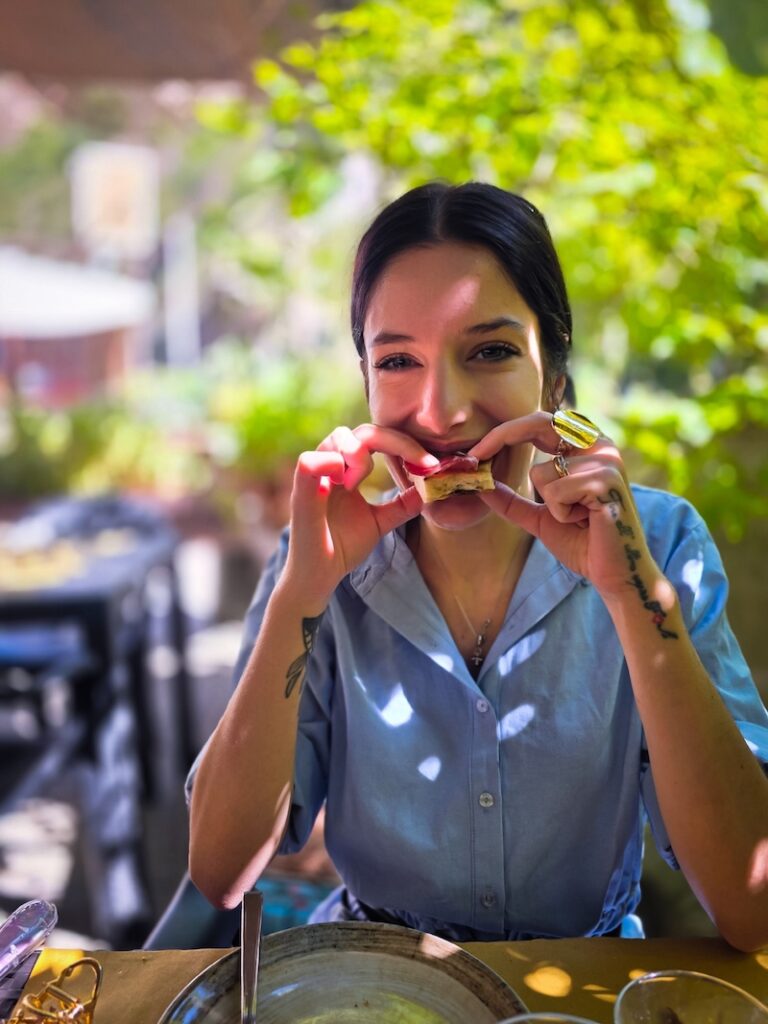
A short walk away, Osteria del Bottaccione preserves authentic authentic cuisine from Gubbio.
The space is simple, warm, and familiar. There is no excess, only substance. The dishes speak clearly, without decoration. Every bite reflects care, patience, and tradition passed down through gestures rather than words.
Here, time slows. And that matters.
Walking the Roman Aqueduct
From the osteria, the journey continues along the ancient Acquedotto Romano di Gubbio.
Originally part of Roman hydraulic engineering, the path evolved through the Middle Ages. Today, it offers a peaceful panoramic walk surrounded by greenery.
The views open slowly. Each step reveals quiet corners of the landscape.
The Hanging Gardens and Ducal Views
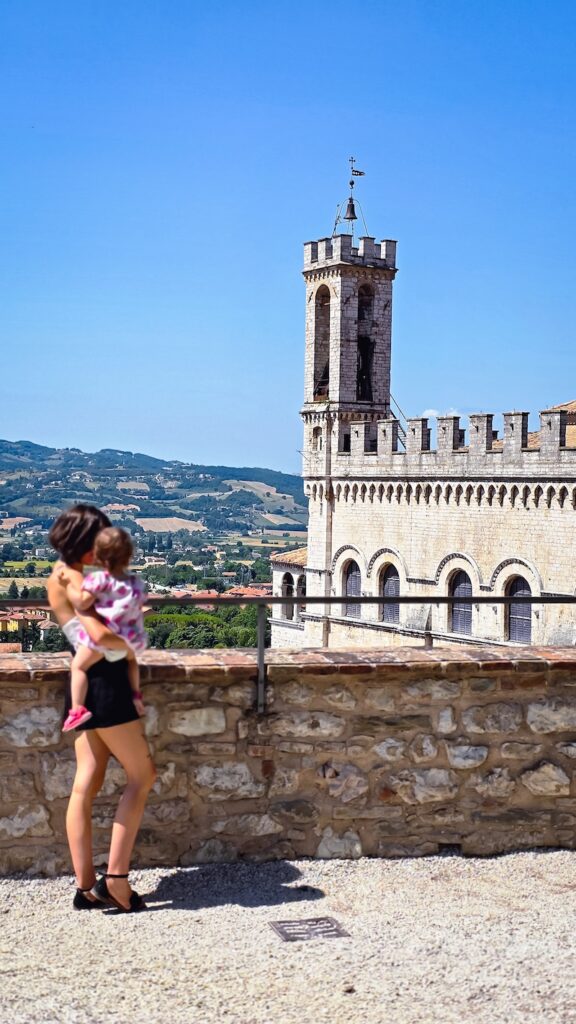
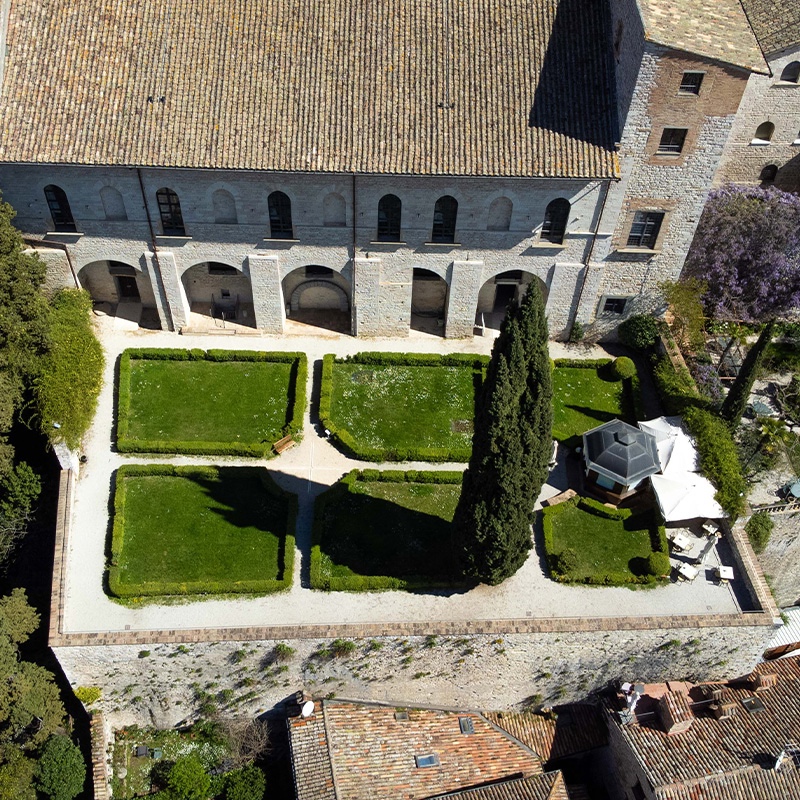
Following this elevated path leads to the Giardini Pensili, above the Palazzo Ducale di Gubbio.
Built in the fifteenth century for Federico da Montefeltro, these gardens offer a refined example of Renaissance design.
From here, Gubbio unfolds below. The balance between architecture and nature feels almost suspended in time.
A Hidden Wonder: The Botte dei Canonici
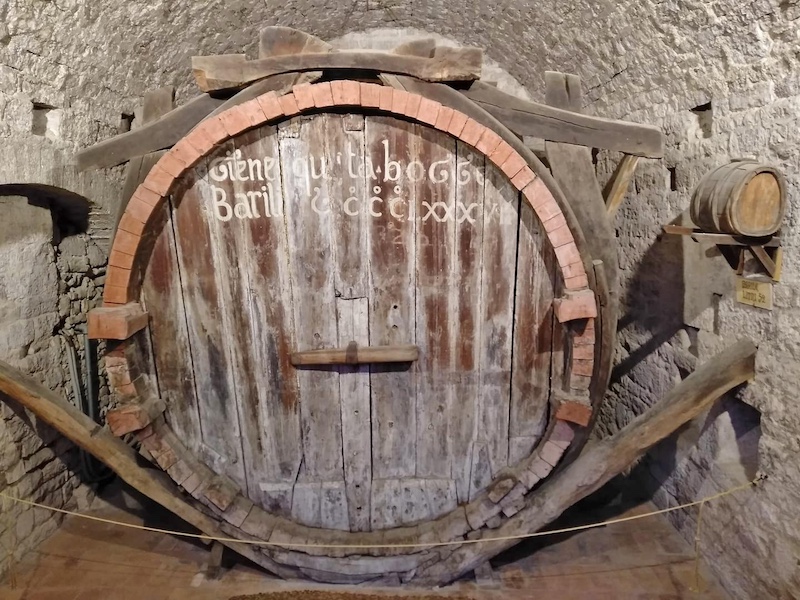
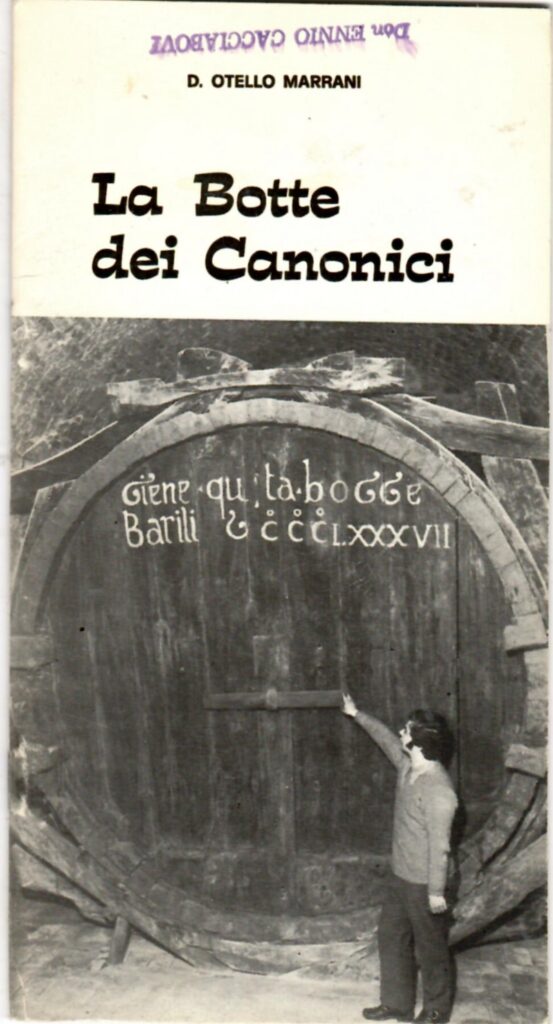
Descending further, you reach one of Gubbio’s lesser-known treasures: the Botte dei Canonici.
This massive fifteenth-century wooden barrel once stored wine from ecclesiastical lands. It remains one of the largest of its kind in Europe.
It tells a different story—one of daily life, work, and organization.
San Benedetto: Memory and Discovery
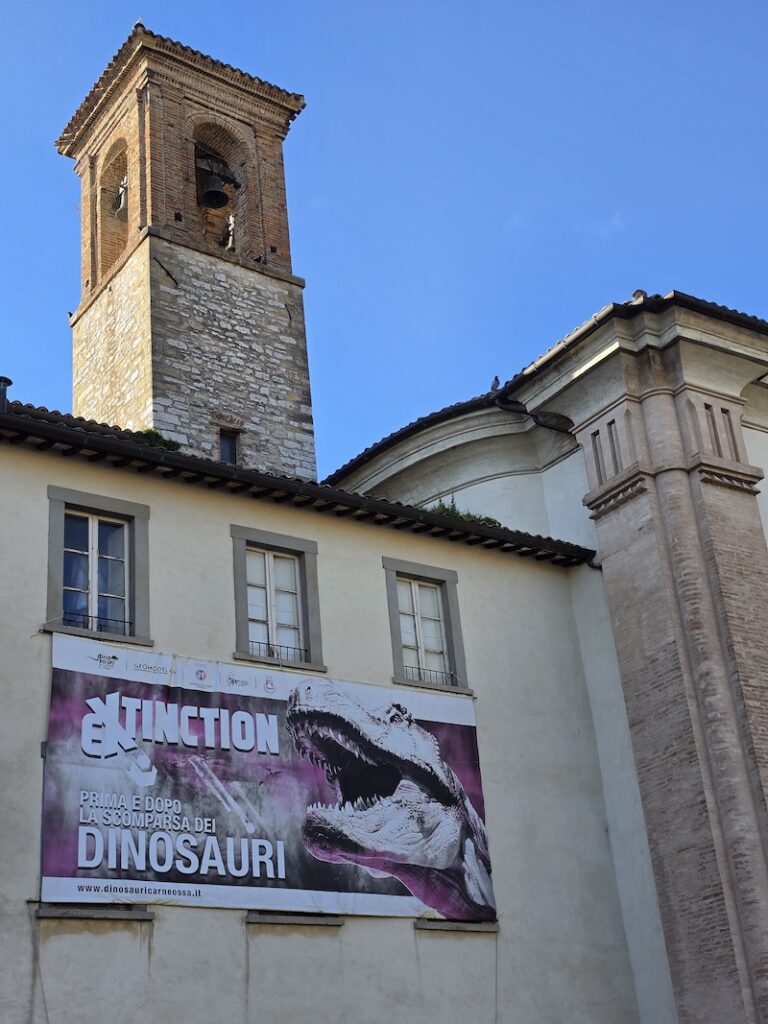
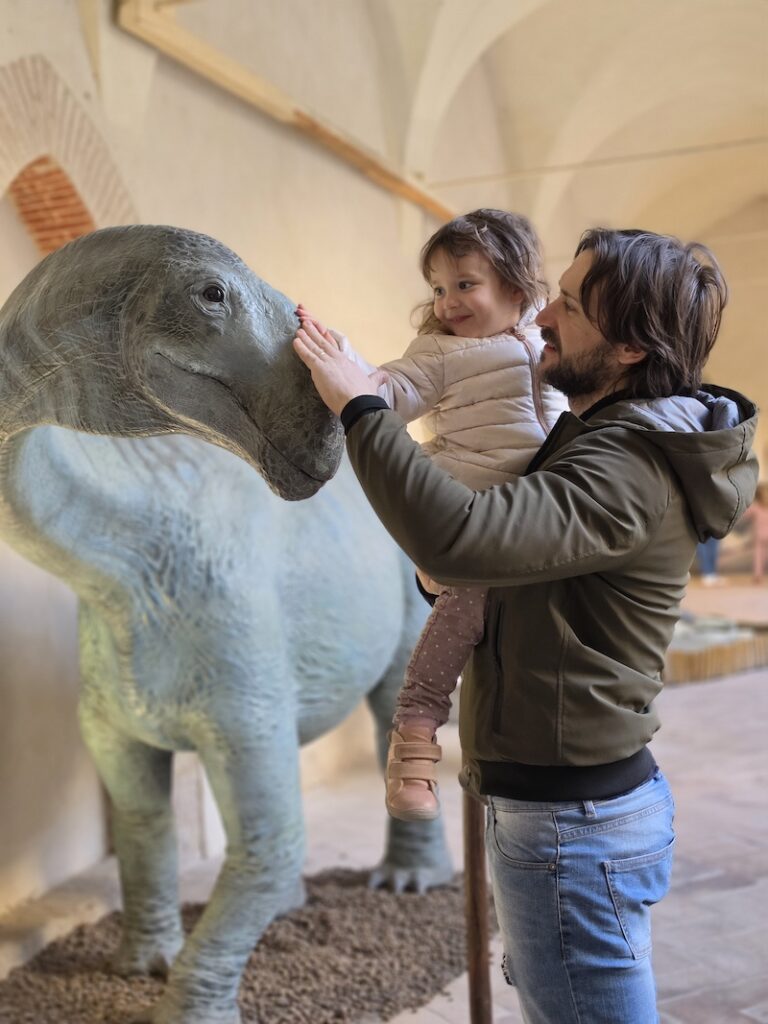
The journey ends at the Complesso di San Benedetto.
Once a monastery, it now hosts an exhibition dedicated to the history of life on Earth. Visitors encounter life-sized dinosaur reconstructions and educational installations.
It is both surprising and immersive—especially for families.
Here, the journey comes full circle. After walking through the traces of extinction, you meet the creatures themselves.
Gubbio, Always Revealing More
Gubbio never stops telling its story. Not only what it was—but what it continues to be.
For those willing to go beyond the surface, it offers something deeper.
Friccò Eugubino by Rosita
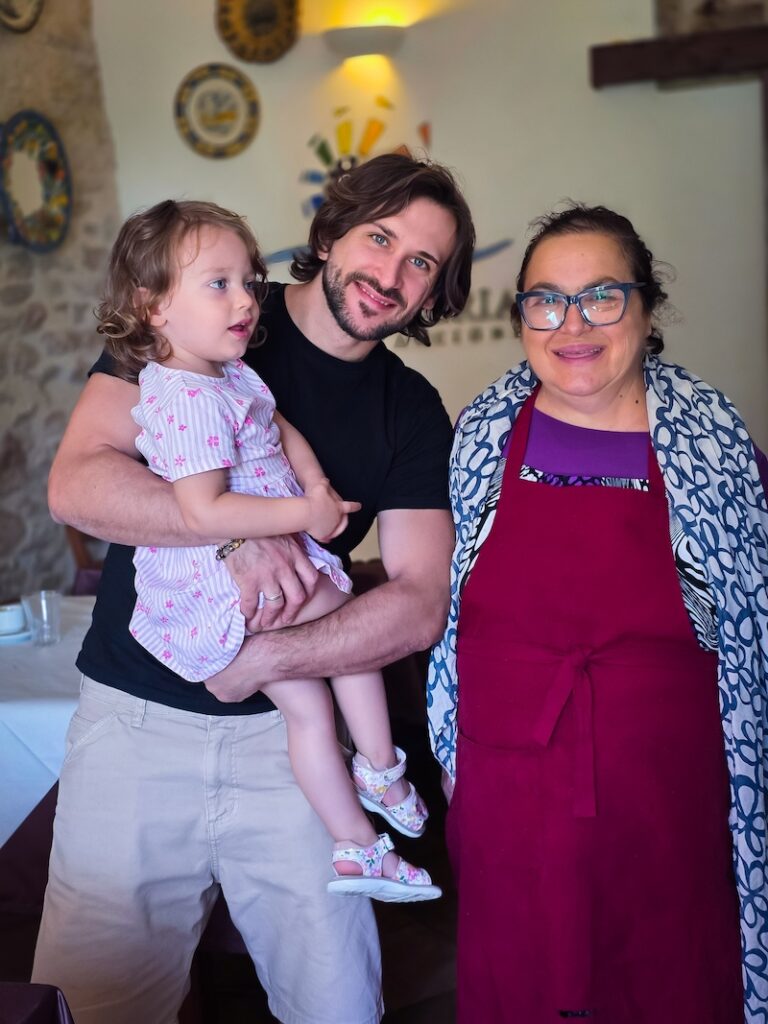
From that table, between a glass of wine and the scent of the kitchen, this recipe is born.
There is a moment at Osteria del Bottaccione when time shifts. It happens when the friccò arrives.
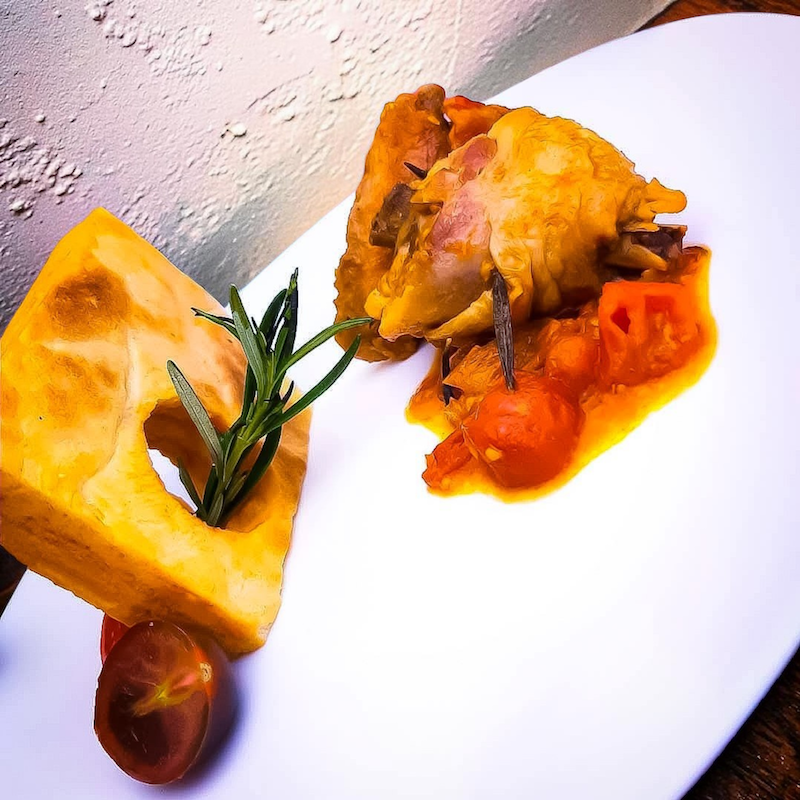
This is Rosita’s version—a living memory of Gubbio’s culinary tradition. It is guided by gestures more than rules. The secret is not just ingredients, but time.
Ingredients (Serves 4)
- 1 free-range chicken (about 1 kg), cut into pieces
- 300 g peeled tomatoes
- 2 garlic cloves
- 2 slices guanciale (or pancetta)
- 2 anchovy fillets
- 1 tsp juniper berries
- 1 rosemary sprig
- Fresh sage
- Capers, to taste
- 1 glass dry white wine
- Extra virgin olive oil
- Salt and black pepper
Method
1. Aromatic Marinade
Combine wine, rosemary, sage, garlic, capers, and juniper. Let rest for 10–15 minutes.
2. Browning
Heat olive oil with guanciale. Add chicken and brown over high heat, turning often.
3. Building Flavor
Add garlic, herbs, and anchovies. Let the anchovies melt into the base.
4. Cooking
Pour in some infused wine. Let it evaporate. Cook over medium heat for 30–40 minutes. Season.
5. Tomatoes, Gently
Add crushed tomatoes near the end. The sauce should bind, not overwhelm. Cook 10 more minutes.
Rosita’s Tip
Friccò does not like haste. It improves with time. The next day, it is even better.
How to Serve
Serve with crescia—warm and perfect for soaking up the sauce.
Wine Pairing
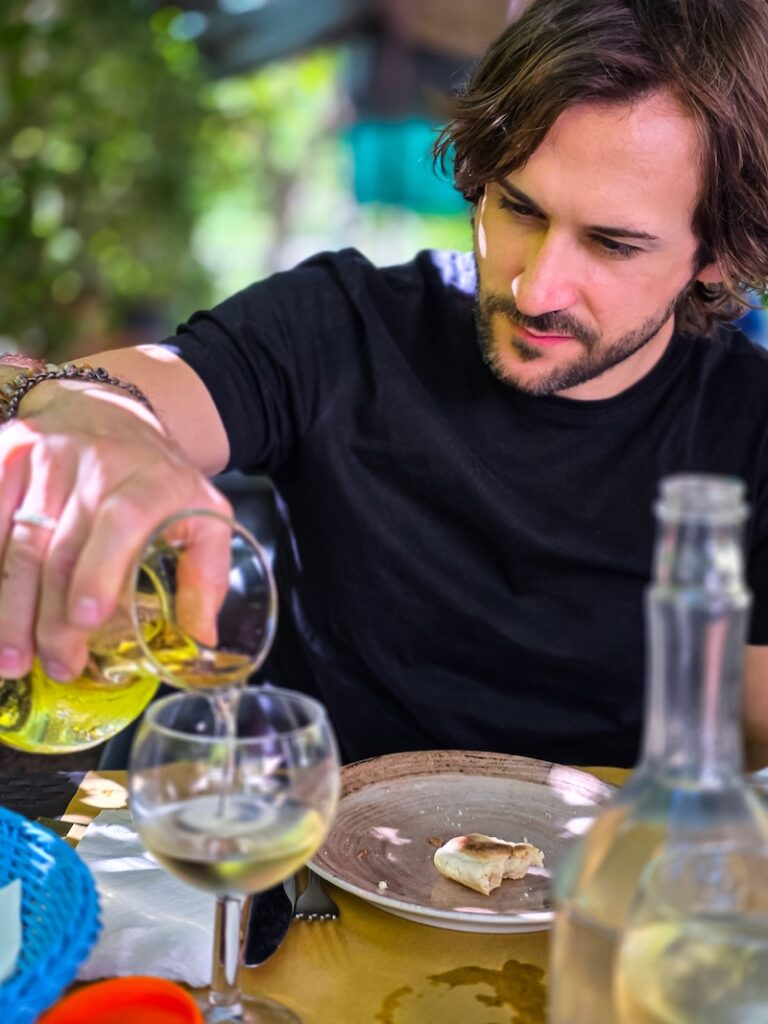
House wine. Always.