
A conversation with the Chief Architect Officer of Pininfarina of America, following the brand’s 95th anniversary celebration in Miami, on Italian design heritage, conscious luxury, and shaping global architecture.

In the world of Italian excellence, few names translate legacy into contemporary relevance as seamlessly as Pininfarina. From the intimacy of the cockpit to the scale of the skyline, the studio’s work has always shared one conviction: design is not only about form—it is about how it feels to live inside it.
For this Live in Italy Magazine luxury feature, architect and contributor Sandra Diaz-Velasco spoke with Samuele Sordi of Pininfarina about how the brand’s multidisciplinary DNA—automotive, product, and architecture—shapes spaces for a global audience whose expectations continue to evolve. Today, luxury is increasingly defined by calm, longevity, craftsmanship, and conscious performance. In the conversation that follows, Sordi shares how Pininfarina is interpreting this shift, creating architecture where precision and emotion coexist.
This dialogue also unfolds in the context of Pininfarina’s 95th anniversary, recently celebrated in Miami, a moment that underscored the brand’s evolution from automotive icon to a global design ecosystem spanning architecture, product design, and mobility.
Pininfarina’s design legacy spans automotive, product, and architecture, all rooted in a distinctly Italian sense of harmony and emotional clarity. How does this multidisciplinary heritage shape your philosophy when creating contemporary spaces for a global luxury audience?
Pininfarina’s multidisciplinary legacy is the foundation of how we approach contemporary space-making. Coming from a heritage that spans automotive, product, and architecture, we have developed a design philosophy rooted in a distinctly Italian sense of refined proportion and sensorial elegance. These values transcend scale—whether we are shaping the ergonomics of a steering wheel, the gesture of a façade, or the flow of an interior.
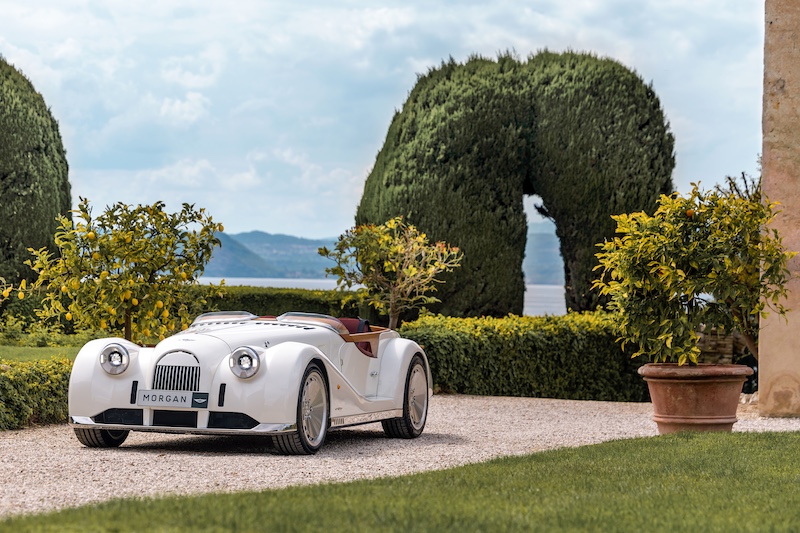
Our automotive roots, in particular, teach us to design around the human experience with extreme precision. Cars require an intimate understanding of proportion, movement, aerodynamics, and sensorial quality; when translated into architecture, this becomes a commitment to fluid spaces, intuitive functionality, and a deep focus on comfort and well-being.
Product design adds another layer: the belief that every detail counts. It trains us to approach buildings with the same sensitivity we would apply to an object held in the hand. Materiality, touch, craftsmanship, and interface become crucial in creating environments that feel both personal and elevated.
Finally, our Italian heritage infuses all of this with a cultural lens defined by beauty, balance, and emotional resonance. For a global luxury audience, this translates into spaces that are not only sophisticated and technologically advanced, but also warm, humanized, and unmistakably Pininfarina.
In essence, our cross-disciplinary DNA allows us to design architecture that operates at multiple levels—functional, experiential, and symbolic—creating spaces that stand out in the global landscape while remaining deeply connected to our roots.
In recent years, sustainable and biophilic design principles have become central to high-end development. As clients increasingly prioritize wellbeing, longevity, and environmental responsibility, how is Pininfarina interpreting “conscious luxury” within its current architectural work?
At Pininfarina, we define conscious luxury as the convergence of wellbeing, environmental intelligence, and timeless design quality—a shift from opulence to experiences that elevate life in meaningful, lasting ways. Architecture must not only be visually compelling; it must also humanize our built environment by nurturing people, respecting nature, and creating emotional connections.
Biophilic and sustainable principles play a central role in this evolution. We design buildings as ecosystems, where natural light, ventilation, materiality, and landscape are integrated from the earliest concept stages. In Light Towers, for example, the dual-volume composition is shaped to maximize daylight penetration and frame views of nature, enhancing both energy performance and emotional wellbeing. The building becomes a living interface between urban life and the natural environment.
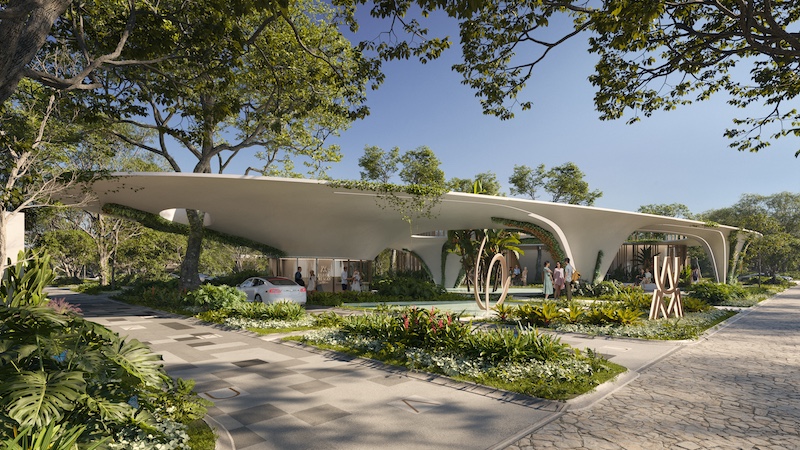
Our Italian heritage naturally places emphasis on human comfort, proportion, and emotional resonance, and today we expand that lens to include physiological and psychological wellbeing: access to greenery, multisensory experiences, and architecture that promotes calm rather than overstimulation. In Aldea Uh May, this becomes a guiding principle—the design is immersed in the lush Mexican jungle, using organic geometries and natural materials to create meditative, sensorial pathways where architecture almost dissolves into the landscape. It is a direct expression of luxury as connection to nature.
Conscious Luxury
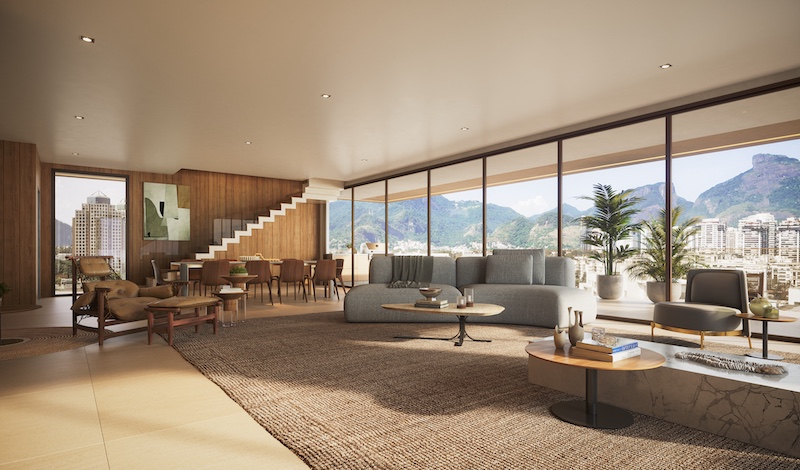
On the sustainability front, conscious luxury also means integrating performance-driven solutions inspired by our automotive expertise, such as prefabrication, modularity, and material optimization. Atto, in Rio de Janeiro, is a clear example of this mindset: its façade was engineered with a combination of shading strategies, structural efficiency, and slender proportions that reduce heat gain while delivering a distinctive sculptural identity. The result is a building that is both elegant and highly responsive to its climate.
Across these projects, our definition of luxury expands from the visual to the experiential. Conscious luxury means designing spaces that feel good, function well, and evoke emotion—spaces that allow people to reconnect with themselves, with others, and with nature. This is, ultimately, a human-centered approach: architecture as a catalyst for healthier, calmer, and more meaningful lives.
The landscape of luxury real estate is evolving, with international buyers seeking authenticity, craftsmanship, and cultural depth in their homes. How do you see Italian design resonating with these new expectations, and how is Pininfarina adapting its approach?
Italian design has always carried a unique emotional and cultural weight—an instinctive balance of craftsmanship, proportion, material sensitivity, and human warmth. Today, as international buyers increasingly seek authenticity and meaning over extravagance, this design language resonates more strongly than ever. What people are looking for is not just a luxurious home, but a place that tells a story, reflects heritage, and elevates everyday life with quiet sophistication.
At its core, Italian design is rooted in craft, culture, and care. It embraces beauty not as decoration, but as a way of living. This aligns perfectly with the global shift toward more intentional, experience-driven luxury—where materials matter, natural light matters, cultural context matters, and the way a space makes you feel becomes the true metric of value.
Italian Sensibility
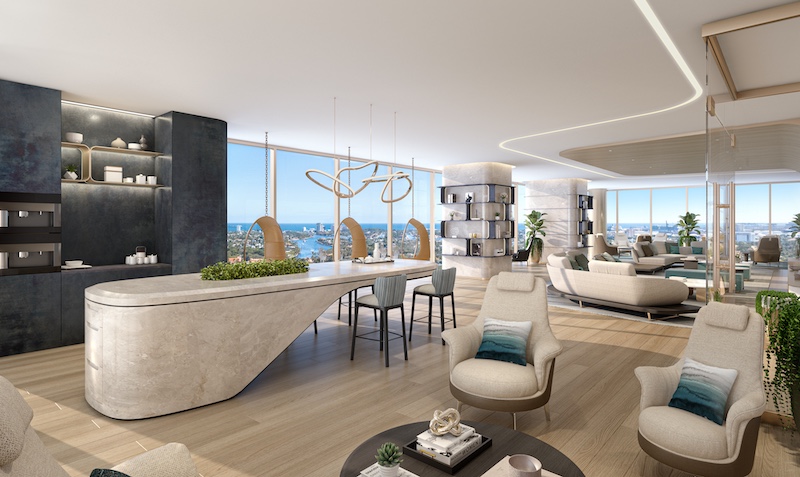
Pininfarina’s approach adapts these principles to an increasingly diverse and global audience. We draw from Italy’s tradition of artisanal excellence, but we reinterpret it through a lens of innovation, technology, and local relevance. Projects like Andare in Fort Lauderdale demonstrate how an Italian sensibility can bring refined proportion and fluidity to a vibrant coastal lifestyle, while Cyrela Heritage in São Paulo reveals how craftsmanship, material depth, and hospitality-driven intimacy can redefine vertical living in a dense urban context. Even at a monumental scale—such as the Iconic Tower in Dubai—we translate Italian design values into expressive forms, human-centered luxury, and a sculptural identity that remains elegant rather than excessive.
Across these geographies, our goal is consistent: to craft architecture that carries the timeless DNA of Italian design while being fully rooted in the culture, climate, and aspirations of the places we build in. In a world where luxury is shifting from possession to experience, from ostentation to authenticity, Italian design offers a model that is both timeless and deeply relevant.
Luxury That Evolves
Pininfarina’s architecture makes a compelling case for where luxury is headed: away from spectacle, toward experience. As Samuele Sordi explains, automotive heritage brings a discipline of human-centered precision—movement, ergonomics, comfort—while product design sharpens the attention to detail, tactility, and craft. When applied to architecture, this becomes something rare: spaces that are simultaneously sculptural and intimate, technologically advanced yet deeply human.
Most importantly, the conversation reframes “conscious luxury” as a new standard—not an add-on. Sustainability, biophilia, and material intelligence are treated as intrinsic to beauty and wellbeing, shaping environments that feel restorative and enduring. In a world redefining luxury from possession to presence, Pininfarina’s work suggests a simple truth: the most elevated spaces are not the ones that announce themselves—they are the ones that quietly transform life from the inside out.
Website: pininfarina.it
Instagram: @pininfarinaofamerica | @pininfarina_official