Mamuthones: The Ancestral Heart of Sardinian Carnival

In the heart of Barbagia, in Mamoiada in Sardegna (Sardinia), when winter still envelops the villages and the cold stiffens the land, the Mamuthones make their first appearance, known in Sardinian as sa primma issida. It happens on January 17, on the night of Saint Anthony the Abbot. Fires blaze in the town squares, bonfires light up the darkness, and the deep sound of cowbells cuts through the cold air. With their slow, measured steps, the Mamuthones announce the beginning of the Sardinian Carnival.
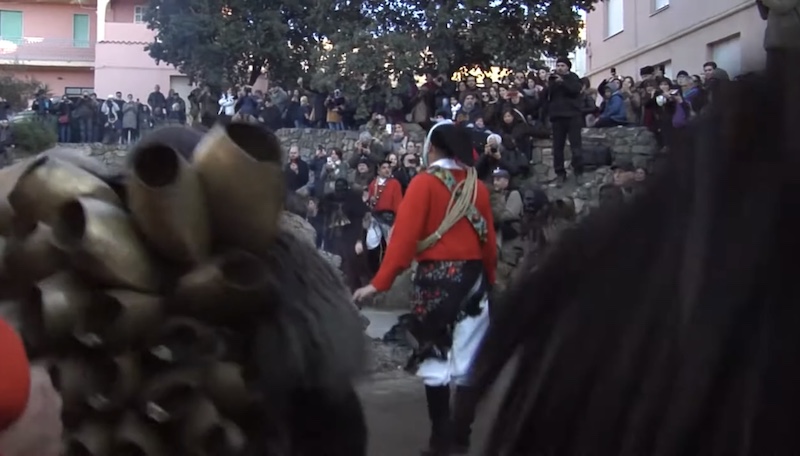

Even before seeing them, you hear them. That deep sound precedes the group’s arrival and travels through the village like an ancient call. It is not a simple accompaniment; it is the guide of the ritual. Every step becomes a collective gesture, every toll a memory taking shape.

Masks, Skins, and Colors: Mamuthones and Issohadores
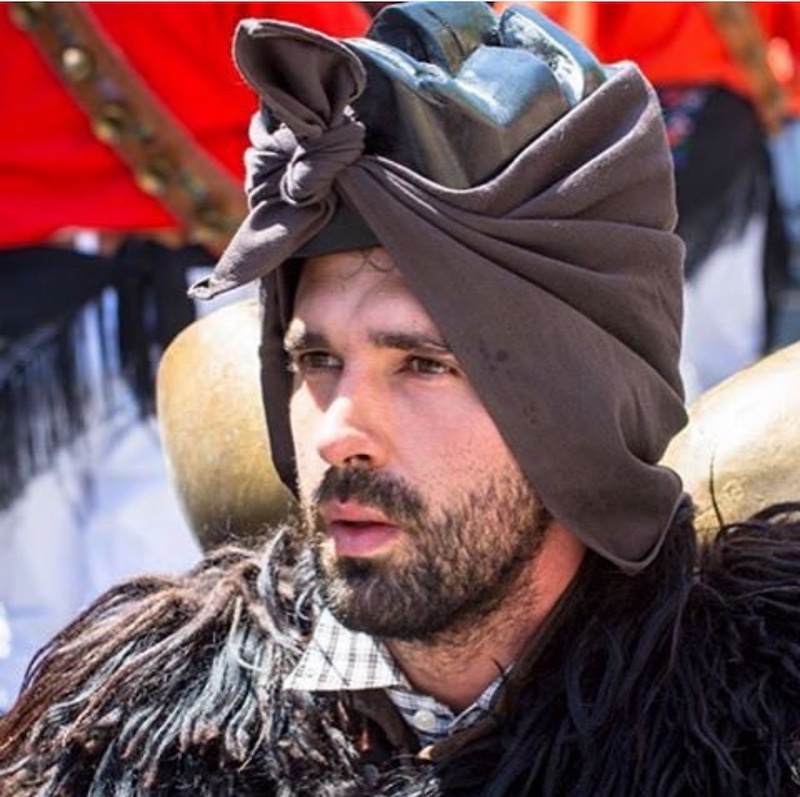

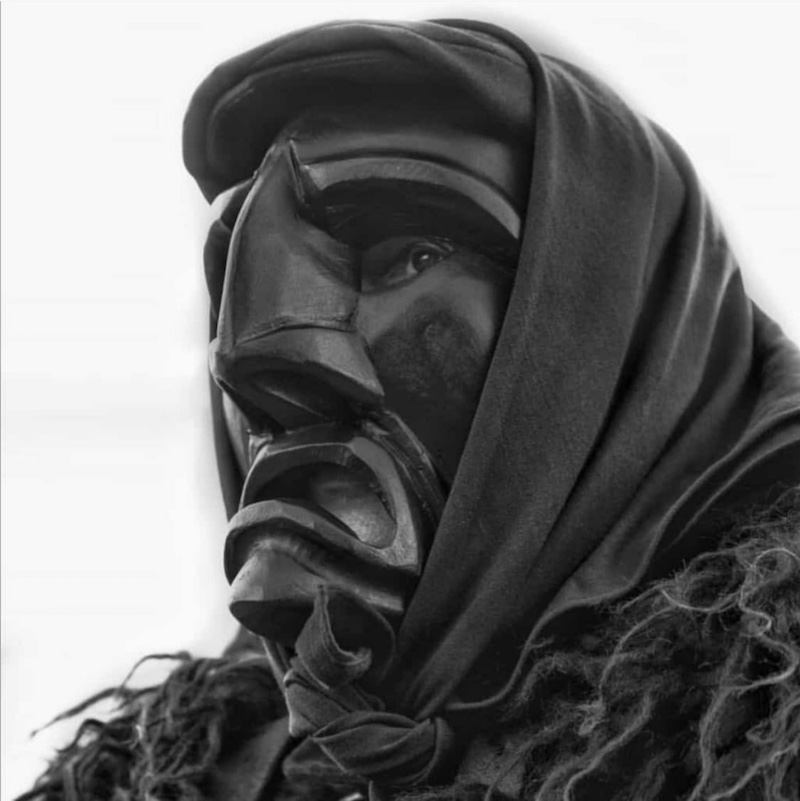
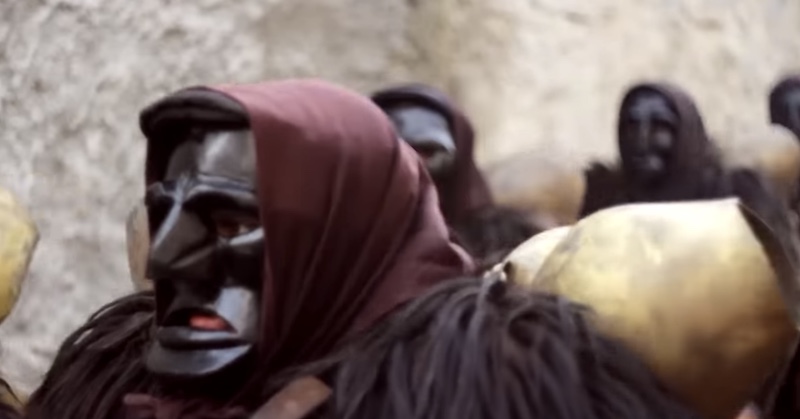
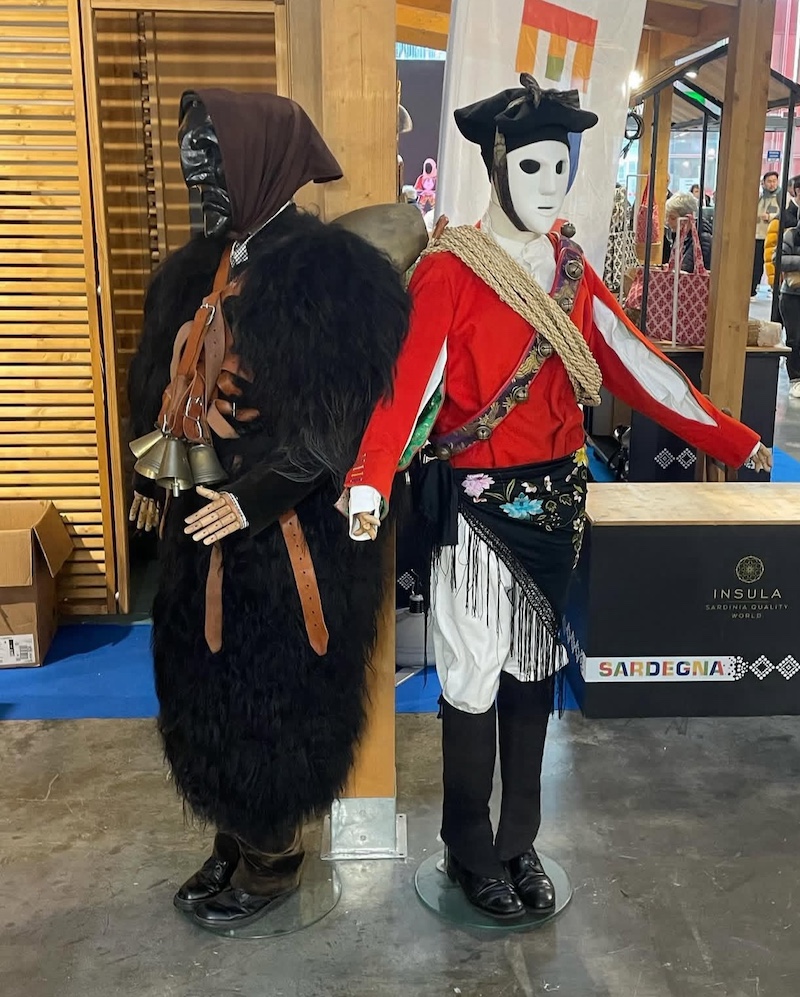
The Mamuthones wear a black sheepskin cloak, with the fleece turned outward, a light-colored shirt, dark trousers, and heavy shoes. Their faces are covered by black wooden masks with severe, suffering features, erasing individual identity. On their backs they carry cowbells, whose weight and sound mark the rhythm of the ritual movement.

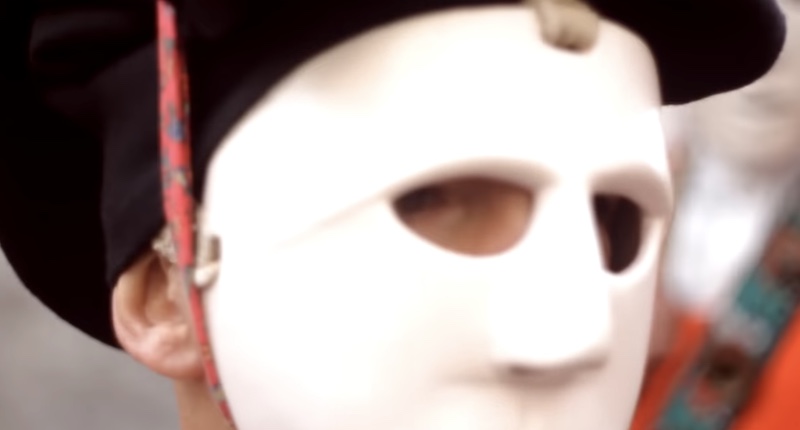
Alongside them move the Issohadores, figures of contrast and complement. They wear brighter garments: a white shirt, a red bodice, dark trousers, and a black headpiece. They carry sa soha, the braided rope that becomes a symbolic instrument of connection with the community. Their step is agile and dynamic, in sharp contrast to the gravity of the Mamuthones.

Two Roles, One Ritual Balance

The Mamuthones advance in a compact formation, following a precise pattern guided by su guidadore, the leader. Their movements are ancient and measured: alternating jumps forward and backward, performed in unison to make the row of cowbells on their backs resonate. At the leader’s signals, the sequence culminates in three consecutive jumps in place. One final signal closes the ritual: the last double step marks the end, leaving behind a suspended, solemn moment filled with symbolic power.


During the ritual, the Issohadores move through the crowd, loosen sa soha, and throw it to “capture” women and girls. It is a gesture of good fortune, involving spectators and making them active participants in the ceremony, restoring balance among the forces at play.

If the Mamuthones embody primordial, instinctive, and heavy force, the Issohadores represent order, control, and measure. Together, they create a constant tension between chaos and harmony, between weight and lightness, between silence and sound.

A Ceremony Before a Celebration

Sardinian Carnival has roots in distant times, when life was marked by the cycles of nature and the earth. Celebrations did not serve an entertaining purpose, but a ritual one: to invoke, to ward off evil, to prepare the community for a new beginning. In this context, the Mamuthones are not a folkloric performance, but the living survival of an archaic ritual that still speaks today through the body, sound, and silence.

Piera Demartis

Ciao! I’m Piera, and I’m from Sardegna. I am an AIS-certified sommelier and a qualified Food & Wine Writer with the Scuola Italiana Sommelier. Wine has become my greatest passion, and I love talking about it not only as a drink, but as a journey through cultures, territories, and people. Every glass tells a story—a bridge connecting people and places with their roots. I enjoy visiting wineries, meeting producers, and transforming their words into stories that inspire others to travel. When I’m not in the vineyards, you’ll find me exploring new flavors, landscapes, and traditions to share—always with a glass in hand and Sardegna in my heart.

No Comments Yet

Leave a Reply

Your email address will not be published.

Live in Italy Magazine is an experiential travel and lifestyle magazine dedicated to all things Italy. Monthly features: “Chat with an Expat” – a in depth conversations with people who have moved permanently to Italy. “Italy Answered” our Spotify podcast features Italians with special stories and more. We are committed to authentic and sustainable travel and spotlighting “Made in Italy”.
Named the Best Italy Magazine by Feedspot for two consecutive years!

We feature in-depth articles and interviews covering:

  • Expat Life
  • Food & Wine
  • Travel
  • Lifestyle
  • Design, Art, & Culture
  • Real Estate, Hotels/Resorts & Long-Term Rentals

We are committed to creating great content. Please consider becoming a Sponsor by donating on Patreon

Thank you for your support!

Our Contributors:

Lisa Morales, Editor-in-Chief (Miami)
Christine Cutler, Travel Editor (St. Petersburg, FL)
Lorenzo Diamantini, Food Editor (Gubbio)
Adriana Suarez, Top 8 Editor, Social Media Manager (Miami)
Angie Kordic, Visual Arts Guest Contributor (Sweden)
Feuza Reis, Guest Contributor (Miami)
Patrizia Vigolo, Wine Contributor (Vicenza)
Natalia Bell. Food Contributor (Scotland)
Emma Prentice, Guest Contributor (UK)
Chiara Borghesi, Contributor & Italian Language Advisor (Siena)
Annalucia Scotto Di Clemente, Guest Contributor (Rome)
Dennis Woudt, Guest Wine Contributor (Netherlands)
Jemma Fowler, Guest Contributor (UK)
Paola Cirino, Guest Contributor (Napoli)
Justin Patulli, Contributing Editor (Canada)
Sara Bauer, Contributor (Milan)
Valentina Salcedo, Contributor (Trieste)
Piera Demartis, Guest Wine Contributor (Sardegna)
Reginald Dunlap, Interior Design and Luxury Lifestyle Contributor (Miami/Noto)
Raluca Kotowski, Contributing Photographer & Storyteller (Miami)
Sandra Diaz-Velasco, Architecture & Design Contributor (Miami/Colombia)

Al Esper Graphic Design: Digital Edition Art Director (Tennessee)
Profit.Mov–Content Creation: Aaron Morales & Caitlin Watson (Miami)
SQLHardhat: Aaron Morales, Website Design and SEO (Miami)
Visual Popcorn: John Craven, Video Editor (Miami)
“Italy Answered” Podcast Editor, Charles Dike (Estonia)
Sabrina Negro, Translator (Piemonte)
Giulia Ferro, Subtitler EN/IT (San Michele all’Adige)

Sales: sales@liveinitalymag.com

Submit Your Press Release: lisa @ liveinitalymag.com

Guest Contributors:

Guest Contributor applicants should have a good understanding of WordPress. Email links to recent articles along with your social media handles to: lisa @ liveinitalymag.com.